 Save
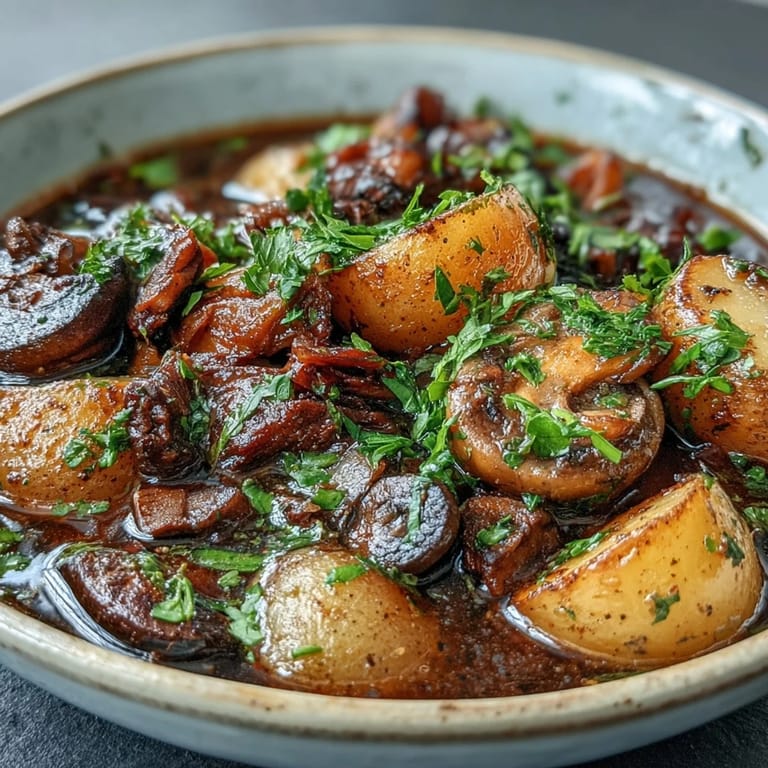
Save There's something about a steaming bowl of Irish stew on a gray afternoon that makes everything feel right again. My friend Róisín laughed when I told her I was making it vegan, said it couldn't possibly work without the Guinness and the meat. But then she tasted it—that rich, savory depth from the mushrooms, the way the broth had absorbed all those earthy root vegetables—and she went quiet. Sometimes the best dishes surprise you because they prove that tradition doesn't need to be rigid, just honest.
I made this for my mum's book club last winter, and three women asked for the recipe before they'd even finished their bowls. One of them whispered that she'd been vegan for two years and had been missing this exact comfort, and watching her face as she ate it was worth every chopped vegetable. That's when I realized this stew wasn't about replacing anything—it was about remembering what Irish stew was supposed to do in the first place: warm you from the inside out.
Ingredients
- Cremini or portobello mushrooms (400 g): These are your anchor, the part that transforms from squeaky raw to deeply savory as they release their moisture and caramelize. Finely chopping them is crucial—you want them to break down into a texture that mimics ground meat.
- Soy sauce (2 tbsp): The umami hero that makes the mushrooms taste umami-forward without tasting like soy; it's almost invisible but absolutely essential.
- Smoked paprika (1 tsp): This is your smoke signal, the ingredient that hints at depth and something you can't quite name but definitely remember.
- Olive oil (3 tbsp for broth, 1 tbsp for mushrooms): Use the good stuff you actually like—cheap oil will whisper through every spoonful, and nobody wants that.
- Yellow onion (1 large): The foundation, the one that melts into sweetness and binds everything together as it cooks down.
- Garlic (2 cloves, minced): Just enough to wake things up without overpowering; if you've got good garlic, you'll taste it the way it was meant to be tasted.
- Carrots, parsnips, and potatoes: These three carry the whole stew on their shoulders—the sweetness, the earthiness, the substance that makes it a proper meal.
- Celery (2 stalks): A quiet contributor that adds brightness and structure without demanding attention.
- Rutabaga or turnip (optional): If you can find it, add it; if you can't, don't fret—the stew works beautifully without it, but it does add a subtle sweetness and texture variation.
- Vegetable broth (1.2 L): The liquid backbone; make it count by using one you'd actually drink on its own.
- Tomato paste (2 tbsp): A small amount goes a long way toward depth and slight acidity, which brightens everything.
- Fresh thyme and rosemary: These herbs are what make it unmistakably Irish; they're woody and grounding, almost like cooking with memory itself.
- Bay leaves (2): Remove them before serving, but don't skip them—they're doing serious work in the background.
- Flour or cornstarch (2 tbsp): Use cornstarch if you need it gluten-free; either one will thicken the broth into something that clings to the vegetables instead of running off the spoon.
- Fresh parsley (2 tbsp): A bright, last-minute reminder that good food is about color and freshness, not just warmth.
Tired of Takeout? 🥡
Get 10 meals you can make faster than delivery arrives. Seriously.
One email. No spam. Unsubscribe anytime.
Instructions
- Brown the mushroom meat:
- Heat 1 tbsp olive oil in a large skillet over medium-high heat and add your finely chopped mushrooms along with the soy sauce, smoked paprika, and black pepper. You want to listen for a gentle sizzle and watch the mushrooms slowly release their moisture—about 8 to 10 minutes—until they're dark and caramelized and smell almost meaty. This step is where the magic happens, so don't rush it or crowd the pan.
- Build the base:
- In your large pot, warm 3 tbsp olive oil over medium heat, then add the chopped onion and minced garlic. Let them soften and become fragrant, about 5 minutes, stirring occasionally so they don't catch on the bottom. You're creating the foundation that every vegetable will taste better because of it.
- Add the root vegetables:
- Toss in the carrots, parsnips, potatoes, celery, and rutabaga if you're using it, and give everything a stir. Cook for 5 minutes, letting the heat start to wake up the vegetables without browning them too much. You want them to just begin releasing their natural sweetness.
- Season and aromatics:
- Stir in the tomato paste, fresh thyme, rosemary, bay leaves, and a generous pinch of salt and black pepper. Let it cook for a minute so the tomato paste caramelizes slightly and the herbs release their oils. This is the moment the stew starts to smell like someone's been taking care of it all afternoon.
- Simmer until tender:
- Pour in the vegetable broth and bring everything to a boil, then reduce the heat to low, cover, and let it bubble gently for 30 minutes until the vegetables are completely soft. You should be able to cut a carrot with the side of your spoon when it's ready.
- Return the mushroom meat:
- Stir the browned mushroom meat back into the pot and let everything get to know each other again for a minute. The mushrooms add a savory depth that transforms this from 'vegetable soup' into something rich and memorable.
- Thicken it up:
- Mix your flour or cornstarch with 2 tbsp water in a small bowl until smooth, then stir this slurry into the stew and simmer uncovered for 5 to 10 minutes. You'll watch it transform from thin and brothy into something creamy and clinging, and it's deeply satisfying.
- Final taste and serve:
- Fish out those bay leaves, taste the stew, and add salt and pepper until it tastes like comfort in a spoon. Ladle it into bowls, garnish with fresh parsley, and serve it hot with crusty bread if you can.
 Save
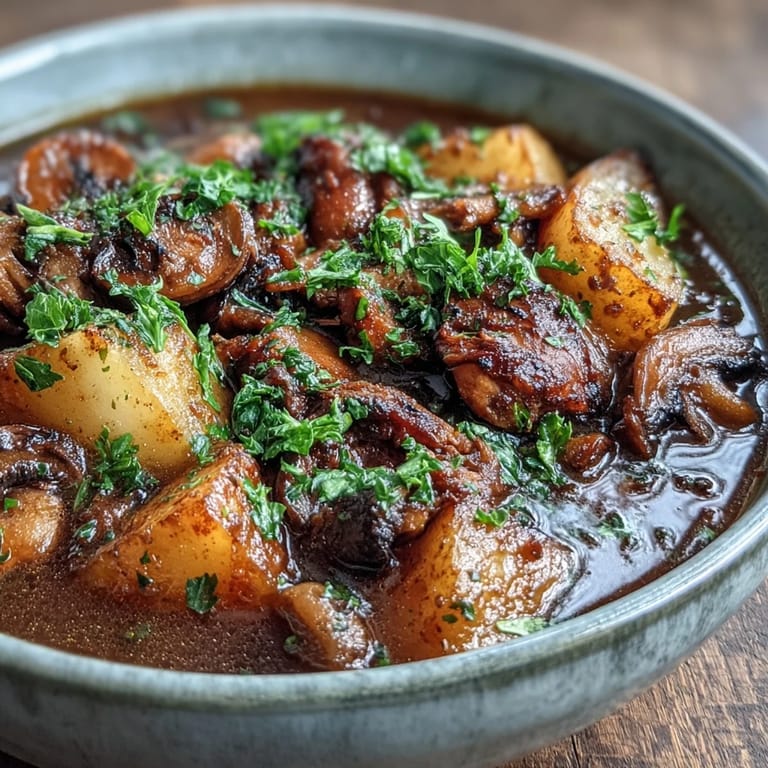
Save The real magic of this stew is that it tastes like someone's grandmother made it, even if that someone has never eaten Guinness or animal products in their life. It's proof that comfort food isn't about following rules exactly as they've always been done—it's about understanding why those rules exist and respecting them enough to make something honest in their spirit.
The Mushroom Meat Difference
When I first started cooking vegan, I thought I had to apologize for what wasn't in the pan. But cremini and portobello mushrooms don't feel like a substitute for anything—they're their own ingredient, ancient and earthy and completely worthy of your attention. The soy sauce and smoked paprika aren't tricks to make you forget about something else; they're genuine flavors that mushrooms actually need to taste like their best selves. The key is respecting that transformation, letting the moisture escape fully so the mushrooms can concentrate their flavor into something almost meaty without trying to be something they're not.
Building Layers of Flavor
This stew works because every element is doing something specific. The tomato paste adds acidity and depth, the thyme and rosemary anchor you in herbaceous comfort, the soy sauce provides umami, and the caramelized mushrooms give you that savory backbone you'd otherwise miss. Adding them in stages means each flavor gets its moment to shine instead of disappearing into the pot like it never mattered. By the time everything simmers together, you've built something that tastes like it took hours, not seventy minutes.
Make It Your Own
The beauty of a stew is that it's forgiving and flexible. If you can't find parsnips, use more carrots; if rutabagas aren't in season or available, the stew is perfectly complete without them. Some people add a splash of vegan Worcestershire sauce or a tiny spoonful of marmite for extra richness, and honestly, it doesn't hurt—it just deepens what's already there. The stew also tastes noticeably better the next day when all those flavors have had time to get properly acquainted.
- Try swapping sweet potatoes for regular potatoes if you want something slightly sweeter and more autumnal.
- A robust vegan Merlot or similar red wine pairs beautifully, and if you want to add a splash to the pot toward the end, it won't complain.
- Serve with good crusty bread for soaking up every last bit of broth, because that's what the bread is actually for.
 Save
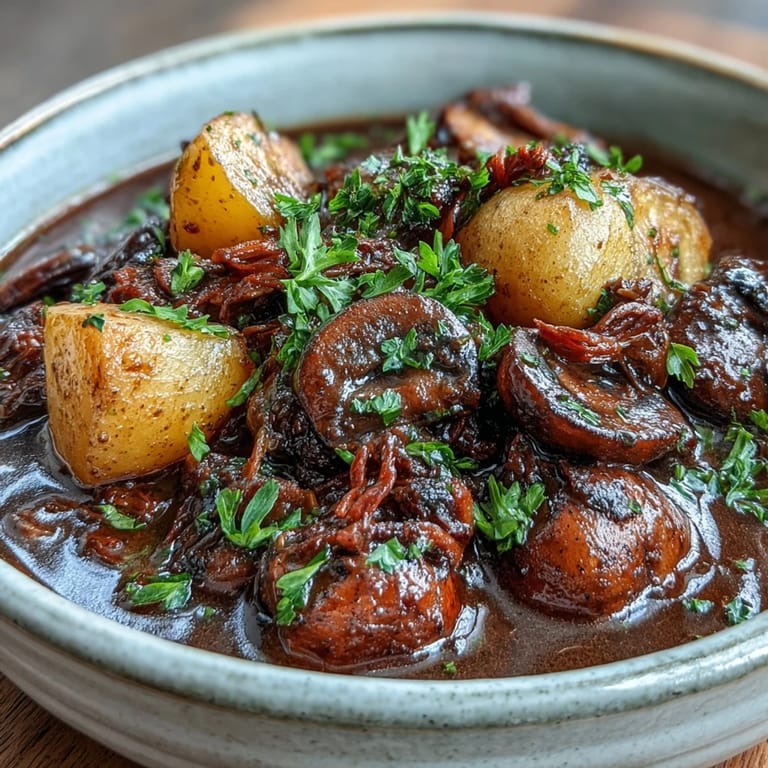
Save This stew is a reminder that feeding people well doesn't require apologies or compromises. Make it, watch someone taste it and realize what they've been missing, and know that you've done something worth doing.
Recipe Guide
- → How is the mushroom meat prepared?
Chopped cremini or portobello mushrooms are sautéed with olive oil, soy sauce, smoked paprika, and black pepper until browned and liquid evaporates, creating a savory meat-like texture.
- → What vegetables are included in this stew?
The stew features carrots, parsnips, potatoes, celery, onion, garlic, and optionally rutabaga or turnip for added earthiness and texture.
- → How is the stew thickened?
A slurry made from flour or cornstarch mixed with water is stirred into the stew and simmered until the liquid thickens to a hearty consistency.
- → Can the flour be substituted for a gluten-free option?
Yes, cornstarch can replace all-purpose flour to maintain thickening without gluten, making the dish suitable for gluten-free diets.
- → What herbs are used to flavor the broth?
Fresh or dried thyme and rosemary combine with bay leaves to create a fragrant, herbaceous base that complements the vegetables and mushroom meat.
- → What can enhance the richness of the broth?
Adding vegan Worcestershire sauce or a teaspoon of marmite can deepen the umami and add complexity to the broth.