 Save
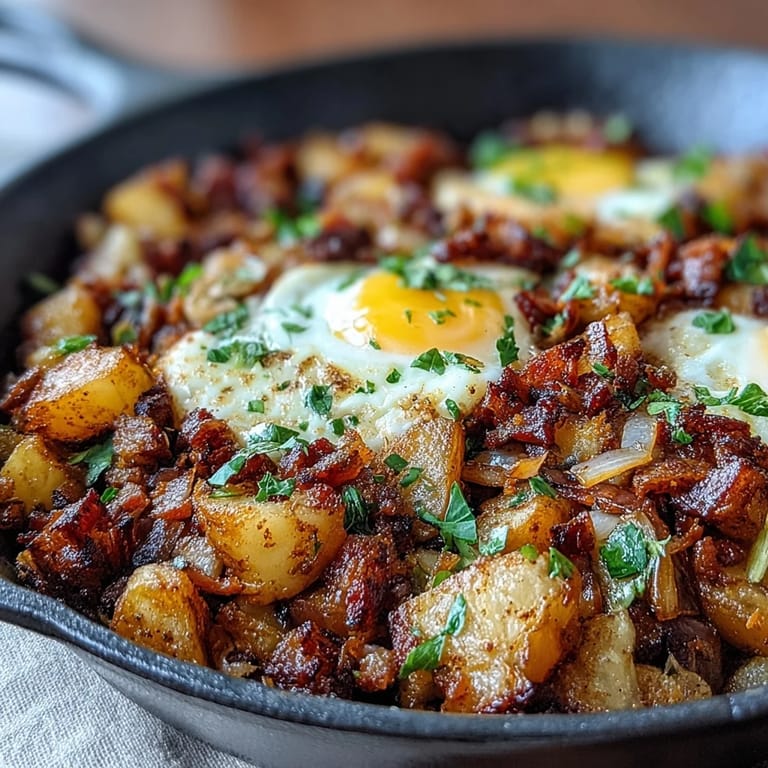
Save There's something about the sizzle of corned beef hitting a hot skillet on a lazy Sunday morning that just feels like permission to slow down. My neighbor taught me this particular version years ago, swearing by the technique of getting those potatoes golden before anything else touches the pan. She'd lean against her kitchen counter with coffee in hand, explaining how the order matters more than the ingredients themselves. I've made it countless times since, and each iteration teaches me something new about timing and heat.
I cooked this for my roommate Sarah on the morning she got the job she'd been interviewing for all month. She walked into the kitchen sleepy and skeptical, then stopped dead when she smelled the corned beef crisping up. We ate straight from the skillet with a shared fork, and she said it tasted like celebration. That's when I realized good breakfast food isn't really about the ingredients at all.
Ingredients
- Cooked corned beef (340 g): Using pre-cooked corned beef saves you hours and means you can focus on the hash itself; dice it into roughly quarter-inch pieces so it crisps up properly rather than turning to mush.
- Yukon Gold potatoes (500 g): These waxy potatoes hold their shape beautifully and develop golden, crispy edges when cooked slowly; they're worth seeking out because russet potatoes tend to break apart mid-cooking.
- Yellow onion (1 medium): The sweetness from onion balanced against the salty corned beef is essential; finely chopping it helps it disappear into the hash rather than creating big chewy pieces.
- Green bell pepper (1): This adds brightness and a slight vegetal sweetness that cuts through the richness of the meat and butter.
- Garlic (2 cloves): Minced fine so it doesn't overpower, garlic deepens the savory notes without announcing itself.
- Fresh parsley (2 tablespoons): The herbs at the end are less about flavor and more about waking up the whole dish visually and adding a fresh breath to each bite.
- Eggs (4 large): These become your sauce, essentially; the runny yolk mingles with everything below it and transforms the texture completely.
- Unsalted butter (2 tablespoons): Butter browns beautifully and adds a richness that oil alone cannot achieve; it's what makes this feel luxurious rather than merely practical.
- Olive oil (2 tablespoons): Using both oil and butter prevents the butter from burning while giving you enough fat to get the potatoes properly golden.
- Smoked paprika (1/2 teaspoon): This spice has a whisper of smoke that echoes the corned beef's cured flavor without overwhelming it.
- Black pepper and kosher salt (1/2 teaspoon each): Season as you go rather than waiting until the end; you'll taste the difference in how flavors develop layer by layer.
Tired of Takeout? 🥡
Get 10 meals you can make faster than delivery arrives. Seriously.
One email. No spam. Unsubscribe anytime.
Instructions
- Start with the potatoes alone:
- Heat 1 tablespoon olive oil and 1 tablespoon butter together over medium heat until the butter foams slightly. Add your diced potatoes and resist the urge to stir constantly; let them sit for a minute or two so they can brown, then stir gently. You're looking for golden, tender pieces after about 10 to 12 minutes, and patience here pays off with better texture.
- Build the vegetable foundation:
- Add the remaining oil and butter, then introduce your onion, bell pepper, and minced garlic all at once. This aromatic trio softens together over about 4 minutes, filling your kitchen with that unmistakable breakfast smell that makes everyone suddenly appear in the kitchen.
- Bring the corned beef into the mix:
- Increase your heat to medium-high and scatter the diced corned beef across the skillet. Sprinkle with smoked paprika, salt, and pepper, then stir everything together, letting it cook untouched for a minute or two so the meat develops crispy edges. This stage takes about 5 to 6 minutes and is when the hash transforms from ingredients into something cohesive and golden.
- Create nests for the eggs:
- Using the back of a spoon, press gently into the hash to create 4 shallow wells spaced evenly around the skillet. These little nests keep the eggs from rolling around and help them cook more evenly.
- Nestle in the eggs and let them set:
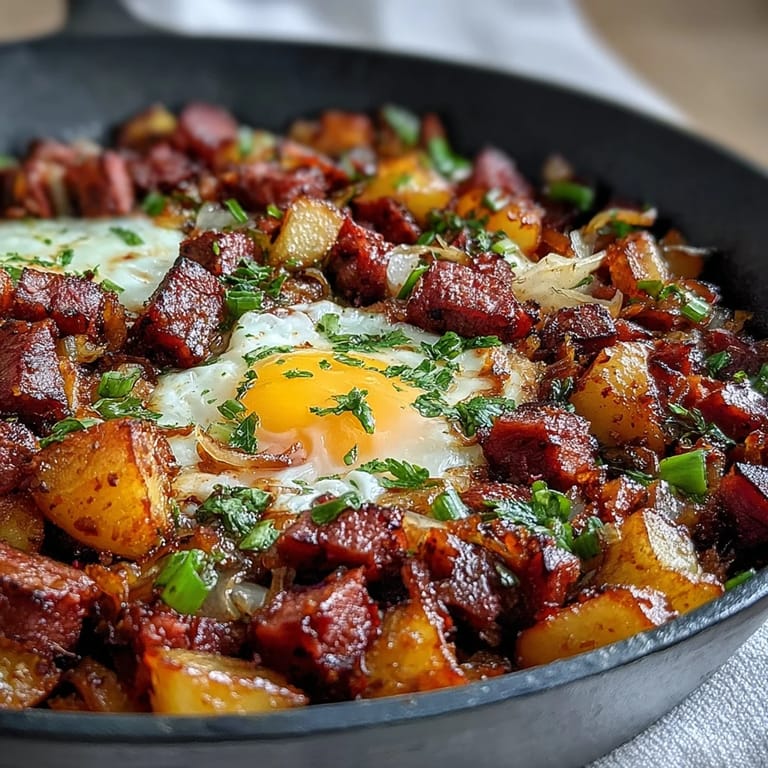
- Crack one egg carefully into each well, reduce heat to medium-low, and cover the skillet with a lid. Cook for 5 to 7 minutes depending on how you like your yolks; runny yolks will give you that luxurious sauce quality, while firmer yolks mean everything stays on your fork more cooperatively.
- Finish and serve:
- Remove from heat, scatter fresh parsley over everything, and bring the whole skillet to the table if you're feeling generous. The heat continues to cook gently under the lid even after you turn off the flame, so don't wait too long to serve.
 Save
Save My dad made this for me the morning I had to drive eight hours to help my sister move, and he wouldn't let me leave until I'd finished every bite. He knew I'd be eating bad gas station food otherwise, so he turned it into something worth waking up early for. That's when breakfast stopped being just fuel and became an act of care.
The Beauty of Crispy Edges
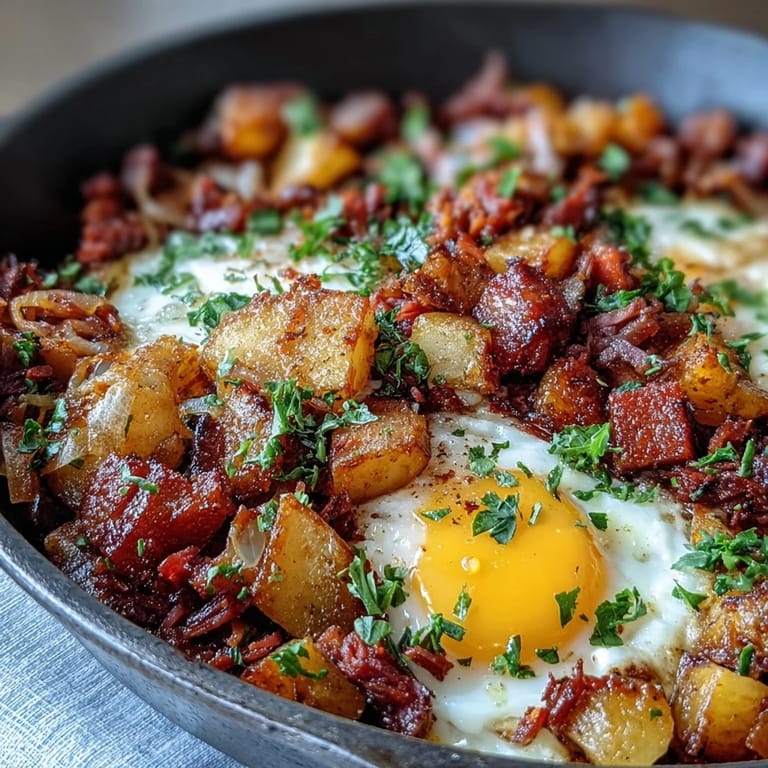
What separates a great hash from a mediocre one is honestly just time and temperature. You need enough heat to build color and crispiness, but not so much that everything burns before the potatoes soften through. Cast iron holds heat beautifully and distributes it evenly, which is why diner cooks swear by it, but a good nonstick skillet works just fine too. The key is listening to that sizzle and trusting it as your guide.
Building Flavor Layers
Every component that goes into this skillet brings something distinct to the table. The corned beef provides saltiness and umami, the potatoes give you substance and texture, the vegetables add sweetness and brightness, and the egg becomes the final layer that ties everything into a complete thought. Cooking them in the right order means each flavor has a chance to develop rather than getting muddled together. Think of it less like mixing a batter and more like conducting a conversation where everyone gets a turn to speak.
Variations and Personal Touches
Once you understand the technique, this skillet becomes a canvas for whatever you have on hand or whatever you're craving that morning. Some people add sharp cheddar cheese right before the eggs so it melts into the hash, others swear by a dash of hot sauce for brightness, and I've seen versions with spinach folded in at the end for extra greens. The foundation stays solid; the details become yours to decide.
- Try adding a handful of fresh spinach in the last minute before cracking the eggs if you want more vegetables without changing the core technique.
- A sprinkle of sharp cheddar or crispy bacon bits right before serving adds depth and texture that transforms the whole dish.
- Serve with toasted bread for soaking up that runny yolk, or alongside fresh fruit if you want something lighter alongside all that savory richness.
 Save
Save This is the kind of dish that transforms a regular morning into something memorable, whether you're making it for yourself or someone else. Every time I cook it, I think about all the hands that taught me how, and I feel grateful for breakfast food that asks for nothing more than your presence and attention.
Recipe Guide
- → How do I get the corned beef hash crispy?
Cook the diced corned beef over medium-high heat, stirring occasionally, until it develops a golden, crispy texture, about 5-6 minutes.
- → Can I substitute Yukon Gold potatoes?
Yes, russet or red potatoes work well and provide similar texture and flavor. Sweet potatoes offer a sweeter, lighter alternative.
- → What’s the best way to cook the eggs in the skillet?
Create shallow wells in the hash, crack the eggs into them, then cover and cook on medium-low heat for 5-7 minutes for runny yolks or longer for firmer eggs.
- → Is this dish suitable for a gluten-free diet?
Yes, as long as you use certified gluten-free corned beef and avoid cross-contamination, the dish remains gluten-free.
- → What additional flavors can enhance this skillet?
Adding a dash of hot sauce, a sprinkle of cheddar cheese, or fresh herbs like extra parsley can provide more depth and freshness.