 Save
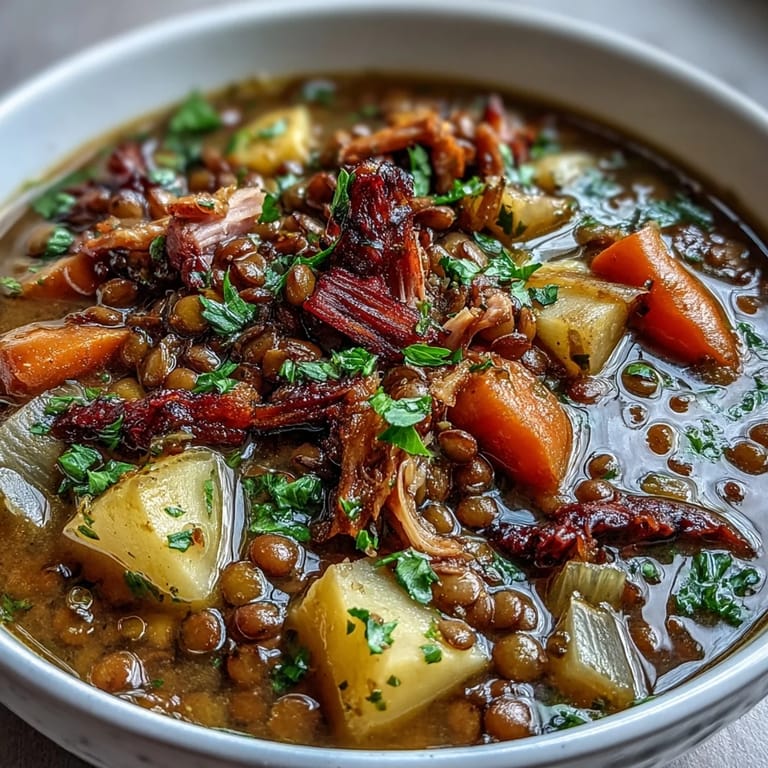
Save My neighbor brought over a ham bone one December morning, still wrapped in foil from her holiday dinner, and asked if I knew what to do with it. I'd been staring at my pantry that week feeling uninspired, so I decided right then to make soup—the kind that fills your kitchen with steam and makes the whole house smell like home. That first pot taught me that the best meals often start with someone else's leftovers and a willingness to simmer things slowly.
Years later, I made this for my partner during the worst flu he'd ever had, and he still talks about how that bowl of soup sitting on the nightstand meant more than anything I could have said. There's something about sipping warm broth with tender vegetables and flecks of real ham that makes you believe you'll actually get better.
Ingredients
- Meaty ham bone: This is your foundation—don't trim away too much fat, as it carries flavor and helps build that silky broth texture that makes people ask for seconds.
- Cold water: Starting with cold water lets the ham bone release its flavors gradually, creating a clean, golden broth instead of a murky one.
- Bay leaves and black peppercorns: These aren't just filler; they add subtle depth that rounds out the ham's saltiness without being obvious.
- Brown or green lentils: I've found green lentils hold their shape better if you're making this ahead, but brown lentils have a earthier, almost nutty taste that pairs beautifully with ham.
- Carrots, parsnips, celery, and onion: This is your aromatic base—the soffritto that builds umami and makes the whole soup taste like someone's been cooking all day.
- Yukon Gold potatoes: They're buttery and don't fall apart after an hour of simmering, so your soup stays chunky and satisfying.
- Garlic: Added after the other vegetables soften so it doesn't burn and turn bitter, just warm and sweet.
- Olive oil: A couple tablespoons is all you need to gently coax out the vegetables' natural sugars before they hit the broth.
- Dried thyme and rosemary: These herbs whisper rather than shout, adding a subtle earthiness that makes you feel like you're eating something from a grandmother's kitchen.
- Fresh parsley: A bright finish that cuts through the richness and adds a color that makes the soup look alive in the bowl.
Tired of Takeout? 🥡
Get 10 meals you can make faster than delivery arrives. Seriously.
One email. No spam. Unsubscribe anytime.
Instructions
- Build your broth foundation:
- Place the ham bone, cold water, bay leaves, and peppercorns into a large stockpot and bring to a boil over medium-high heat. You'll see foam rise to the surface—skim it off with a spoon because it's impurities that cloud your broth. Once it's mostly foam-free, lower the heat and let it simmer partially covered for 1 hour and 15 minutes, which is the sweet spot for extracting all that deep, salty ham flavor without overcooking the bone.
- Prep while it simmers:
- While the broth is working, peel and dice your carrots, parsnips, celery, potatoes, and onion into roughly the same size so everything cooks evenly. Rinse your lentils under cold water and set them aside—this simple step removes dust and makes them cook more predictably.
- Strain and clarify:
- After the broth has simmered, carefully remove the ham bone with tongs and set it aside to cool. Strain the broth through a fine sieve back into the pot, discarding the solids—what you're left with should be clear and golden, not cloudy.
- Sauté your vegetables:
- Heat olive oil in a large skillet over medium heat and add your diced onion, carrots, parsnips, and celery together. Let them cook undisturbed for about 5 minutes, then stir them around so they soften and begin to caramelize slightly. Add your minced garlic in the last minute—it should smell incredible, not burnt.
- Bring it all together:
- Pour the sautéed vegetables, potatoes, lentils, thyme, and rosemary into your broth and bring everything to a simmer over medium heat. Let it bubble gently for 35 to 40 minutes, which is usually when the lentils lose their hard center and the potatoes become creamy. You want everything tender enough that a spoon cuts through without resistance.
- Add back the ham:
- While the soup simmers, pick any meat from the cooled ham bone—there's usually more than you'd expect—chop it into bite-sized pieces, and stir it back into the pot. This is where the soup transforms from vegetable broth into a proper, protein-filled meal.
- Season and finish:
- Taste the soup carefully before seasoning; the ham bone contributes a lot of salt, so you might need less than you think. Remove the bay leaves, grind in some fresh black pepper, and adjust salt to taste. Ladle into bowls, top with fresh parsley, and serve with lemon wedges on the side for anyone who wants to brighten theirs up.
 Save
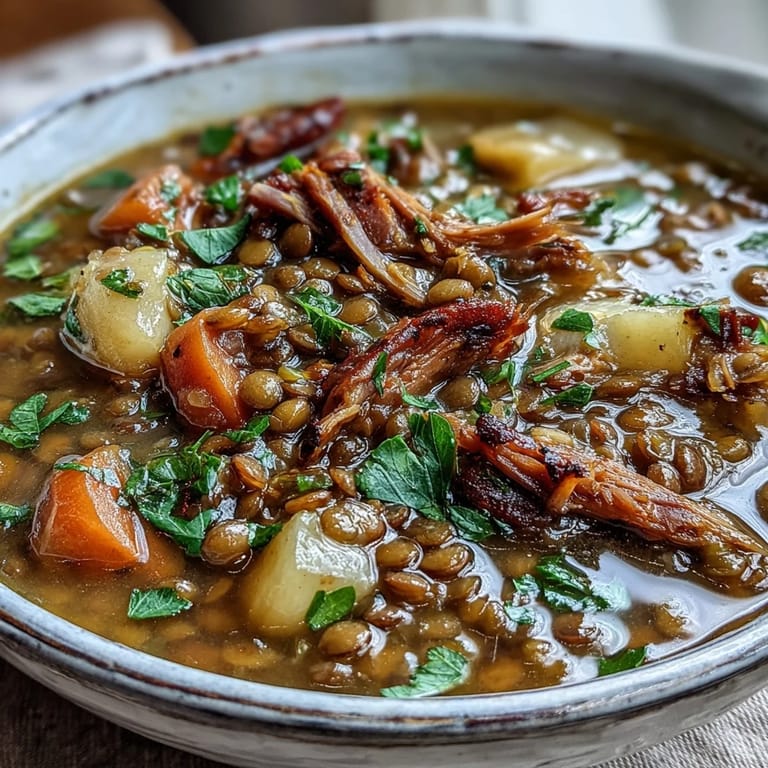
Save There was one evening when my friend Sarah came over during a rough patch in her life, and we didn't talk about her troubles much—we just sat at the kitchen counter, both with bowls of this soup, and somehow that was exactly what she needed. Food has a way of saying things we can't put into words.
Why Ham Bone Broth Changes Everything
The magic of this soup lives in the broth, which is why I never throw away a ham bone anymore. A proper ham bone broth is like liquid gold in the kitchen—it's salty, it's rich, and it carries the memory of whatever meal that ham was part of. Once you've made it, you understand why people used to save bones the way they saved string; there's real value in something that costs nothing but patience.
The Art of Root Vegetables
Root vegetables have this quiet power in soups because they're naturally sweet and become almost silky when they've simmered long enough. I used to peel them too thin or cut them too small, thinking that would make them cook faster, but I learned that they actually need a little substance to stand up to the broth without dissolving. When you cut them to roughly the same size—about three-quarter inch pieces—they finish at the same time, and the soup has a beautiful, intentional texture.
Making It Your Own
Once you've made this soup once, you'll start seeing variations everywhere. Some days I add a pinch of smoked paprika if I'm feeling like something with more depth, or I'll swap half the potatoes for sweet potatoes if I want the soup to taste slightly warmer and sweeter. The framework is flexible enough to handle your mood and whatever vegetables you have on hand.
- If you have a ham hock instead of a bone, it'll work just as well and might give you even more meat to pull off.
- Fresh herbs like dill or tarragon can replace the thyme and rosemary if that's what you've got growing on your windowsill.
- A splash of apple cider vinegar or a squeeze of fresh lemon juice at the end brightens everything up without making it taste acidic.
 Save
Save This soup has become my go-to for when I want to feed someone or myself something that feels both effortless and deeply intentional. Every spoonful tastes like it took all day, even though most of that time is just the gentle work of simmering.
Recipe Guide
- → How long should the ham bone simmer?
Simmer the ham bone in water with bay leaves and peppercorns for about 1 hour 15 minutes to develop a rich broth.
- → Can I use dried lentils without soaking?
Yes, rinsed dried lentils cook well without soaking and soften during the simmering process.
- → What vegetables complement the lentils best?
Carrots, parsnips, celery, onions, and Yukon Gold potatoes add earthiness and texture to the soup.
- → How can I enhance the smoky flavor?
Add diced smoked sausage or a pinch of smoked paprika for a deeper smoky character.
- → Is the soup suitable for a gluten-free diet?
Yes, naturally gluten-free ingredients are used, but check labels on the ham bone and broth to ensure no gluten was added.
- → Can this soup be made ahead?
Absolutely, the flavors deepen after resting, making it even better the next day.