 Save
Save There's something about the smell of chicken hitting a hot grill that makes everything feel easier—like whatever stress I carried into the kitchen just melts away with the smoke. I stumbled onto this Mediterranean combination on a random Tuesday evening when I had chicken, a handful of herbs, and absolutely no plan. By the time my partner came home, the whole apartment smelled like lemon, garlic, and charred chicken, and suddenly we were eating something that tasted like a summer I didn't know we needed.
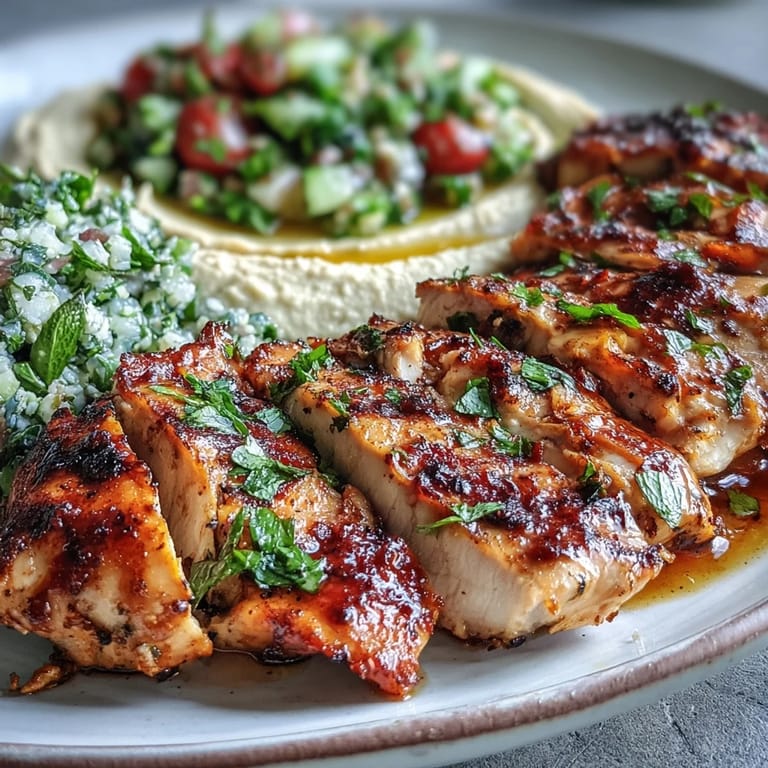
I made this for my mom the day she mentioned wanting to eat lighter but not feel like she was missing out on flavor. She sat at the kitchen counter watching me assemble the plate—the golden chicken, that vibrant green tabbouleh, the creamy hummus with its little olive oil pool—and something shifted in how she thought about what healthy food could look like. We ended up talking for hours over that meal, and she's made it at least a dozen times since.
Ingredients
- Boneless, skinless chicken breasts (4): These cook faster than thighs and take on the marinade beautifully, though thighs work if you prefer them juicier and don't mind a few extra minutes of cooking time.
- Olive oil (combined 6 tbsp): The quality here matters more than you'd think—use something you'd actually taste on bread, not the cheapest bottle you can find.
- Lemon juice (combined 5 tbsp): Fresh squeezed is absolutely worth the effort; bottled gets acidic in a way that tastes flat by comparison.
- Garlic (3 cloves total): Mince it small so it distributes through the marinade evenly and doesn't create any bitter-tasting chunks.
- Ground cumin (1 tsp in marinade, ½ tsp in hummus): This spice is what makes the whole thing taste Mediterranean rather than just grilled—don't skip it or substitute.
- Smoked paprika (1 tsp): The smoke adds depth that regular paprika can't touch, and it makes the chicken look as good as it tastes.
- Ground coriander (½ tsp): Subtle and slightly sweet, it rounds out the spice blend and keeps everything from tasting one-dimensional.
- Dried oregano (1 tsp): Dried works better than fresh here because the flavors concentrate into the marinade more effectively.
- Tahini (3 tbsp): The sesame paste that makes hummus actually taste like hummus—don't try to skip it or substitute peanut butter, the flavor is completely different.
- Chickpeas (1 can, 15 oz, drained and rinsed): The rinsing step is non-negotiable if you want hummus that doesn't taste grainy or starchy.
- Fresh flat-leaf parsley (2 cups): The curly stuff is too delicate for tabbouleh; flat-leaf parsley holds its texture and flavor through the acid of the lemon juice.
- Fresh mint leaves (½ cup): This is what transforms tabbouleh from just a salad into something that feels bright and alive on your tongue.
- Bulgur wheat (½ cup) or quinoa for gluten-free: Fine bulgur (not medium or coarse) hydrates to the perfect texture in about fifteen minutes and has a slight chewiness that adds interest.
- Cherry or Roma tomatoes (2 medium): Dice them small and remove excess seeds if you have time so the tabbouleh doesn't get watery sitting around.
- English cucumber (½): The skinless variety has fewer seeds and a more delicate texture than regular cucumbers.
- Green onions (3): The white and light green parts add bite; save the dark green tops for garnish if you want to look fancy.
Tired of Takeout? 🥡
Get 10 meals you can make faster than delivery arrives. Seriously.
One email. No spam. Unsubscribe anytime.
Instructions
- Build your marinade with intention:
- Whisk together the olive oil, lemon juice, minced garlic, cumin, paprika, coriander, oregano, salt, and pepper in a bowl until the spices dissolve into the liquid. You want this to look cohesive, not grainy or separated.
- Let the chicken learn the flavors:
- Pat your chicken breasts dry first—this helps the marinade stick better—then coat them completely and cover the bowl. Even twenty minutes makes a difference, but two hours is where the real magic happens. If you're in a rush, at least do thirty minutes while you prep everything else.
- Awaken the bulgur:
- Pour boiling water over the fine bulgur, cover it, and set a timer for fifteen minutes. You'll see it absorb the liquid and puff up slightly; when you fluff it with a fork, each grain should be separate and tender, not mushy or hard in the center.
- Chop your herbs with focus:
- Finely chop your parsley and mint, trying to keep them separate until the very end so the fresh green color stays vibrant. Rough chopping leaves you with tough, unpleasant bites; too fine and they turn into bitter mush.
- Assemble the tabbouleh with gentleness:
- Combine the cooled bulgur with parsley, mint, tomatoes, cucumber, and green onions, then dress with olive oil and lemon juice. Toss gently so you don't bruise the herbs, and taste before adding salt because you might be surprised at how the lemon and vegetables add their own saltiness.
- Blend your hummus to silky perfection:
- Combine drained chickpeas, tahini, lemon juice, olive oil, garlic, and cumin in a food processor and blend until completely smooth. Add cold water one tablespoon at a time—this gradual addition is how you get that restaurant-quality creamy texture instead of something thick and chunky.
- Heat your grill with confidence:
- Get it to medium-high heat so you hear a sizzle the moment the chicken touches the grates but it's not screaming loud. If your grill is too cool, the chicken steams; too hot, and it burns before the inside cooks through.
- Grill with minimal fussing:
- Place chicken on the grates and resist the urge to move it around for the first few minutes. After six to eight minutes per side, the internal temperature should hit 165°F (74°C), and you'll see clear juices when you poke the thickest part.
- Rest before you slice:
- Let the chicken sit for five minutes after it comes off the grill—this allows the juices to redistribute so every bite stays moist instead of running all over your plate.
- Plate like you mean it:
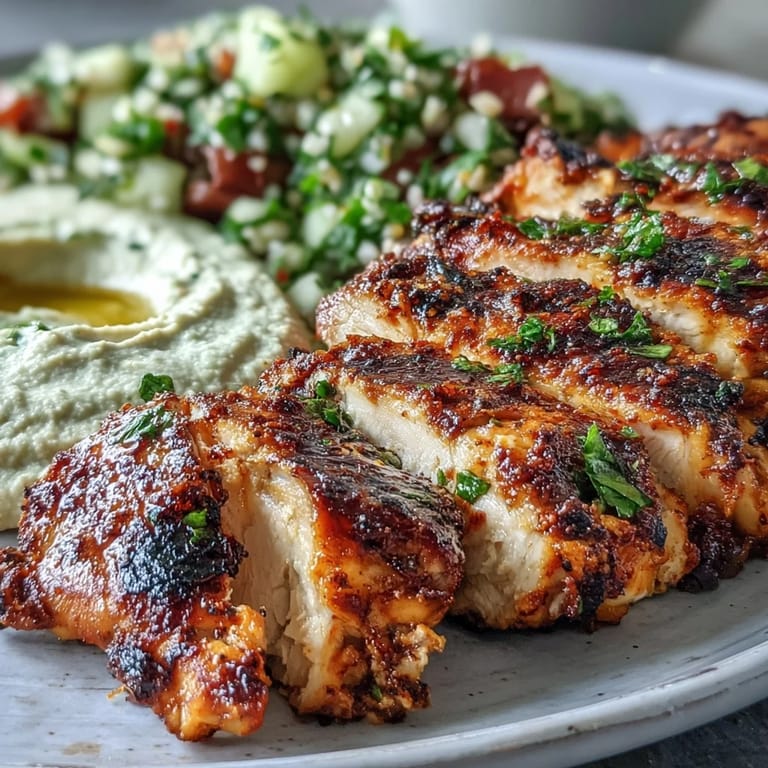
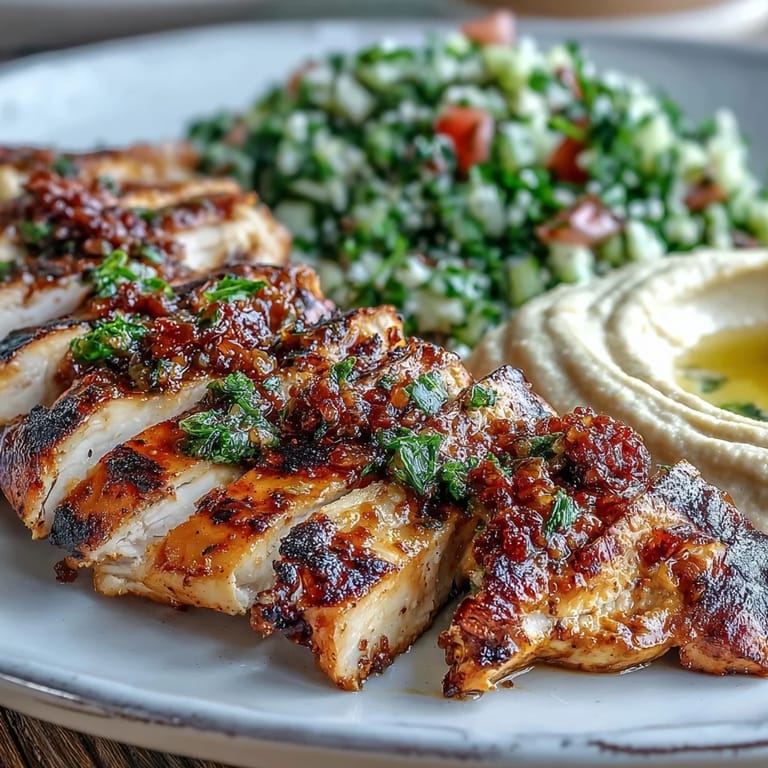
- Arrange sliced chicken alongside a generous scoop of hummus and a heap of tabbouleh, then squeeze fresh lemon over everything. A sprinkle of extra herbs or even a pinch of sumac makes it look intentional and tastes amazing.
 Save
Save One summer afternoon, a friend brought her kids over and her youngest asked why the salad was so green. I realized in that moment that kids don't usually see food that bright and alive outside of fruit, and when we all sat down to eat, she tried the tabbouleh and asked for seconds before touching anything else on her plate. That's when I understood this dish isn't just Mediterranean food—it's an invitation to eat something that actually tastes like sunshine.
When Your Grill Isn't Ready
Life happens, and sometimes you don't have access to a grill or the weather makes outdoor cooking impossible. A grill pan on the stove works almost as well if you get it properly hot and don't crowd the pan—you'll still get decent color and the marinade flavors develop the same way. An oven broiler is your third option: place the marinated chicken on a baking sheet, broil for about eight to ten minutes until cooked through, and while it's not quite the same as charred chicken, the taste is still excellent and the whole meal comes together just as quickly.
The Art of Perfectly Creamy Hummus
Making hummus at home teaches you something that store-bought versions don't reveal: the texture is everything. The cold water addition is the secret—some people use ice water because the temperature actually matters for achieving that cloud-like creaminess. I also learned the hard way that if your food processor is ancient or small, blending in batches works better than trying to force everything into one overworked batch. The moment the tahini and lemon juice emulsify with the oil, you'll see the hummus transform from grainy to glossy, and that's when you know you're close.
Variations and Flavor Additions
Once you understand the basic structure, this meal becomes a canvas for your own tastes and what you have on hand. I've added roasted red peppers to the hummus, replaced half the tabbouleh bulgur with farro for a chewier texture, and experimented with different herbs depending on the season. Some nights I drizzle pomegranate molasses over everything, and other times a sprinkle of sumac adds a pop of color and subtle tartness that makes people ask what makes it taste so different.
- Try mixing pomegranate molasses into the tabbouleh dressing for a sweet-tart complexity that changes everything.
- Roasted red peppers blended into the hummus add sweetness and visual drama without changing the fundamental recipe.
- A handful of toasted pine nuts sprinkled over the finished plate brings a nutty richness that completes the Mediterranean picture.
 Save
Save This meal has become my go-to for nights when I want to feel like I'm actually cooking something with intention, but I don't want to spend hours in the kitchen. Every time I make it, I'm reminded that simple ingredients treated with care taste infinitely better than complicated food made without attention.
Recipe Guide
- → Can I use chicken thighs instead of breasts?
Yes, boneless skinless chicken thighs work beautifully and may stay juicier. Adjust grilling time to 8-10 minutes per side and check that internal temperature reaches 165°F.
- → Is this dish suitable for meal prep?
Absolutely. The chicken, hummus, and tabbouleh all store well in airtight containers for 3-4 days. Keep components separate and assemble when ready to eat for best texture.
- → What can I substitute for tahini?
You can use sunflower seed butter or cashew butter as alternatives. The flavor profile will shift slightly, but the creamy consistency remains similar.
- → Can I bake the chicken instead of grilling?
Bake at 400°F for 20-25 minutes until cooked through. For char marks, finish under the broiler for 2-3 minutes per side.
- → How do I make this entirely gluten-free?
Substitute quinoa or cauliflower rice for the bulgur wheat in the tabbouleh. All other components including chicken and hummus are naturally gluten-free.
- → Can I make the hummus without a food processor?
Use a potato masher for chunky hummus, or mash chickpeas by hand then whisk vigorously with tahini and lemon juice. The texture will be rustic but still delicious.