 Save
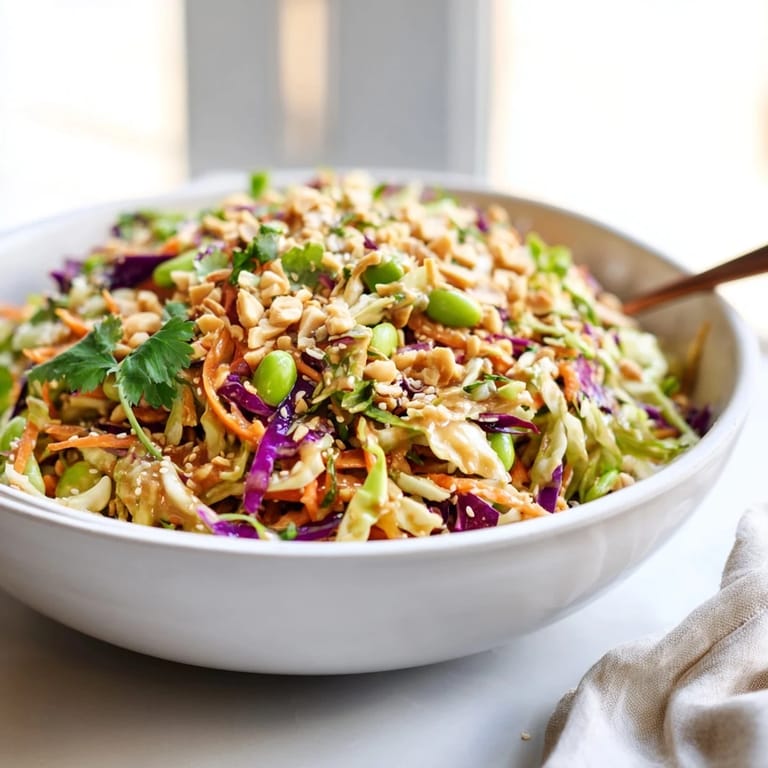
Save I was standing in my kitchen on a humid Tuesday evening, staring at a sad bag of wilting cabbage and wondering what I could possibly do with it that didn't involve boiling. My friend had just texted me a photo of her lunch, a riot of purple and orange from some restaurant downtown, and I thought, why not try something crunchy and bright for once? I pulled out my jar of peanut butter, grabbed the few vegetables that looked halfway decent, and started slicing without much of a plan. Twenty minutes later, I had a bowl of color in front of me that tasted better than anything I'd eaten all week. That accidental creation became my most requested salad.
The first time I brought this to a potluck, I watched someone who claimed to hate salads go back for thirds. She kept asking what was in the dressing, convinced there was some secret ingredient she couldn't identify. It was just peanut butter, lime, and a bit of ginger, but somehow the combination made everything taste like it came from a restaurant with a waitlist. I've made it for picnics, weeknight dinners, and even a birthday party where it sat next to much fancier dishes and still disappeared first. There's something about the crunch and the tang that makes people forget they're eating something healthy.
Ingredients
- Shredded green cabbage: The backbone of the salad, it stays crisp for hours and doesn't wilt like lettuce, plus it's cheap and lasts forever in the fridge.
- Shredded purple cabbage: Adds a pop of color and a slightly peppery bite that balances the sweetness of the dressing.
- Shredded carrots: I use pre-shredded ones when I'm lazy, but freshly grated carrots have more moisture and sweetness.
- Edamame: These little green gems add protein and a buttery texture, just make sure they're fully cooled or they'll make everything soggy.
- Red bell pepper: Slice it as thin as you can manage, the crunch and slight sweetness are what make every bite interesting.
- Scallions: They bring a mild onion flavor without the harshness, and the green parts look pretty scattered on top.
- Fresh cilantro: I know some people have the soap gene, but for the rest of us, cilantro makes this taste vibrant and alive.
- Creamy peanut butter: The star of the dressing, use the kind that's smooth and stirs easily, not the natural stuff that separates into oil and paste.
- Soy sauce or tamari: This adds the salty, umami depth that makes the dressing crave-worthy, tamari keeps it gluten-free if that matters to you.
- Rice vinegar: Milder and slightly sweeter than white vinegar, it adds tang without making your face pucker.
- Lime juice: Freshly squeezed is worth the extra thirty seconds, bottled lime juice tastes flat and bitter in comparison.
- Maple syrup or honey: Just enough sweetness to balance the salty and sour, I prefer maple because it blends faster.
- Toasted sesame oil: A little goes a long way, this is what gives the dressing that nutty, roasted aroma.
- Fresh ginger: Grate it finely or it'll be stringy, the warmth it adds is subtle but essential.
- Garlic: One clove is enough, any more and it'll overpower the peanut butter.
- Water: This thins the dressing so it coats instead of clumps, add it slowly until it looks like melted caramel.
- Roasted peanuts: Roughly chop them so every bite has a bit of crunch, they're the final flourish that makes it feel complete.
- Toasted sesame seeds: Optional but worth it for the extra nuttiness and visual appeal.
- Lime wedges: Serve them on the side so everyone can add an extra squeeze if they want more brightness.
Tired of Takeout? 🥡
Get 10 meals you can make faster than delivery arrives. Seriously.
One email. No spam. Unsubscribe anytime.
Instructions
- Prep the vegetables:
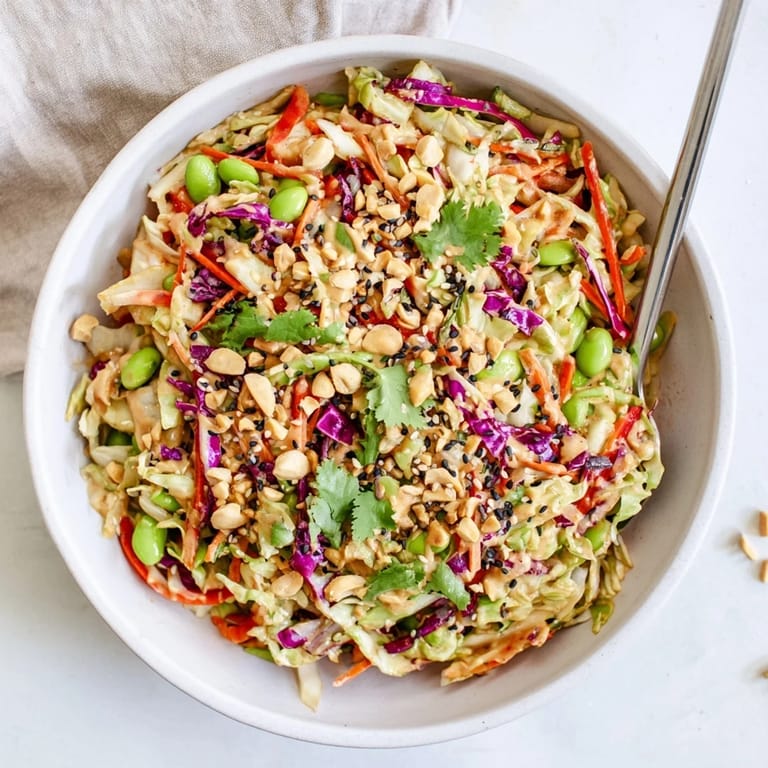
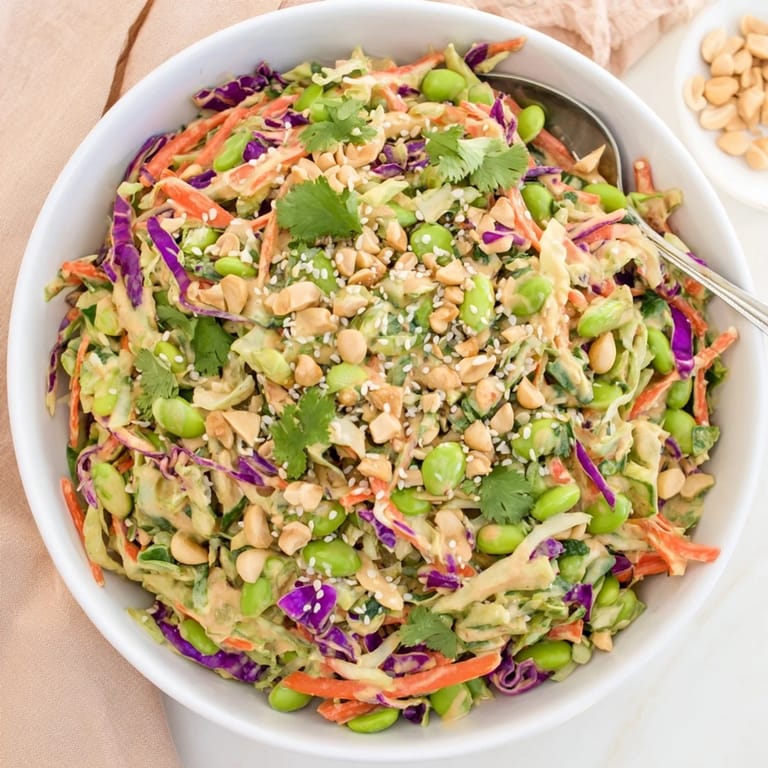
- Toss all your shredded cabbage, carrots, edamame, bell pepper, scallions, and cilantro into a large bowl. The colors should look like a sunset, if they don't, you've forgotten something.
- Make the dressing:
- In a smaller bowl, whisk together peanut butter, soy sauce, rice vinegar, lime juice, maple syrup, sesame oil, ginger, and garlic until it's smooth. Drizzle in water a tablespoon at a time, whisking constantly, until the dressing is thin enough to drizzle but thick enough to cling.
- Combine everything:
- Pour the dressing over the vegetables and toss with your hands or two big spoons until every shred is coated. Don't be shy, really get in there and mix it well.
- Top and serve:
- Transfer to a serving platter or bowls, then scatter the chopped peanuts and sesame seeds on top. Tuck a few lime wedges around the edges and serve right away while everything is still crunchy.
 Save
Save I remember making this on a Sunday afternoon when my sister came over unannounced and hungry. She's the kind of person who orders plain grilled chicken and steamed broccoli at restaurants, so I didn't expect her to love it. But she ate two bowls and asked me to text her the recipe before she left. A few weeks later, she told me she'd been making it every week and her coworkers were starting to ask questions. It's funny how something so simple can become someone else's new favorite thing.
How to Customize It
This salad is forgiving, which is exactly what you need on a busy weeknight. I've added snap peas when I had them, swapped in sunflower butter when my friend with the peanut allergy came over, and even stirred in leftover grilled tofu to make it more filling. The cabbage and carrots are the constants, but everything else can shift depending on what's in your fridge. If you like heat, a pinch of red pepper flakes in the dressing will wake everything up.
Storage and Leftovers
I've found that if you keep the dressing separate, this salad lasts up to three days in the fridge without getting limp. Store the chopped vegetables in one container and the dressing in a jar, then toss them together right before you eat. Once it's dressed, it's still good for a day or two, but the cabbage will soften and lose some of its crunch. The peanuts, though, should always go on top at the last second or they'll get chewy.
Serving Suggestions
I've served this alongside grilled chicken, tucked it into spring rolls, and even piled it on top of rice noodles for a cold noodle salad situation. It's one of those recipes that plays well with others, but it's also perfectly fine standing alone as lunch. If you're feeding a crowd, double the recipe and serve it in a big shallow bowl so everyone can see the colors.
- Try it with a fried egg on top for breakfast, the runny yolk mixes with the peanut dressing in the best way.
- Add some cooked rice noodles to make it more substantial and turn it into a full meal.
- If you have leftover rotisserie chicken, shred it and toss it in for extra protein without any extra work.
 Save
Save This salad has earned a permanent spot in my weekly rotation, not because it's fancy, but because it's reliable and never boring. I hope it becomes one of those recipes you make without thinking, the kind that feels like muscle memory and tastes like home.
Recipe Guide
- → Can I make this salad ahead of time?
Yes, you can prepare the vegetables and dressing separately in advance. Store them in airtight containers for up to 2 days. Combine them just before serving to maintain maximum crunchiness.
- → What can I substitute for peanut butter?
Almond butter, sunflower seed butter, or tahini work well as substitutes. Use the same quantity and adjust water as needed to reach the desired dressing consistency.
- → How do I make this gluten-free?
Simply use tamari instead of regular soy sauce, and verify that all other ingredients, including your peanut butter, are certified gluten-free.
- → What proteins pair well with this salad?
Grilled tofu, shredded rotisserie chicken, crispy chickpeas, or baked tempeh all complement the peanut dressing beautifully. Add 3-4 ounces per serving for a heartier meal.
- → How do I thin out the peanut dressing?
Add water gradually, one tablespoon at a time, while whisking until you reach your desired consistency. The dressing should pour easily but still coat the vegetables well.
- → Can I add heat to this salad?
Absolutely. Mix in fresh diced chili peppers, add sriracha to the dressing, or sprinkle red pepper flakes on top. Start with a small amount and adjust to your heat preference.