 Save
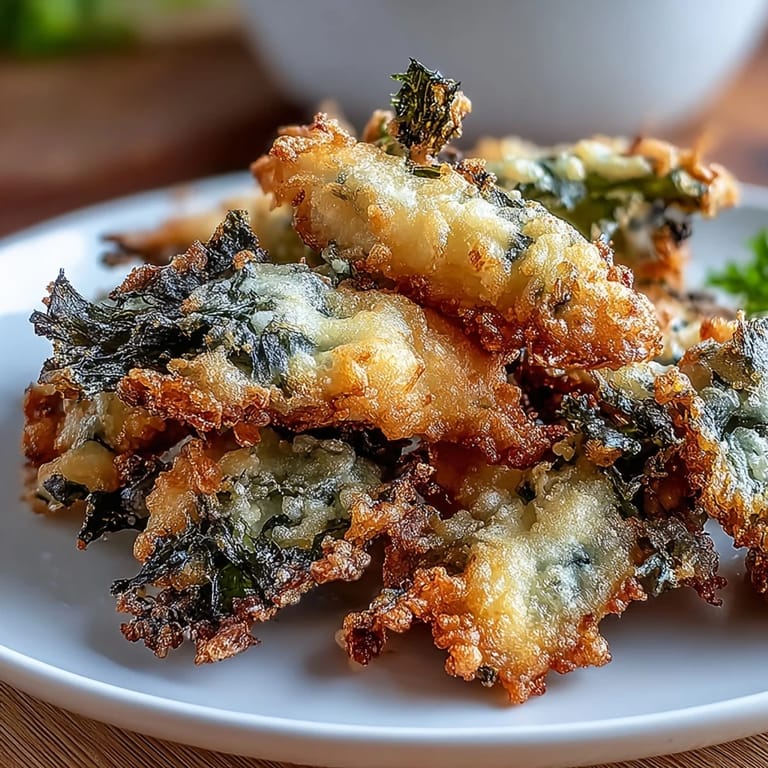
Save My first encounter with seaweed tempura happened on a humid Tokyo evening when a street vendor near Shibuya Station handed me a warm paper cone filled with these impossibly crispy, paper-thin rectangles. The nori shattered between my teeth, golden and salty, releasing that briny umami that made me pause mid-chew. I stood there for ten minutes asking questions in broken Japanese while the vendor laughed and kept frying, clearly amused by my obsession with what locals treated as casual finger food. That night changed how I thought about seaweed—not as something to wrap sushi, but as a vehicle for textural magic.
Years later, I served these at a casual dinner party when someone asked what the crunching sound was coming from the kitchen. Three guests followed me like curious cats, and within five minutes they'd demolished two batches while debating whether they tasted better with beer or tea. My friend Marcus declared it the best five-minute appetizer he'd ever encountered, completely unaware it had taken me longer to set the table than to fry everything. That's when I realized this recipe isn't just food—it's the kind of thing that brings people to the stove, wondering what magic is happening in the oil.
Ingredients
- Nori sheets, 8 large: These form your edible canvas; buy them from the sushi section, not the snack aisle, and store them in an airtight container so they stay crispy until you need them.
- All-purpose flour, 100 g: The foundation of your batter's structure, providing just enough gluten to create that delicate, shatterable crust without toughness.
- Cornstarch, 30 g: This is the secret to ethereal crispness; it absorbs less moisture than flour alone and creates those lacy, almost lacework edges.
- Baking powder, 1/2 tsp: A tiny amount that adds gentle lift and airiness, making each bite feel lighter than it has any right to be.
- Fine sea salt, 1/2 tsp: Use fine, not coarse, so it distributes evenly throughout the batter and doesn't create unexpected salty pockets.
- Ice-cold sparkling water, 200 ml: The carbonation is non-negotiable here; it creates microscopic bubbles that fry up into crispy pockets, and you must use it cold straight from the fridge.
- Egg yolk, 1 large, chilled: Just the yolk, which binds without making things heavy—keep it cold until the last second so the batter stays reactive in the hot oil.
- Neutral oil, 500 ml: Canola or sunflower work perfectly; avoid olive oil or anything with a strong flavor that would fight the nori's briny character.
- Soy sauce, 3 tbsp: The umami anchor of your dipping sauce, bringing that savory depth that makes people keep reaching for more.
- Mirin, 2 tbsp: A touch of sweetness that balances the salt and adds a subtle glaze-like quality to the sauce.
- Rice vinegar, 1 tbsp: Brightens everything without aggression, cutting through richness with gentle acidity.
- Sugar, 1 tsp: Helps carry the flavors and rounds out the sauce's profile so nothing tastes sharp or one-dimensional.
- Toasted sesame oil, 1/2 tsp: A whisper of this goes a long way; toasted specifically, as it has more personality than plain sesame oil.
- Spring onion, 1, finely sliced: Adds a fresh, slightly sharp note that cuts through the richness of the fried tempura beautifully.
- Sesame seeds, 1/2 tsp (optional but encouraged): They add visual texture and a subtle nutty note that makes people notice the care you put into this.
Tired of Takeout? 🥡
Get 10 meals you can make faster than delivery arrives. Seriously.
One email. No spam. Unsubscribe anytime.
Instructions
- Make your dipping sauce first:
- Combine soy sauce, mirin, rice vinegar, and sugar in a small bowl, stirring until the sugar dissolves completely. Stir in the sesame oil, then scatter the sliced spring onion and sesame seeds on top—this is done now, just sitting there getting better as flavors meld.
- Cut your nori into bite-sized squares:
- Stack all eight sheets and slice them into quarters with a sharp knife or kitchen scissors, creating 32 pieces that are perfect for single-bite dipping. These don't need to be perfect; irregular edges actually fry up crispier and look more rustic.
- Build your batter base:
- Whisk together flour, cornstarch, baking powder, and salt in a mixing bowl, making sure there are no lumps. This dry mixture is your foundation, and taking 30 seconds here prevents clumpy batter later.
- Create the batter magic:
- In a separate bowl, lightly beat only the chilled egg yolk, then pour in your ice-cold sparkling water and stir gently. Pour this wet mixture into your dry ingredients and mix with chopsticks or a fork using maybe five or six strokes total—the batter should look slightly lumpy and cloudy, almost like it's not quite mixed.
- Heat your oil to the right temperature:
- Use a deep, heavy-bottomed pan or small pot filled with neutral oil, bringing it to 180°C (350°F)—if you don't have a thermometer, drop a tiny piece of batter in and it should sizzle immediately and float to the surface within seconds. Wait until the oil is genuinely hot or your tempura will absorb oil instead of crisping.
- Fry in batches with intention:
- Dip each nori piece into the batter, letting excess drip away for just a second, then slide it into the hot oil immediately. Work in groups of four or five pieces so the oil temperature doesn't crash, frying each for about 30 to 45 seconds until the edges are lightly golden and the whole thing sounds crispy when you tap it with your spoon.
- Drain and serve while still warm:
- Lift each piece onto a paper towel-lined plate using a slotted spoon, letting excess oil drain away. Serve within a few minutes while they're still crackling, with your dipping sauce nearby and cold beer if you're feeling celebratory.
 Save
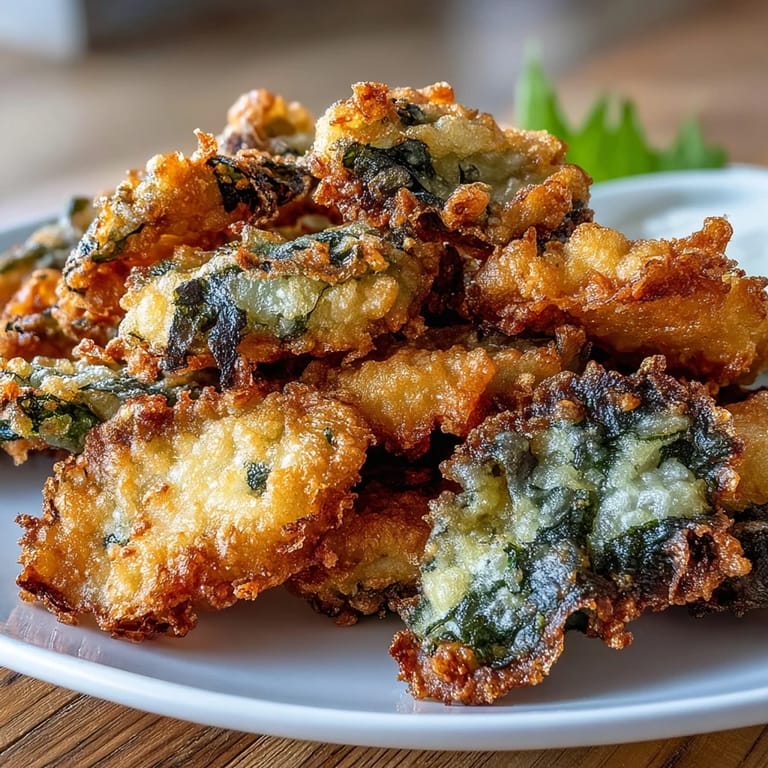
Save There's a particular satisfaction in watching someone's face when they realize how simple this actually is—they come in expecting complexity and find instead that five minutes of cooking can create something restaurant-quality. My neighbor still texts me photos of tempura she's made, and every message includes some variation of amazed surprise.
The Science Behind the Crispiness
That impossibly crispy exterior isn't luck; it's a combination of factors working in harmony. The cornstarch creates structure without developing gluten, the sparkling water provides carbonation that expands in the hot oil creating air pockets, and the egg yolk acts as a delicate binder without adding heaviness. The cold batter hitting hot oil creates contrast that seals the outside in milliseconds, trapping moisture inside while the outside shatters. I learned this the hard way by experimenting with different batters, discovering that warm water made everything soggy and regular water made things dense.
Temperature Really Matters Here
This is one of those rare recipes where equipment precision actually changes the outcome dramatically. Oil that's too cool will soak into the nori instead of crisping it, while oil that's too hot will burn the outside before the inside has time to soften slightly. I keep a kitchen thermometer clipped to the pot now, partly because I'm particular but mostly because it's the difference between mediocre and magnificent. Even if you're frying by feel, get your oil genuinely hot before you start—that confident sizzle is your cue.
Creative Variations Worth Trying
Once you master the basic technique, this opens into a world of possibilities that still feel distinctly Japanese and sophisticated. Try doubling the batter coating for extra crunch, or add a pinch of chili flakes to the batter itself for warmth. The dipping sauce transforms with additions too—fresh ginger, a squeeze of lemon, or even a tiny drop of toasted sesame oil in place of some of the regular oil changes everything while keeping the essence intact.
- Pair with cold Japanese beer, green tea, or sake for the complete experience—each works beautifully for different reasons.
- Make the dipping sauce up to two days ahead and store it in the refrigerator, bringing it to room temperature before serving.
- If you can't find mirin, substitute with a tablespoon of honey or a teaspoon of white sugar mixed with a teaspoon of water.
 Save
Save This recipe sits in that perfect place where it feels like you're doing something impressive but actually tastes like casual, joyful cooking. Serve it and watch people's faces light up.
Recipe Guide
- → How do I achieve a crispy tempura batter?
Use ice-cold sparkling water and mix batter gently to keep lumps. Fry immediately in hot oil at about 180°C for best crispiness.
- → Can I use other types of seaweed?
Yes, swap nori with other sturdy edible seaweeds but ensure they are dried enough for frying.
- → What oil is best for frying tempura?
Neutral oils like canola or sunflower are ideal for frying as they have high smoke points and won’t overpower flavors.
- → How can I make the dipping sauce more flavorful?
Add finely sliced spring onions and a touch of toasted sesame oil to enrich the soy-mirin mixture.
- → Is double coating the seaweed necessary?
Double coating adds extra crunch but is optional; it depends on your preference for thickness and texture.