 Save
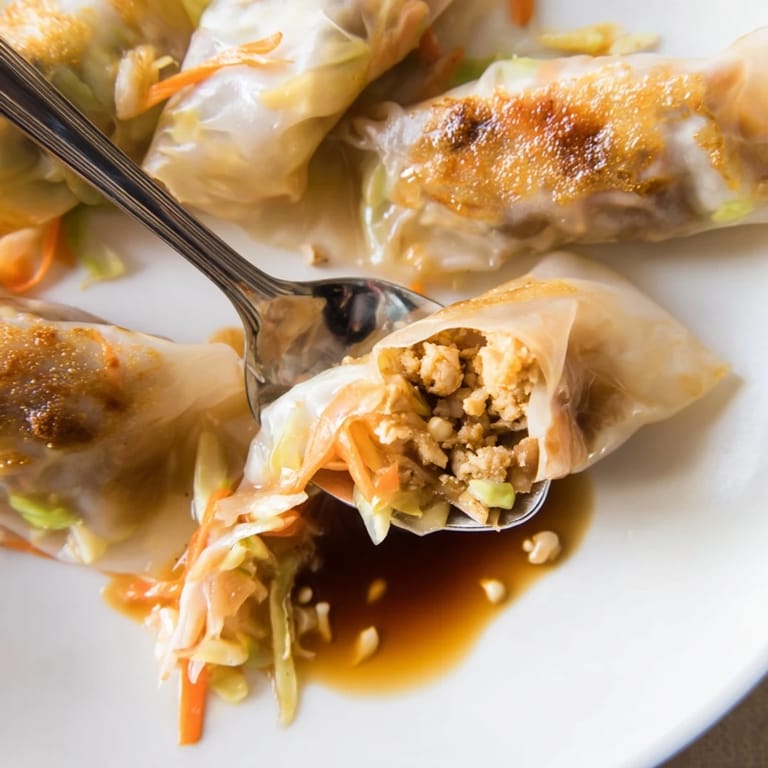
Save The first time I made these dumplings, I was trying to recreate something I'd eaten at a tiny restaurant tucked behind a market in the city. I couldn't stop thinking about how the rice paper crackled between my teeth, giving way to warm, fragrant filling. Three failed batches later, I finally got the rhythm: quick water dip, swift rolling, confident sizzle in the pan. Now I make them when friends drop by unexpectedly, and somehow they never last long enough to cool down.
I remember my sister's face when she bit into one and that satisfying crunch happened just as the warm ginger and sesame hit her mouth. She went quiet for a second, then immediately asked for the recipe. That moment taught me that good food doesn't need to be complicated—it just needs to be honest.
Ingredients
- Ground chicken or pork (200 g): Gives you that savory base that feels substantial without being heavy; tofu works beautifully if you're going vegetarian, just make sure it's firm so the filling holds together.
- Carrot and cabbage: These two are your textural backbone, adding sweetness and crunch that balance the salty, umami-forward seasonings.
- Spring onions, garlic, and ginger: This trio is where the magic lives—don't skip the fresh ginger, as it's what makes people ask where you learned to cook like this.
- Soy sauce and sesame oil: The classic pair that makes everything taste authentically good; use tamari if you need gluten-free, and don't be shy with the sesame oil's nuttiness.
- Rice paper wrappers (22 cm): These are delicate but forgiving once you get the water-dipping technique down—they transform from stiff circles into something you can actually fold.
- Vegetable oil for pan-frying: Medium heat is your friend here; too hot and they burn before the inside cooks, too cool and they just soak up oil instead of crisping.
- Dipping sauce ingredients: Rice vinegar gives you brightness, honey adds a whisper of sweetness, and that grated garlic clove makes it taste like someone who knows what they're doing made it.
Tired of Takeout? 🥡
Get 10 meals you can make faster than delivery arrives. Seriously.
One email. No spam. Unsubscribe anytime.
Instructions
- Mix the filling:
- Combine meat or crumbled tofu with carrot, cabbage, spring onions, garlic, ginger, soy sauce, sesame oil, sugar, and pepper in a bowl. Stir until everything is evenly distributed, so every bite of dumpling gets a bit of everything. You'll know it's ready when it looks cohesive but still has some texture.
- Prep your station:
- Set up three things in a row: warm water in a shallow dish, rice paper wrappers nearby, and a damp kitchen towel where you'll lay out each wrapper. Having this organized means you won't panic mid-fold.
- Soften and fill:
- Dip a rice paper wrapper into warm water for just six to eight seconds—it should be pliable but still slightly firm, never floppy. Lay it on the damp towel, add two tablespoons of filling to the center, then fold the bottom edge up and over, tuck in the sides, and roll tightly to seal. The key is confidence; hesitating makes them tear.
- Pan-sear to golden:
- Heat oil in a non-stick skillet over medium heat until it shimmers gently. Place dumplings seam-side down and listen for that satisfying sizzle—cook for two to three minutes until the bottom is golden and crispy. Flip carefully with tongs and cook the other side for another two to three minutes. Work in batches so they have room to breathe.
- Make the sauce:
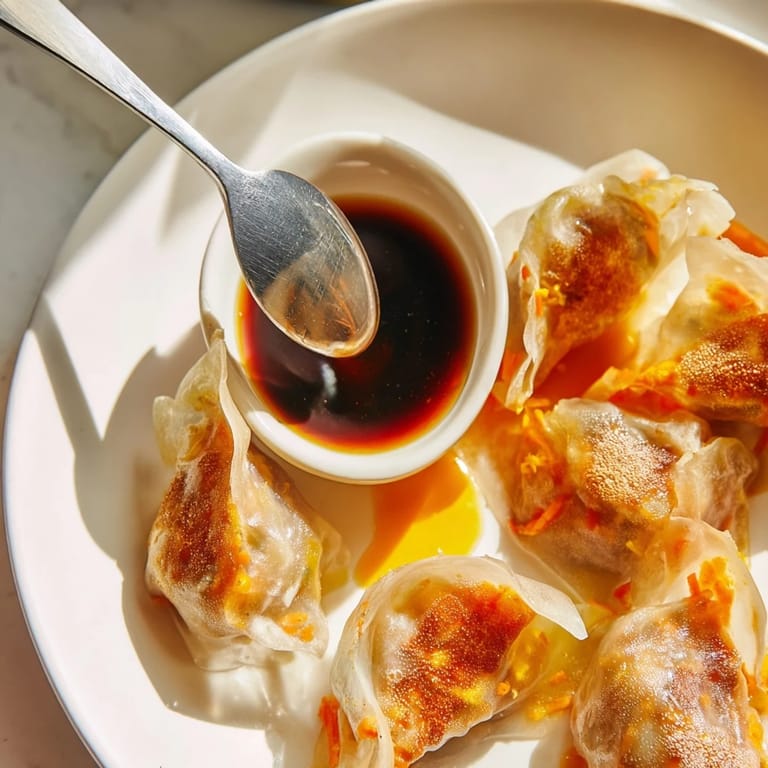
- Whisk soy sauce, rice vinegar, sesame oil, honey or maple syrup, grated garlic, and chili flakes together in a small bowl. The sauce should taste bright, salty, and just slightly sweet—taste as you go and adjust the vinegar or honey if needed.
- Serve immediately:
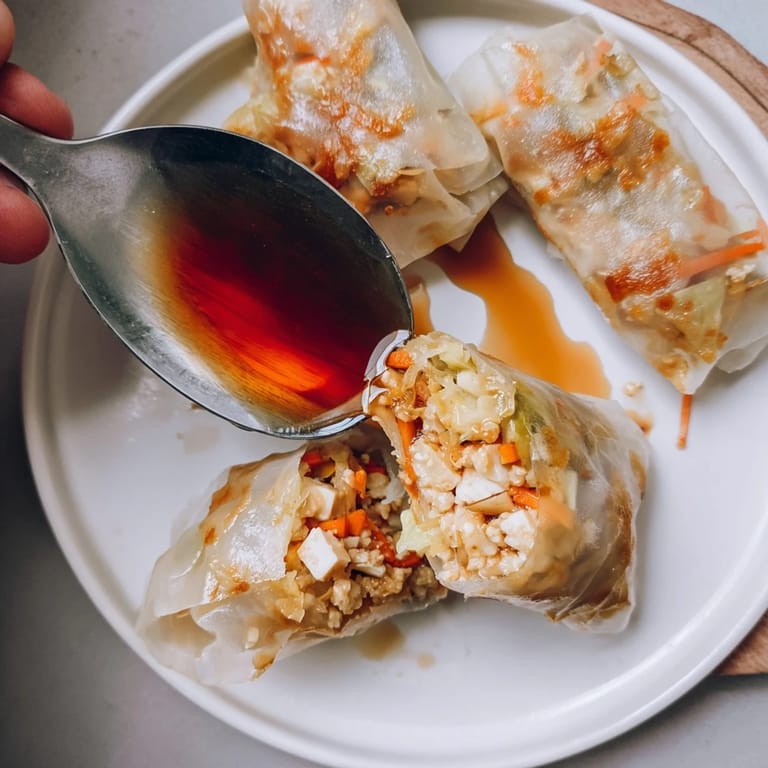
- Plate the dumplings while they're still warm and the exterior is at its crispiest, with the dipping sauce in a small bowl alongside. They're best enjoyed right away, while that textural contrast is still alive.
 Save
Save There's something almost meditative about folding dumplings, the repetition becoming a kind of flow state. My hands remember the motion now without my brain having to direct them, and I've found myself making these on quiet evenings just to have something warm to do.
The Filling: Your Creative Canvas
The filling recipe I've given you is a solid foundation, but it's really just a suggestion. I've made these with mushrooms when the farmer's market had beautiful ones, with bell peppers when someone in my kitchen couldn't eat garlic, with a mix of pork and shrimp when I wanted to feel fancy. The ratio that matters is roughly one part protein to two parts vegetables, bound together by the soy sauce and sesame oil. Everything else is intuition and what's in your refrigerator.
Why Rice Paper Works
I spent years avoiding rice paper because I thought it was too fussy, too easy to tear, too temperamental. But rice paper is actually forgiving once you understand it: it doesn't want to be overworked, and it needs respect for its delicacy. When it's the right softness, it folds like silk. When you respect the water temperature and duration, it never lets you down. The payoff is that crispy, translucent exterior that you can't replicate with wheat wrappers.
Building Layers of Flavor
The dipping sauce is where you get to add personality. I've made it with extra chili for friends who like heat, with lime juice instead of rice vinegar when I wanted something brighter, with a touch of peanut butter when I was feeling bold. The base of soy, vinegar, and sesame oil stays the same, but that's your blank canvas.
- Fresh herbs like mint or cilantro on the side make it feel restaurant-quality and add color to your plate.
- A squeeze of lime juice right before eating brightens everything and cuts through the richness.
- If someone arrives and you haven't made sauce yet, you can literally whisk one together in two minutes and still feel prepared.
 Save
Save These dumplings have become the thing I make when I want people to feel like I've taken care of them, because somehow crispy food that arrives at the table still steaming makes any moment feel special. They're proof that simple ingredients and a little bit of attention can turn everyday cooking into something memorable.
Recipe Guide
- → How do I soften rice paper wrappers without tearing?
Dip each wrapper in warm water for 6–8 seconds until just pliable but not limp, then place on a damp towel before filling.
- → Can I make the filling vegetarian or vegan?
Yes, substitute ground chicken or pork with firm crumbled tofu and use maple syrup in the dipping sauce for vegan options.
- → What is the best oil for pan-searing dumplings?
Use vegetable oil or any neutral high-smoke point oil to achieve a crispy, golden crust without burning.
- → How do I prevent dumplings from sticking to the pan?
Ensure the skillet is well-heated before adding dumplings and avoid overcrowding to maintain crispiness and easy flipping.
- → Can I add extra vegetables to the filling?
Absolutely, chopped mushrooms or bell peppers can be added for enhanced flavor and texture.