 Save
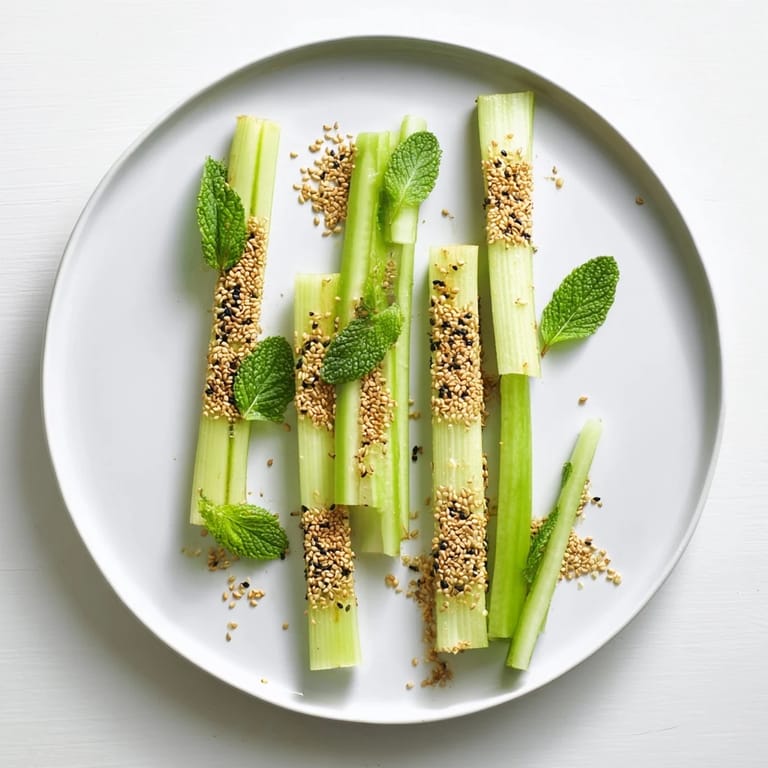
Save There's something almost meditative about arranging these crisp vegetable sticks on a plate, the way they catch the light like bamboo stalks in a garden. I discovered this dish on a quiet afternoon when I had guests arriving and barely any time, realizing that sometimes the most elegant solutions come from doing less, not more. The beauty of it isn't just visual—it's in that satisfying crunch when you bite down, the clean taste that feels like a reset button for your palate. What started as a last-minute improvisation became something I now make whenever I need to feel a little calmer, a little more intentional.
I remember making this for my mother's book club when everyone was exhausted from a long week, and watching their faces light up when they realized it was just vegetables—but somehow it felt special, even restful. Someone asked if there was a secret ingredient, and I had to laugh because the secret was simply listening to what the vegetables wanted to be. That moment taught me that food doesn't always need to be complicated to matter.
Ingredients
- Cucumbers: Use large, firm ones that snap when you bend them slightly, as they stay crispest longest and hold their structure beautifully on the plate.
- Celery stalks: Pick the palest ones from the center of the bunch—they're milder and more tender than the outer ones.
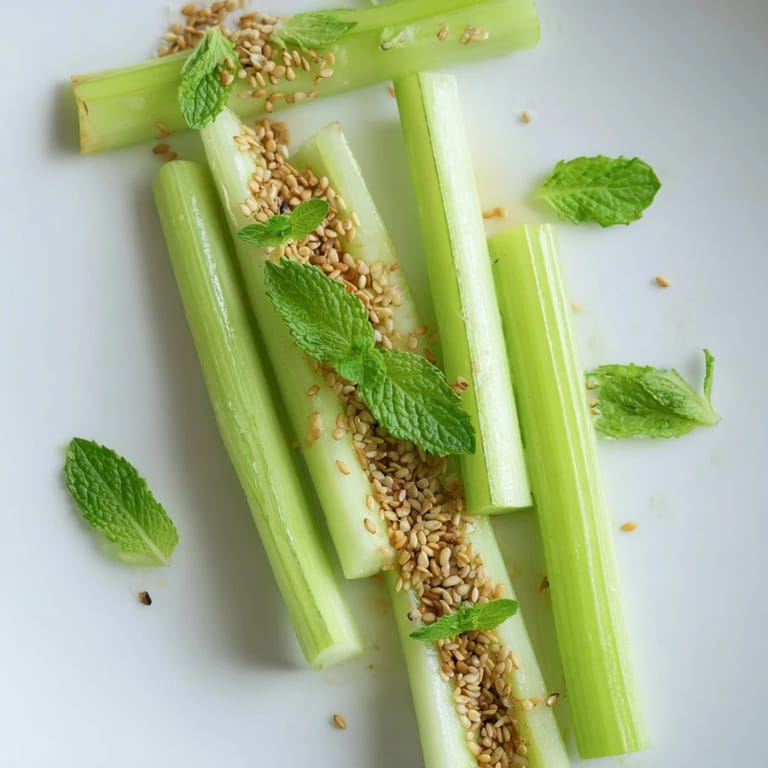
- Toasted sesame seeds: Toast them yourself in a dry pan for thirty seconds if you can; the difference in flavor is worth the tiny effort.
- Soy sauce or tamari: Keep it light and good quality, since there are so few ingredients, everything shows.
- Rice vinegar: A splash changes everything, softening the salt and adding a whisper of complexity.
- Fresh mint or basil: Don't chop it—leave leaves whole so they stay fragrant and beautiful.
Tired of Takeout? 🥡
Get 10 meals you can make faster than delivery arrives. Seriously.
One email. No spam. Unsubscribe anytime.
Instructions
- Wash and prepare:
- Run your vegetables under cold water, paying attention to any hidden grit in the celery grooves. Pat them dry gently so they're ready to cut cleanly.
- Trim with intention:
- Cut away the tough ends so every stick is uniform and ready to stand tall on your platter. This small step makes the whole presentation feel intentional.
- Cut into long sticks:
- Aim for 4 to 5 inch lengths, keeping them as even as possible so they look like they belong together. A sharp knife makes this feel effortless rather than frustrating.
- Arrange like a meditation:
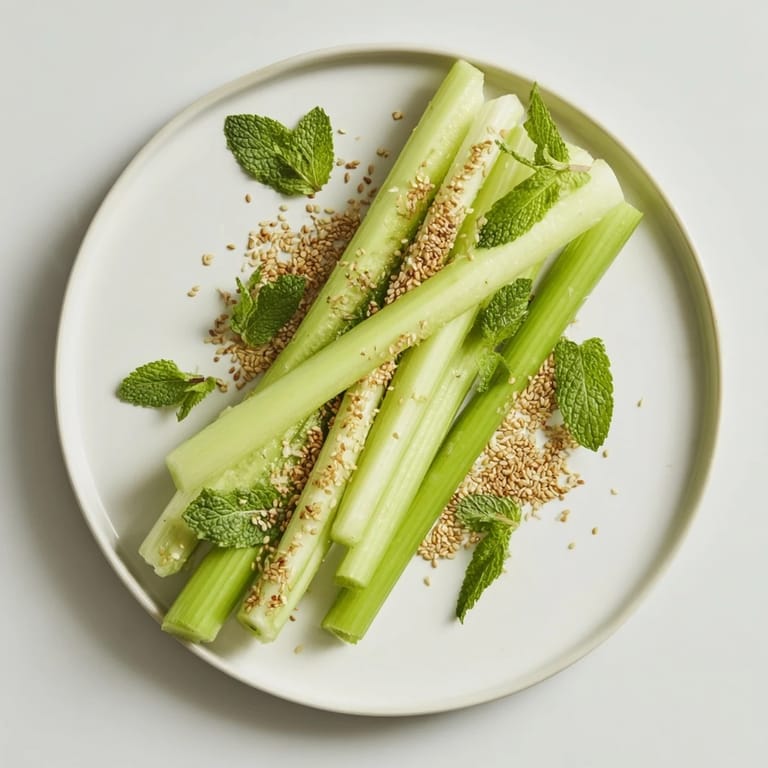
- Stand the sticks vertically and lay some horizontally to create balance and movement on your platter. There's no right way—let the vegetables guide you and trust what feels calm to your eye.
- Garnish if the mood strikes:
- Sprinkle sesame seeds where they catch light, tuck herb leaves between the sticks, and step back to see what you've made. Even if you skip this, the vegetables alone are enough.
- Chill and serve:
- Let everything sit in the cold for a few minutes before guests arrive, so every bite is crisp and refreshing. Offer the dipping sauce on the side so people can choose.
 Save
Save I'll never forget when my daughter asked if we could eat dinner like this more often—simple, colorful, nothing heavy. That question shifted something in how I think about feeding people.
The Art of Doing Less
This dish taught me that restraint in cooking is its own kind of skill. When you have only two vegetables and a handful of aromatics, every choice matters, and every element has to earn its place. I've learned that beginners often overthink appetizers, thinking they need to be fussy or complicated, but some of the most memorable bites come from respecting what's already beautiful about the ingredient itself.
Setting the Mood at Your Table
There's a reason this works so well at the start of a meal—it's a quiet invitation for people to slow down before everything else begins. The vertical arrangement creates unexpected visual interest on a flat plate, and the cool crunch wakes up your taste buds without overwhelming them. I've noticed guests often linger over this more than dishes that demand attention, which tells me something about the power of understatement.
Variations Worth Trying
Once you understand the bones of this recipe, you can play with it gently—add carrot sticks for color variation, layer in daikon for a different kind of bite, or even introduce thinly sliced radish if you want a little heat. The real art is knowing when to add something and when to leave well enough alone. I've found that one addition at a time keeps things balanced, and the best versions are often the ones that respect the original vision.
- Try daikon sticks alongside the cucumber and celery for a peppery finish that lingers.
- A sprinkle of nori flakes or furikake adds umami without changing the meditative feeling of the dish.
- Keep the dipping sauce as your constant—everything else is negotiable.
 Save
Save There's a quiet confidence that comes from serving something this simple and watching people genuinely enjoy it. Make this when you need to remember that cooking is really just about respect—for ingredients, for guests, and for the gift of a shared table.
Recipe Guide
- → How should I prepare the vegetables for the best crunch?
Soak the celery and cucumber sticks in ice water for about 10 minutes before serving to enhance their crispness.
- → What are good garnishes to complement the flavors?
Toasted sesame seeds add nuttiness, while fresh mint or basil leaves bring aromatic freshness and color contrast.
- → Can I substitute the dipping sauce?
Yes, use tamari for gluten-free needs or experiment with light soy sauce mixed with rice vinegar for a balanced tang.
- → Is this dish suitable for special diets?
Absolutely, it fits vegan, gluten-free, and low-carb diets thanks to its simple vegetable and seasoning components.
- → What tools are recommended for preparation?
A sharp knife, cutting board, and a serving platter are essential for evenly cutting and artfully arranging the sticks.