 Save
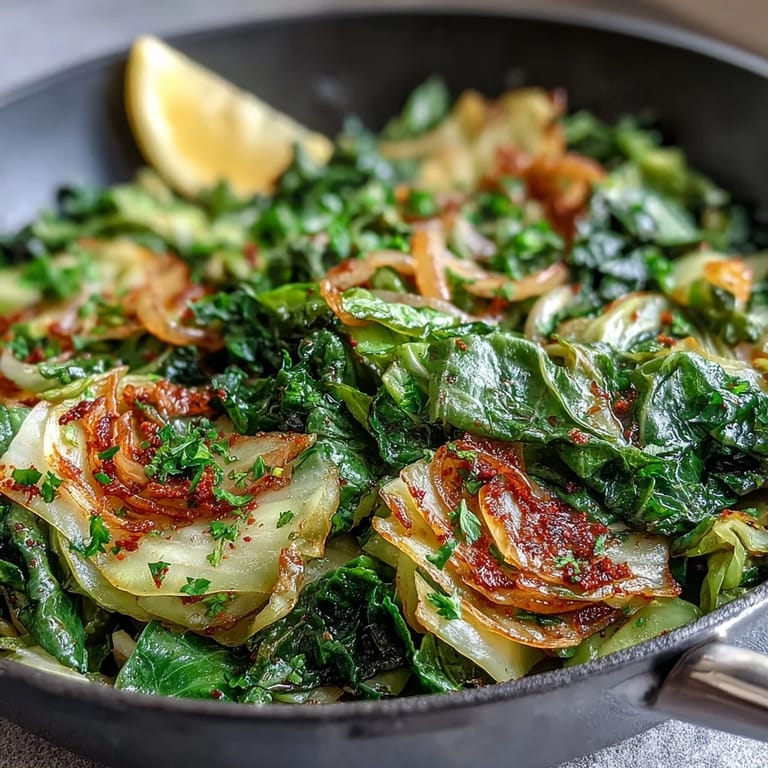
Save There's something about the smell of garlic hitting hot olive oil that makes you forget you're cooking something as humble as cabbage. I discovered this dish on a Tuesday evening when I had nothing but a sad head of green cabbage, half a red onion, and the kind of spice cabinet that whispers Mediterranean promises. Twenty minutes later, I had something that tasted like it came from a sun-soaked kitchen rather than my cluttered counter. The crispy-edged leaves and that warm spice warmth made me realize the best sides don't need complexity, just intention.
I made this for a potluck once where everyone brought something precious and complicated. I carried this skillet of sautéed cabbage almost apologetically, until someone asked for the recipe mid-bite, then another person, then half the room circled back to the nearly-empty pan. That's when I stopped feeling like I was bringing the supporting role and started understanding that sometimes the most memorable food is the kind that lets other things shine alongside it.
Ingredients
- Green cabbage: Thinly sliced is the move here because thin pieces soften just enough to taste cooked while keeping that slight resistance that makes eating it interesting.
- Red onion: The sweetness balances the earthiness, and it softens into almost nothing while still announcing itself in the flavor.
- Garlic: Fresh minced garlic goes in fast, so you need to watch it like a hawk for just thirty seconds or it turns bitter and the whole vibe shifts.
- Extra-virgin olive oil: This isn't the time to use the cheap stuff, the quality actually matters when it's one of only a handful of ingredients doing the heavy lifting.
- Ground cumin: Brings warmth and a slightly earthy note that makes you think Mediterranean without being obvious about it.
- Sweet paprika: The sweetness matters as much as the color, it adds a subtle richness that rounds everything out.
- Dried oregano: Dried works better here than fresh because it distributes more evenly and the heat releases all its oils.
- Red pepper flakes: Keep these optional and add them only if your crew likes heat, they can push the dish in a spicier direction fast.
- Fresh parsley: Chopped and scattered at the end, it brings brightness that makes you taste everything more clearly.
- Lemon wedges: The squeeze at the table lifts the whole dish, cutting through the richness with acid that wakes everything up.
Tired of Takeout? 🥡
Get 10 meals you can make faster than delivery arrives. Seriously.
One email. No spam. Unsubscribe anytime.
Instructions
- Warm your pan and oil:
- Heat olive oil in a large skillet over medium heat until it shimmers slightly and smells warm and grassy. This takes about a minute and you'll feel the difference when the pan is ready.
- Soften the onion:
- Add sliced red onion and sauté for two minutes, stirring occasionally, until the edges turn translucent and it starts to smell sweet. You're not browning it, just waking it up.
- Toast the garlic:
- Stir in minced garlic and cook for exactly thirty seconds until the smell fills your kitchen, then immediately move to the next step before it browns. This is the moment where timing actually matters.
- Add the cabbage:
- Dump in all the sliced cabbage and toss everything together, making sure every piece gets coated in the oil and garlic mixture. It'll look like a lot but trust it, the cabbage shrinks as it cooks.
- Season generously:
- Sprinkle cumin, paprika, oregano, red pepper flakes if you're using them, and a good pinch of salt and pepper over the cabbage. Stir well so the spices distribute evenly and nothing clusters in one spot.
- Sauté until tender-crisp:
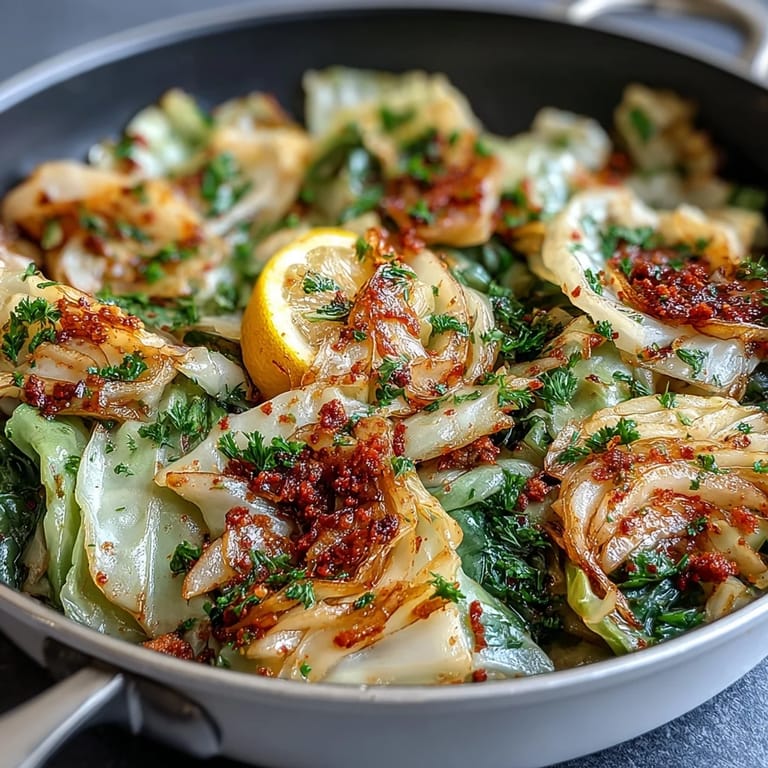
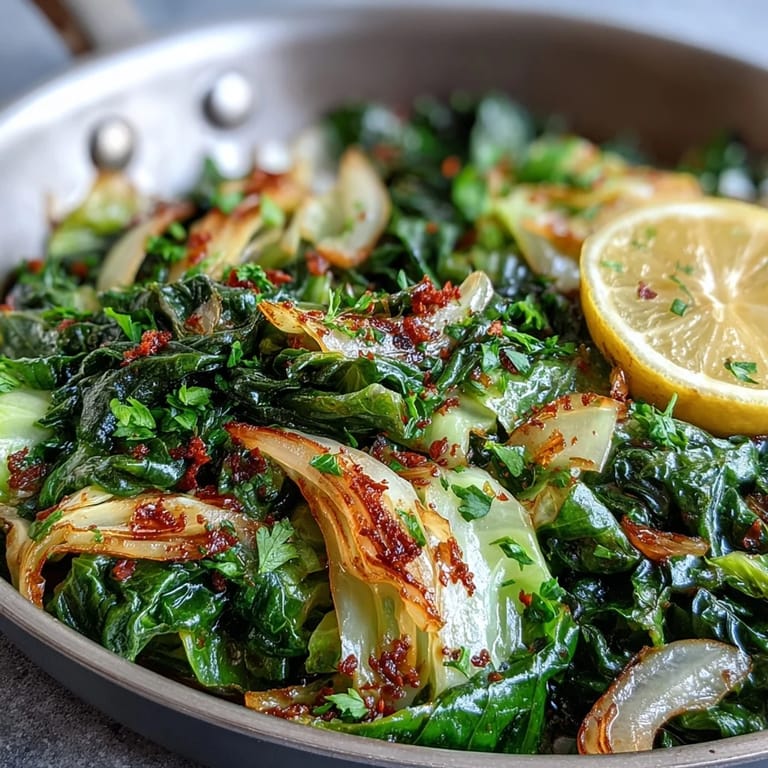
- Let it cook for six to eight minutes, stirring every minute or two, until the cabbage softens but still has slight resistance when you bite it and the edges start to caramelize into crispy bits. You'll notice the cabbage releases its moisture and then that moisture mostly evaporates, leaving behind concentrated flavor.
- Taste and adjust:
- Grab a piece and taste it, then decide if it needs more salt, more heat, or more brightness. This is your moment to make it exactly what you want.
- Finish and serve:
- Take the skillet off heat, scatter chopped parsley across the top, and bring it to the table with lemon wedges on the side. Let people squeeze lemon over their portion to taste.
 Save
Save My roommate used to eat this cabbage directly from the skillet with a fork while standing at the counter, calling it his secret weapon for when he felt like he needed something real and good but didn't have the energy for cooking. He'd make it happen in the time it took to boil water for pasta, and I realized that's when food becomes more than nutrition or technique, it becomes permission to take care of yourself quickly.
The Magic of Caramelization
Those crispy, golden edges that form on the cabbage are doing something important, they're concentrating the natural sugars and creating flavor that didn't exist before. The longer you let it cook without stirring, the more those edges develop, but you have to find the balance where the cabbage softens without turning to mush. Watch the edges more than the center, when you see brown spots forming and hear a slight crackle, that's when you know the timing is right.
Pairing and Serving Ideas
This cabbage sits happily next to grilled fish where the lemon connects the dishes, or alongside chicken where it acts as a bright counterpoint to richer flavors. It also works in a mezze spread where people can graze on it alongside bread, cheeses, and other small dishes. The versatility comes from the fact that the spices are warm enough to feel intentional but subtle enough not to fight with other foods.
Variations and Additions
The beauty of this recipe is how it welcomes small changes without losing its identity. Some nights I add halved cherry tomatoes in the last two minutes, letting them soften just enough to release their juice. Other times I use smoked paprika instead of sweet, which gives the whole thing a deeper, slightly mysterious quality that makes people ask what you did differently.
- Toss in cherry tomatoes in the last two minutes to add brightness and a slight acidity.
- Swap sweet paprika for smoked paprika if you want a deeper, more complex flavor profile.
- Add a pinch of cumin or a squeeze of fresh lemon juice mid-cooking if you want to adjust the balance while tasting as you go.
 Save
Save This cabbage has become the thing I make when I want to feel like I'm cooking something real but don't have the bandwidth for complexity. There's something grounding about eating vegetables that taste like they traveled somewhere warm, especially when they showed up in your pan in under twenty minutes.
Recipe Guide
- → Can I use a different type of cabbage?
Yes, red cabbage or savoy cabbage work well. Red cabbage may take slightly longer to cook and will turn the dish a purple hue. Adjust cooking time as needed for tenderness.
- → How do I prevent the cabbage from becoming too soft?
Cook over medium heat and stir occasionally rather than constantly. The cabbage should retain some bite and crispness. Aim for 6-8 minutes total cooking time and avoid overcrowding the pan.
- → What can I serve this with?
This pairs wonderfully with grilled fish, roasted chicken, lamb kebabs, or falafel. It also works well as part of a Mediterranean mezze platter alongside hummus, tabbouleh, and pita bread.
- → Can I make this ahead of time?
Yes, it can be prepared up to 2 days in advance. Store in an airtight container in the refrigerator and reheat gently in a skillet over low heat. The texture is best when freshly made, though.
- → What substitutions can I make for the spices?
Try smoked paprika for deeper flavor, or use za'atar for an authentic Mediterranean twist. Coriander or turmeric can replace cumin. If you prefer milder heat, omit the red pepper flakes entirely.
- → How do I slice the cabbage thinly?
Cut the cabbage in half, remove the core, then place cut-side down and slice into thin ribbons about 1/4-inch thick. A sharp chef's knife or mandoline works best for uniform slices.