 Save
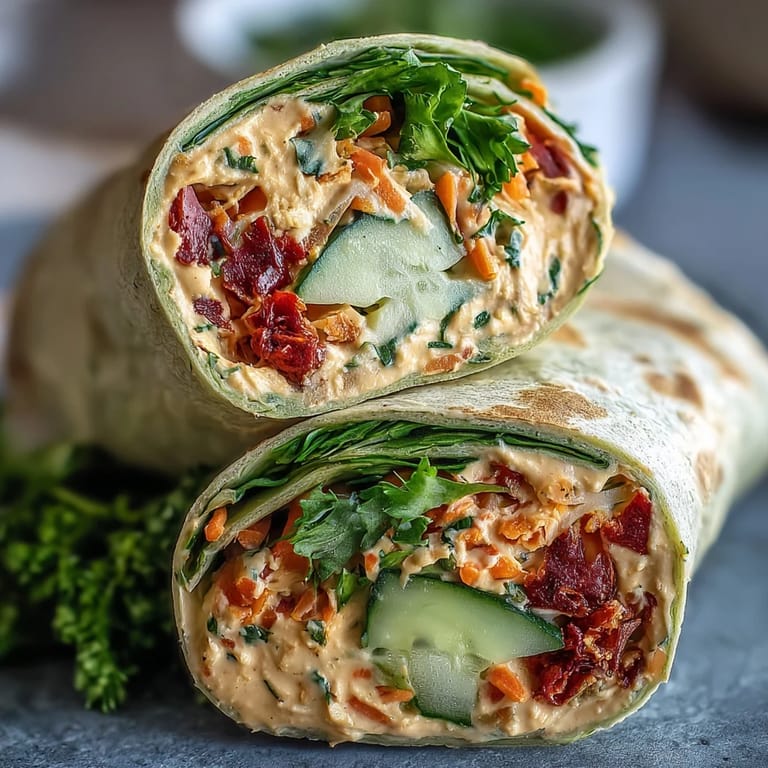
Save There's something about assembling wraps that feels less like cooking and more like creating art. One afternoon, my neighbor stopped by while I was layering vegetables into these sun-dried tomato hummus wraps, and she watched with genuine curiosity as the colors built up—deep reds, bright oranges, tender greens. She asked if it was complicated, and I realized in that moment how beautifully simple it truly is. This recipe came together when I was craving something that tasted restaurant-quality but required absolutely no cooking, just good ingredients and a little intention.
I made these for a picnic last spring, and what surprised me was how they became the thing people asked for seconds on, not the elaborate salad I'd spent hours preparing. My friend Marcus sat under the tree eating one slowly, savoring each bite, and said he'd been eating sad desk lunches for months without realizing what he was missing. That moment taught me that health food doesn't have to feel like punishment, and sometimes the simplest meals carry the most satisfaction.
Ingredients
- Canned chickpeas: Look for ones labeled no salt added if you can find them, and always rinse them well under cold water to remove the excess starch and sodium.
- Sun-dried tomatoes in oil: The oil they're packed in adds flavor to your hummus, so drain them but don't rinse away every drop of it.
- Tahini: This sesame paste is the secret to creating that impossibly creamy texture without any dairy whatsoever.
- Fresh lemon juice: Bottled works if you're in a pinch, but fresh lemon brings a brightness that's impossible to replicate.
- Garlic: One small clove is usually perfect, unless you're someone who loves garlic as much as I do.
- Olive oil: Use something you actually enjoy tasting, because it matters here.
- Smoked paprika and cumin: These spices whisper warmth and depth without shouting, which is exactly what this hummus needs.
- Whole wheat or spinach tortillas: Larger tortillas are easier to work with than small ones, and spinach adds both nutrition and visual interest.
- Fresh vegetables: Buy them as close to serving time as possible so they stay crisp and full of life.
Tired of Takeout? 🥡
Get 10 meals you can make faster than delivery arrives. Seriously.
One email. No spam. Unsubscribe anytime.
Instructions
- Make the hummus magic:
- Combine your drained chickpeas, sun-dried tomatoes, tahini, lemon juice, minced garlic, olive oil, and spices in a food processor. Start blending and listen for the moment it goes from chunky to creamy, adding water a tablespoon at a time until it reaches that perfect spreadable consistency. Taste it and adjust seasonings, because this is your moment to make it exactly right.
- Prepare your assembly station:
- Lay out a tortilla on a clean, dry surface and spread the hummus in the center, leaving about an inch of space around the edges so nothing squeezes out when you roll it. Think of this space as your safety margin.
- Layer with intention:
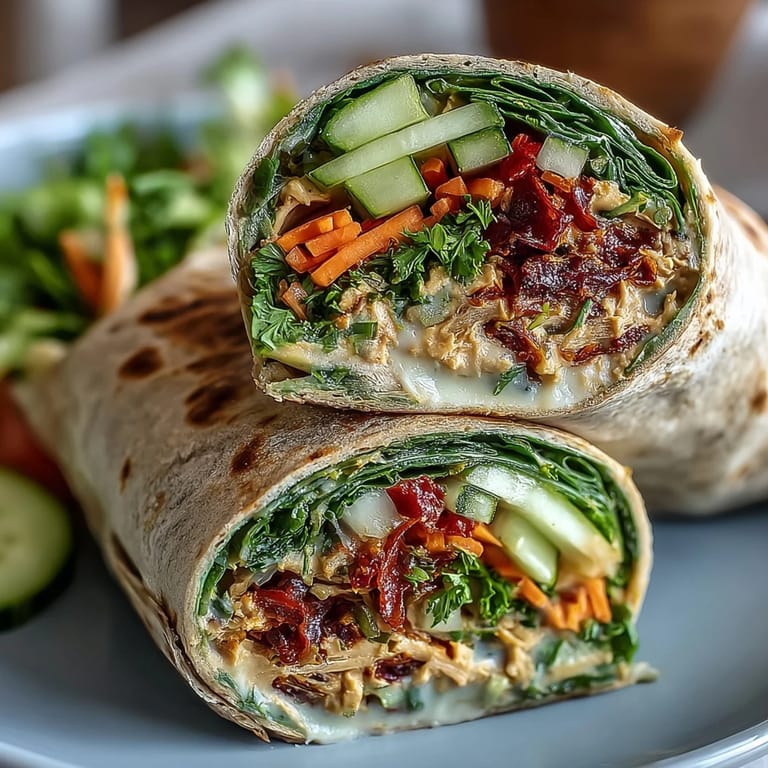
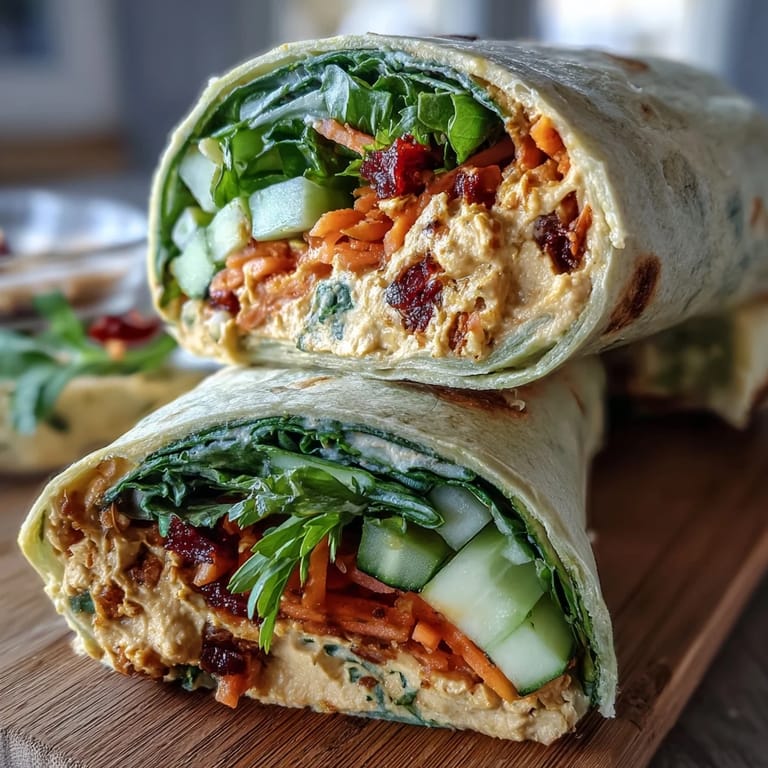
- Start with spinach as your base layer, which acts like a barrier, then add carrots, cucumber, bell pepper, red onion, and fresh parsley. Season lightly with salt and pepper, and remember that you can always add more flavor but you can't take it out.
- Roll with confidence:
- Fold in the sides first, then roll from the bottom upward in one smooth motion, keeping pressure even but not aggressive. A tight roll holds together beautifully, while a loose one falls apart at the first bite.
- Finish and serve:
- Slice diagonally if you want them to look beautiful, or straight across if you prefer simplicity. Eat immediately while everything is still crisp, or wrap individually in parchment paper for grab-and-go meals.
 Save
Save 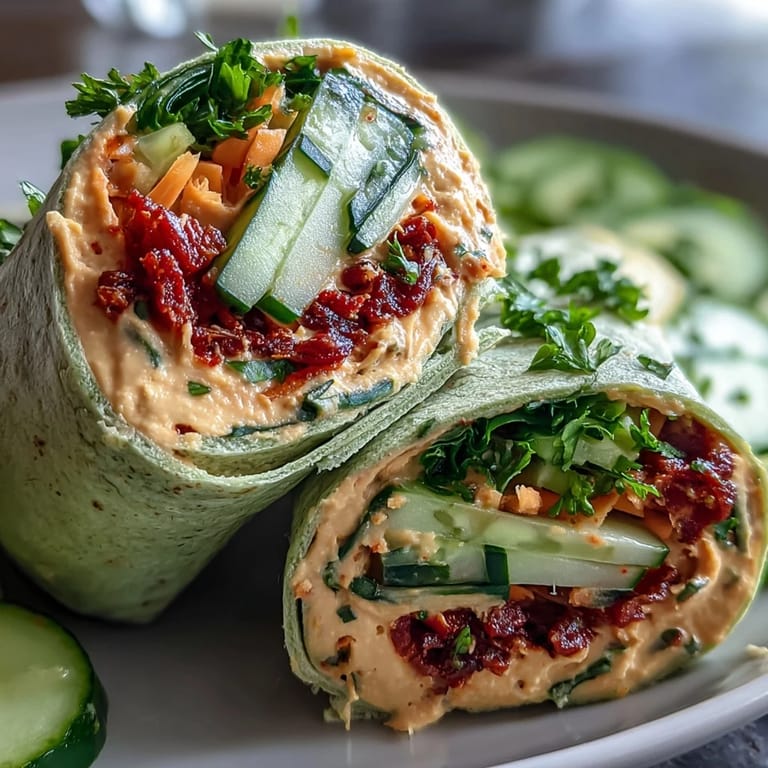 Save
Save These wraps became my daughter's favorite lunch box item, which felt like a small victory in the constant battle to pack healthy meals she'd actually enjoy. She told me once that she liked bringing them because her friends would ask what smelled so good, and there was something proud in her voice when she explained that her mom had made it. Food has this quiet power to make people feel seen and cared for, and that's really what's happening here.
Making the Hummus Truly Creamy
The difference between hummus that's merely good and hummus that tastes restaurant-quality comes down to patience and the water ratio. Start your food processor with all the dry ingredients and let them blend for a solid minute before you add water, so the chickpeas actually break down completely rather than just getting chopped up. The texture should be like soft frosting, spreadable but still holding its shape, and this usually means three to four tablespoons of water total, though every food processor is slightly different.
Vegetable Prep Timing
The vegetables should be cut fresh on the day you're eating these wraps if possible, because there's a real difference between a cucumber cut hours ahead and one sliced twenty minutes before serving. I learned this the hard way after prepping everything the night before and ending up with wraps that felt slightly limp by lunch. Julienne your cucumber thinly, slice your peppers and onion paper-thin, and shred your carrots just before assembly.
Storing and Traveling With Wraps
These wraps are genuinely portable and travel well, which makes them perfect for picnics, work lunches, or road trips. Wrap each one individually in parchment paper rather than plastic wrap, which creates condensation and will make them soggy. They'll keep happily in the fridge for up to 24 hours, though I've noticed the vegetables stay crisper if you store them in an airtight container rather than leaving them exposed.
- Pack any extra hummus in a small container in case someone wants to add more flavor at eating time.
- If you're traveling more than an hour, freeze a small ice pack or water bottle and tuck it near the wraps to keep everything cool.
- These wraps can be customized endlessly, so feel free to swap vegetables based on what you have and what you're craving.
 Save
Save 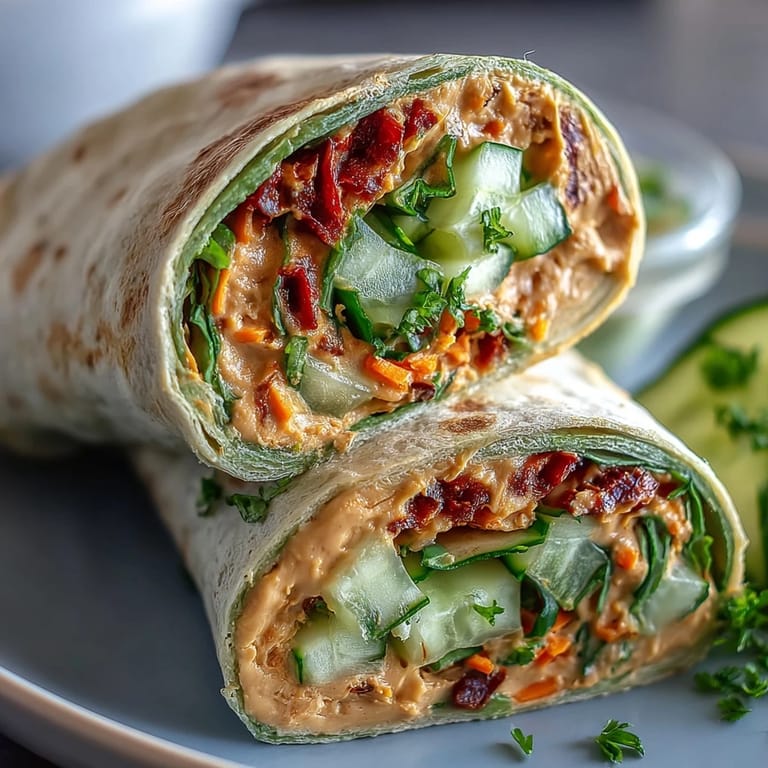 Save
Save These wraps are proof that the best meals are often the simplest ones, built from good ingredients and assembled with care. Every time you make them, you're creating something nourishing and beautiful that tastes like you paid attention.
Recipe Guide
- → How long can I store these wraps in the refrigerator?
These wraps maintain their texture and flavor for up to 24 hours when wrapped tightly in parchment paper or foil. For best results, store components separately and assemble just before serving to prevent sogginess.
- → Can I make the sun-dried tomato hummus ahead of time?
Yes, the hummus stores beautifully in an airtight container in the refrigerator for 4-5 days. The flavors actually develop and intensify over time, making it perfect for meal prep. Add a splash of water when reheating to restore creaminess.
- → What can I substitute for tahini?
If you need a tahini alternative, try sunflower seed butter for a similar creamy texture or use extra olive oil and a tablespoon of Greek yogurt for non-vegan versions. Cashew butter also works well, though it will slightly alter the Mediterranean flavor profile.
- → How do I prevent the wraps from getting soggy?
Layer vegetables in the center and avoid overfilling. Place a barrier like cheese or extra hummus between the tortilla and watery vegetables like cucumber. Pat sliced vegetables dry with paper towels before assembling and consume within 24 hours.
- → Can I add protein to these wraps?
Grilled chicken, baked tofu, or chickpea salad make excellent additions. Sliced hard-boiled eggs, crumbled feta cheese, or leftover roasted vegetables also work well. Add these protein sources between the hummus layer and fresh vegetables.
- → What dipping sauces pair well with these wraps?
Tahini sauce, tzatziki, or a simple lemon-herb vinaigrette complement the Mediterranean flavors. Balsamic glaze or extra virgin olive oil with fresh herbs also enhances the vegetable components while maintaining the light, fresh profile.