 Save
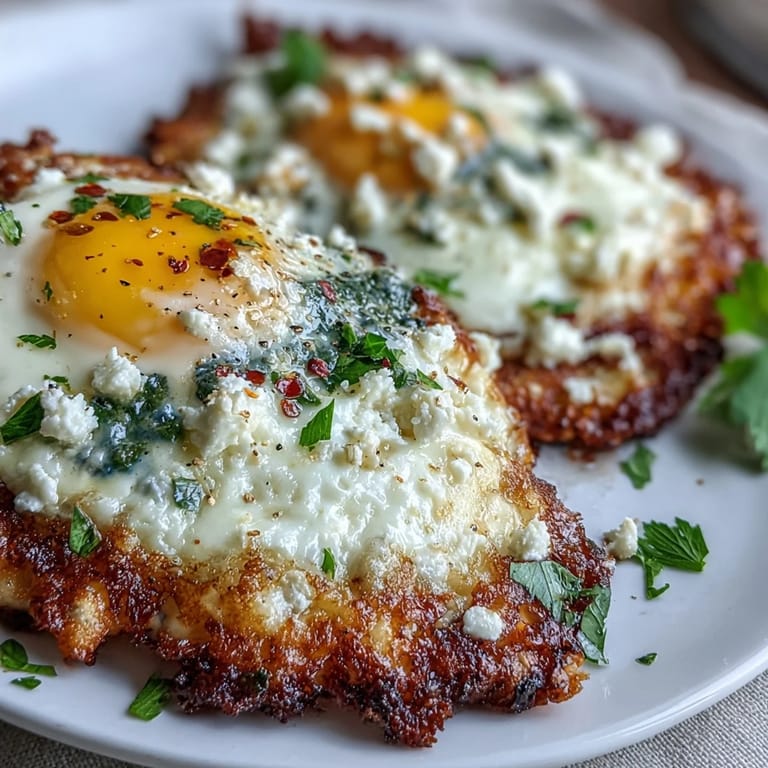
Save The sound of feta hitting hot oil is something I discovered completely by accident one Sunday morning when I was too lazy to make a proper frittata. I had a block of feta aging in the fridge and eggs that needed using, so I just crumbled the cheese into the pan first. That sizzling noise as the edges turned golden and crisp changed my entire breakfast rotation forever. Now it's the one thing my guests actually ask for when they stay over.
Last summer my sister came to visit and I made these for her on the balcony. She took one bite, went completely silent for about thirty seconds, then asked if I could teach her the technique right then and there. We ended up making three batches that morning because she wanted to get it exactly right. Now she sends me photos every time she makes them for her family, each time with slight variations she's discovered on her own.
Ingredients
- 100 g feta cheese, crumbled: Use a good quality Greek feta if you can find it because the higher milk content creates better crispy edges and I've learned the hard way that cheaper brands sometimes just burn instead of goldenning beautifully
- 2 large eggs: Room temperature eggs work best here since they cook more evenly and I always pull mine out about twenty minutes before I start cooking
- 1½ tbsp olive oil: Extra virgin gives you that lovely Mediterranean flavor but regular olive oil has a higher smoke point if you're worried about burning
- ¼ tsp freshly ground black pepper: The pepper really wakes up all the flavors and I recommend grinding it right before you cook
- ¼ tsp red pepper flakes: These are totally optional but I love the gentle heat they add and they look gorgeous sprinkled on top
- 2 slices of crusty bread, toasted: The bread is essential for soaking up those runny yolks and catching all the crispy cheese bits that escape
- Fresh herbs: Parsley, dill, or chives add a bright fresh note that cuts through the richness and makes everything taste lighter
Tired of Takeout? 🥡
Get 10 meals you can make faster than delivery arrives. Seriously.
One email. No spam. Unsubscribe anytime.
Instructions
- Get your oil shimmering:
- Heat the olive oil in a nonstick skillet over medium heat until you see it shimmering and moving across the pan surface, which tells you it's ready for the cheese
- Build your feta nests:
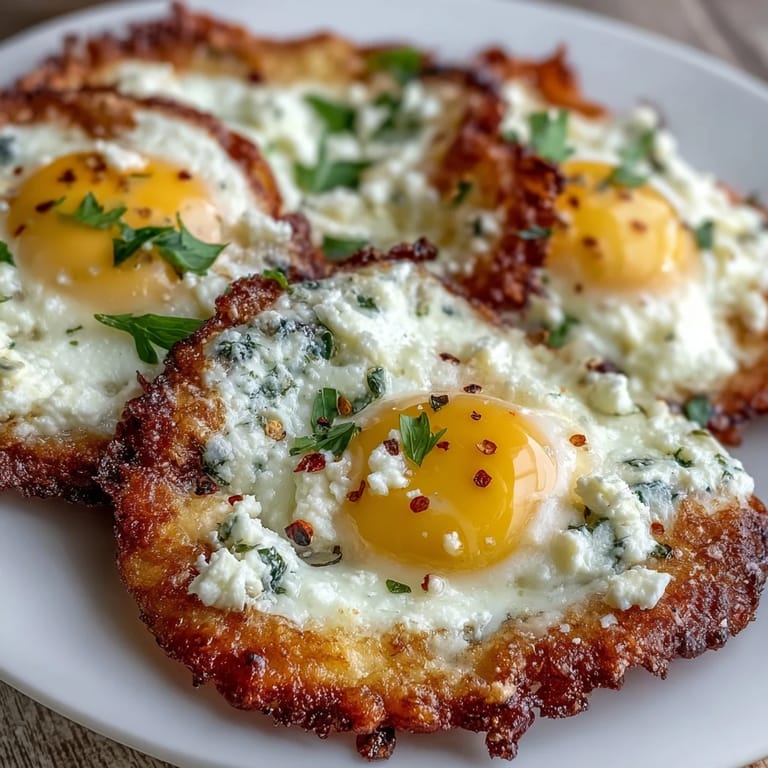
- Sprinkle the crumbled feta evenly into two small mounds in the pan, each about the size of what you imagine a fried egg would be, creating little nests that will cradle the eggs
- Wait for the sizzle:
- Let the feta cook undisturbed for 1-2 minutes until you hear it sizzling and see the edges turning golden brown and crispy
- Add the eggs:
- Gently crack one egg directly into the center of each feta nest, trying not to break the yolks, and watch as the whites start spreading over the hot cheese
- Cover and cook:
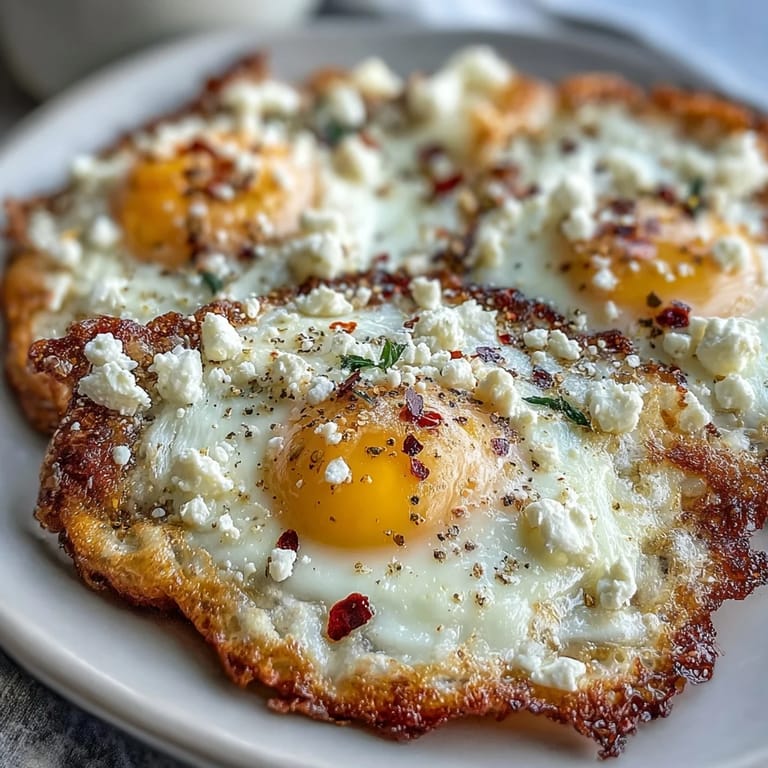
- Place a lid on the pan and cook for 3-4 minutes until the whites are completely set but the yolks still jiggle when you shake the pan gently
- Season and serve:
- Sprinkle with black pepper and red pepper flakes if using, then slide everything onto plates immediately with your toasted bread
 Save
Save This recipe became my go-to when I moved into my first apartment and had barely any cooking equipment but wanted to impress friends at brunch. There's something deeply satisfying about serving something that looks so sophisticated but requires basically zero technique. The way people's eyes light up when they break that yolk and it mixes with the salty feta is pure kitchen magic.
Making It Your Own
I've discovered that this technique works beautifully with goat cheese or even a blend of feta and mozzarella if you want something slightly milder. The key is using a cheese that can hold its shape when it hits the hot oil. Sometimes I add thinly sliced tomatoes or avocado on the side because the fresh, cool elements balance the warm, crispy, salty main event perfectly.
Serving Suggestions
While toasted crusty bread is classic, I've also served these over sautéed greens for a lighter dinner option or alongside a simple green salad dressed with lemon vinaigrette. The combination works for breakfast, lunch, or even a quick dinner when I don't feel like cooking anything elaborate. A glass of fresh orange juice or herbal tea makes it feel like a proper Mediterranean café moment.
Common Questions
The most frequent question I get is whether the feta gets too salty. Because it's being cooked and crisped rather than just sprinkled on top, the saltiness mellows slightly while the texture transforms completely. If you're particularly sensitive to salt, you can briefly soak the feta in cold water before using it, though I personally love the intense salty crunch as it is.
- Make sure your pan is properly heated before adding any ingredients
- Don't overcrowd the pan because the feta needs space to crisp properly
- Have everything ready before you start because once the eggs go in, everything moves quickly
 Save
Save There's something wonderfully uncomplicated about this dish that just makes mornings feel better. The combination of textures and flavors is absolutely worth the minimal effort, and it's become the kind of recipe I can make half-awake and still feel proud of serving.
Recipe Guide
- → Why does the feta get crispy?
When feta cheese hits hot olive oil, the moisture evaporates quickly while the proteins and fats caramelize, creating golden edges that become satisfyingly crisp and crunchy.
- → Can I make the yolks firmer?
Yes, simply cover the pan and cook for 1-2 minutes longer. The trapped steam will cook the yolks through while keeping the whites tender.
- → What other cheeses work well?
Goat cheese creates a similar effect, or try blending feta with mozzarella for a milder flavor with excellent melting properties.
- → Do I need a nonstick pan?
A nonstick skillet is highly recommended as the feta tends to stick to stainless steel or cast iron, making it difficult to achieve that perfect crispy edge without breaking apart.
- → What can I serve alongside?
Toast crusty bread for soaking up the runny yolks, add a fresh green salad, or pair with sliced tomatoes and avocado for a complete meal.