 Save
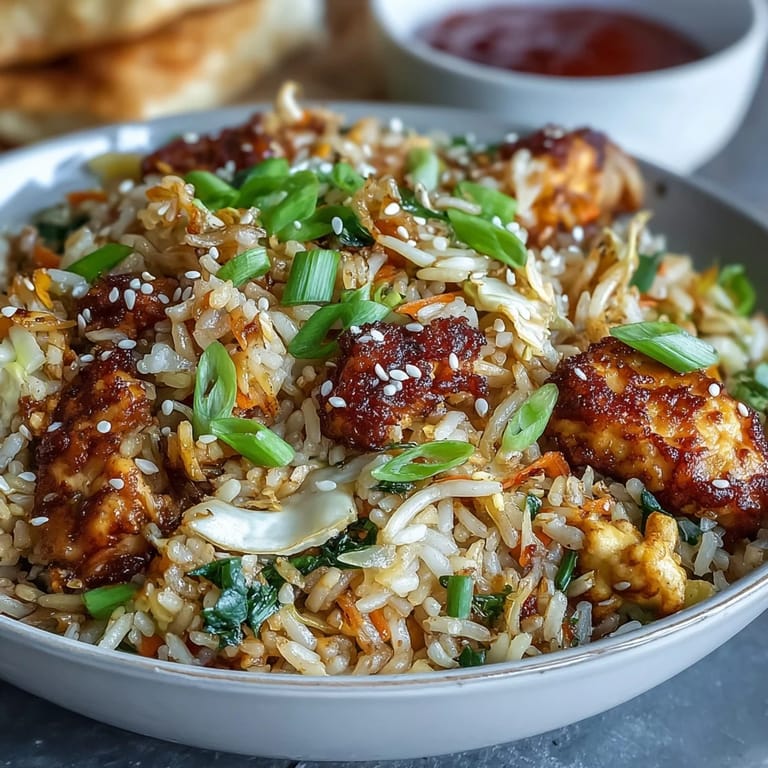
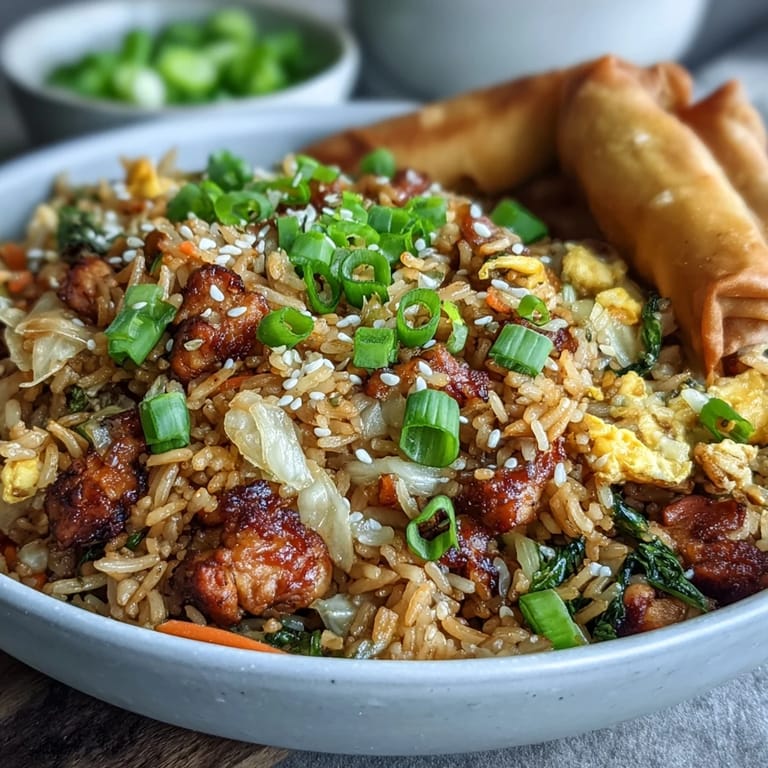
Save There's something magical about the sizzle of a hot wok that makes everything feel like you're cooking in a proper restaurant kitchen, even if you're just standing at your home stove in regular clothes. One weeknight, I was craving the crispy, savory satisfaction of an egg roll but didn't want the mess of deep frying, so I threw together this fried rice version instead—and honestly, it hit all those same flavor notes without any of the guilt. The beauty of this dish is how it captures that golden, umami-rich character of the real thing, but in a way that's faster and actually lets you taste every component. My family started requesting it constantly, which is always the sign that a recipe has earned its place in the rotation.
I made this for my neighbor who was going through a rough time, and she ate three servings while we sat on my kitchen counter talking. There's something about a warm, comforting bowl of fried rice that says I'm thinking of you without being fussy or requiring fancy plating. She told me later that it was exactly what she needed—simple, nourishing, and made with actual care.
Ingredients
- Ground chicken (500 g): Use freshly ground if possible, or buy it and cook it the same day for the best texture—avoid letting it sit raw in the fridge for more than a day.
- Eggs (2 large): Room temperature eggs scramble more evenly and create silkier ribbons throughout the rice.
- Green cabbage (3 cups, thinly sliced): The backbone of the egg roll flavor; slicing it thin means it cooks fast and stays slightly crisp.
- Carrots (1 cup, julienned): Julienning them into thin matchsticks ensures they cook quickly and distribute flavor evenly.
- Bean sprouts (1 cup, optional): Add them at the very end if you want extra crunch and authentic egg roll texture.
- Green onions (4, sliced): Split these into white and green parts; the whites go in early for deep flavor, greens go on at the end for brightness.
- Garlic and ginger (3 cloves and 1 tbsp): Mince both finely so they release their oils quickly and perfume the entire pan in seconds.
- Cold cooked jasmine rice (3 cups): Day-old rice is non-negotiable—fresh rice turns mushy and sticky, defeating the whole purpose of fried rice.
- Soy sauce (3 tbsp): Use tamari if you're cooking for anyone avoiding gluten; the flavor is virtually identical.
- Oyster sauce (1 tbsp): This is where the savory, slightly sweet egg roll character lives; it's worth seeking out the good stuff.
- Toasted sesame oil (1 tsp): A tiny amount goes a long way—it's intensely aromatic and burns easily, so add it at the end.
- White or black pepper (1/2 tsp): White pepper blends more invisibly, but black pepper adds nice visible flecks.
- Chili flakes (1/2 tsp, optional): Only add if you want gentle heat; it won't overpower the dish.
- Rice vinegar (1 tbsp): This subtle acid brightness prevents the dish from feeling heavy or one-note.
- Vegetable oil (2 tbsp, divided): High heat oil that won't burn; peanut oil is even better if you have it.
- Toasted sesame seeds and extra green onions for garnish: These final touches add crunch and a fresh pop that elevates everything.
Tired of Takeout? 🥡
Get 10 meals you can make faster than delivery arrives. Seriously.
One email. No spam. Unsubscribe anytime.
Instructions
- Get your mise en place ready:
- Slice your cabbage thin, julienne the carrots, mince your garlic and ginger, and slice those green onions separating the whites from the greens. Having everything prepped before you turn on the heat is the difference between controlled cooking and frantic scrambling.
- Brown the chicken until it's golden:
- Heat 1 tbsp oil in your wok or large skillet over medium-high heat until it shimmers slightly. Add the ground chicken and break it apart with your spatula as it cooks, about 4–5 minutes, until no pink remains and the edges start to catch color. Season lightly with salt and pepper, then transfer it to a clean plate.
- Bloom your aromatics in the same pan:
- Add the remaining 1 tbsp oil to the pan and let it heat for just 10 seconds. Immediately add your minced garlic, ginger, and the white parts of the green onions—you'll smell this shift happening, a wave of fragrance that tells you everything is working right.
- Stir-fry your vegetables until they're crisp-tender:
- Add the cabbage and carrots, tossing constantly for 3–4 minutes so they cook evenly but stay slightly crunchy. The cabbage will soften and sweeten just slightly, which is exactly what you want. If using bean sprouts, add them in the last minute.
- Scramble your eggs right in the pan:
- Push the vegetables to the side, crack your eggs into the empty space, and let them sit for just a few seconds before scrambling them gently. Once they're barely set, stir them into the vegetables so you get silky ribbons throughout.
- Combine everything with the rice and chicken:
- Add your cold rice and the cooked chicken back to the pan, breaking up any clumps gently with your spatula. This is where the dish starts looking like actual fried rice rather than a collection of ingredients.
- Season and toss with your sauce ingredients:
- Pour in the soy sauce, oyster sauce, sesame oil, rice vinegar, white pepper, and chili flakes all at once. Toss everything constantly for 2–3 minutes so the seasonings coat every grain of rice evenly and the heat brings out all the flavors.
- Taste and adjust before serving:
- This moment matters—taste a small spoonful and ask yourself if it needs more salt, more soy sauce, or a bit more sesame oil. Different brands taste different, so trust your palate over the recipe.
- Plate and garnish with sesame seeds and fresh green onions:
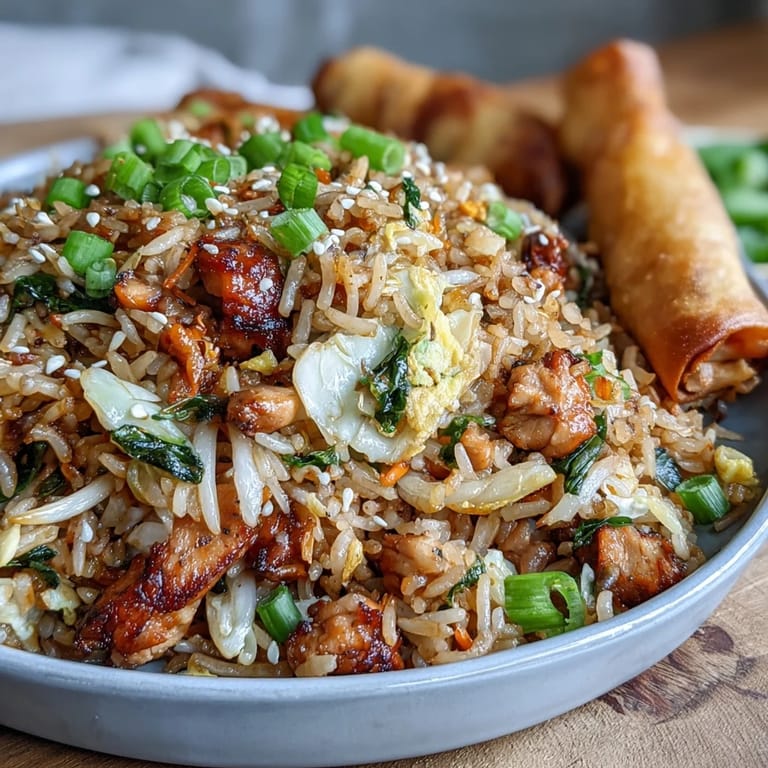
- The sesame seeds add crunch and nuttiness, while the fresh green onion tops add brightness that makes the whole dish sing.
 Save
Save This dish became my go-to when I realized I could make restaurant-quality food without feeling like I was slaving away in the kitchen. There's a confidence that comes from pulling together flavors that complex in under an hour.
Why This Works as an Egg Roll Alternative
Egg rolls work because they balance crispy texture, savory fillings, and slight sweetness all in one bite. This fried rice version respects that blueprint by starting with crispy vegetables, building umami through soy sauce and oyster sauce, and letting the ginger and garlic provide that warm, aromatic character that makes egg rolls addictive. You lose the crispy wrapper, sure, but you gain something equally satisfying: texture from the rice itself, the eggs, the vegetables, and the sesame seeds on top. The cabbage stays tender-crisp, the chicken stays moist, and the whole thing tastes like you've been stir-frying for your life.
Making It Your Own
The beauty of fried rice is that it's built on technique rather than absolutes, which means you can play with it. Ground turkey or pork work just as well as chicken, and honestly, I've made this with a combination when I had both in the freezer. For a vegetarian version, crumbled extra-firm tofu pressed and pan-fried until golden is legitimately good—the texture mimics ground meat better than you'd expect, and it soaks up all those sauces beautifully. Adding a handful of peas or corn at the vegetable stage brings sweetness that echoes the egg roll experience, or you can go heavier on ginger if you want a spicier profile. The point is, once you understand why each ingredient is there, you can adjust without fear.
Serving Suggestions and Storage
This fried rice stands completely on its own but gets even better with a small bowl of sriracha or sweet chili sauce on the side for dipping or drizzling. It's substantial enough to be a full dinner, though some fresh cucumber slices or a simple green salad alongside it feels nice for balance. Leftover fried rice actually tastes better on day two after the flavors have melded—reheat it in a dry wok or skillet over medium heat, adding just a teaspoon of sesame oil and a splash of soy sauce to refresh it. It keeps beautifully in an airtight container in the fridge for up to four days, and honestly, eating it cold straight from the container is not a crime.
- Make extra rice deliberately: If you know you're making this dish, cook extra rice and let it cool completely before storing it—you're setting yourself up for fried rice success.
- Don't skip the cold rice step: Warm rice releases moisture and steam that prevents proper frying; cold rice fries up with better texture every single time.
- Taste as you go: Every stove, every pan, every brand of soy sauce is slightly different, so adjust your seasonings based on what you're actually tasting, not what the recipe says.
 Save
Save This is one of those recipes that tastes like you spent hours cooking but actually respects your time and energy. Once you nail the technique, you'll find yourself making it constantly because it's genuinely delicious, faster than ordering takeout, and somehow even more satisfying.
Recipe Guide
- → Why use day-old rice?
Cold, day-old rice has less moisture content, which allows it to fry up crispier and prevents the grains from sticking together during high-heat stir-frying.
- → Can I use fresh rice instead?
Fresh rice can work if spread on a baking sheet and chilled in the refrigerator for at least 2-3 hours to dry out slightly before cooking.
- → What protein alternatives work well?
Ground turkey, pork, or crumbled tofu make excellent substitutes. Cook times remain similar across these protein options.
- → How do I prevent vegetables from becoming soggy?
Stir-fry over medium-high heat and cook vegetables just until tender-crisp, about 3-4 minutes. Avoid overcrowding the pan.
- → Can this be made gluten-free?
Replace soy sauce with tamari and ensure your oyster sauce is labeled gluten-free. All other ingredients naturally contain no gluten.
- → How long do leftovers keep?
Store in an airtight container in the refrigerator for up to 4 days. Reheat in a skillet over medium heat for best texture.