 Save
Save My neighbor Jin knocked on my door one Tuesday evening holding a container of leftover beef she'd made for her kids. The smell alone pulled me into the hallway. She laughed at my expression and said it was just ground beef and gochujang, nothing fancy, but I ate it cold standing at my counter and couldn't stop thinking about it. The next week I tried making my own version, and now it's the dinner I crave when I need something fast, bright, and satisfying all at once.
I made this for my brother when he came to visit last spring, skeptical because he usually orders the same three things everywhere. He went quiet after the first bite, then asked if I'd written the recipe down. Now he texts me photos of his own versions, each one with different toppings, and it's become this small thing we share across states.
Ingredients
- Lean ground beef: The base of the bowl, it soaks up the gochujang sauce without getting greasy, and I've learned that draining any excess fat keeps the texture just right.
- Vegetable oil: A neutral oil that can handle the high heat needed to get the garlic and ginger fragrant without burning.
- Garlic, minced: Fresh garlic makes all the difference here, the jarred stuff just doesn't bloom the same way in hot oil.
- Fresh ginger, grated: The sharpness cuts through the richness of the beef and adds a brightness you can't fake with powder.
- Gochujang: This Korean chili paste is the soul of the dish, sweet and funky and spicy all at once, and I always keep an extra jar in the fridge.
- Soy sauce: Adds the salty, umami backbone that ties everything together.
- Brown sugar: Balances the heat and helps the sauce caramelize slightly as it cooks down.
- Rice vinegar: A splash of acidity that keeps the flavors from feeling flat or one note.
- Toasted sesame oil: Just a little at the end adds a nutty, roasted aroma that makes the whole kitchen smell incredible.
- Green onions: Half go into the beef for flavor, the rest on top for a fresh, sharp bite.
- Carrot and daikon radish, julienned: These pickle quickly and add crunch and tang that contrast beautifully with the rich beef.
- Rice vinegar, sugar, and salt for pickling: A simple brine that transforms raw vegetables into something bright and addictive in minutes.
- Cooked white rice: The foundation of the bowl, I like it warm and a little sticky to soak up the sauce.
- Cucumber and radish, thinly sliced: Cool, crisp, and refreshing, they balance the heat and add texture.
- Kimchi, chopped: Adds funk, spice, and a fermented depth that makes every bite more interesting.
- Toasted sesame seeds: A final sprinkle for nuttiness and a little visual flair.
Tired of Takeout? 🥡
Get 10 meals you can make faster than delivery arrives. Seriously.
One email. No spam. Unsubscribe anytime.
Instructions
- Pickle the vegetables:
- Whisk together the rice vinegar, sugar, and salt in a small bowl until everything dissolves, then toss in the carrot and daikon. Let them sit while you cook, they'll soften and sour just enough to cut through the richness later.
- Cook the aromatics and beef:
- Heat the oil in a large skillet over medium high heat, add the garlic and ginger, and let them sizzle for about a minute until your kitchen smells amazing. Crumble in the ground beef, breaking it apart with a wooden spoon, and cook until browned and no longer pink, about 5 to 6 minutes.
- Add the sauce:
- Stir in the gochujang, soy sauce, brown sugar, rice vinegar, and sesame oil, mixing until the beef is coated and glossy. Let it cook for another 2 to 3 minutes so the sauce thickens and clings to every piece of meat.
- Finish the beef:
- Pull the skillet off the heat and stir in half the green onions. Taste it now, this is the moment to adjust heat or salt if you need to.
- Build the bowls:
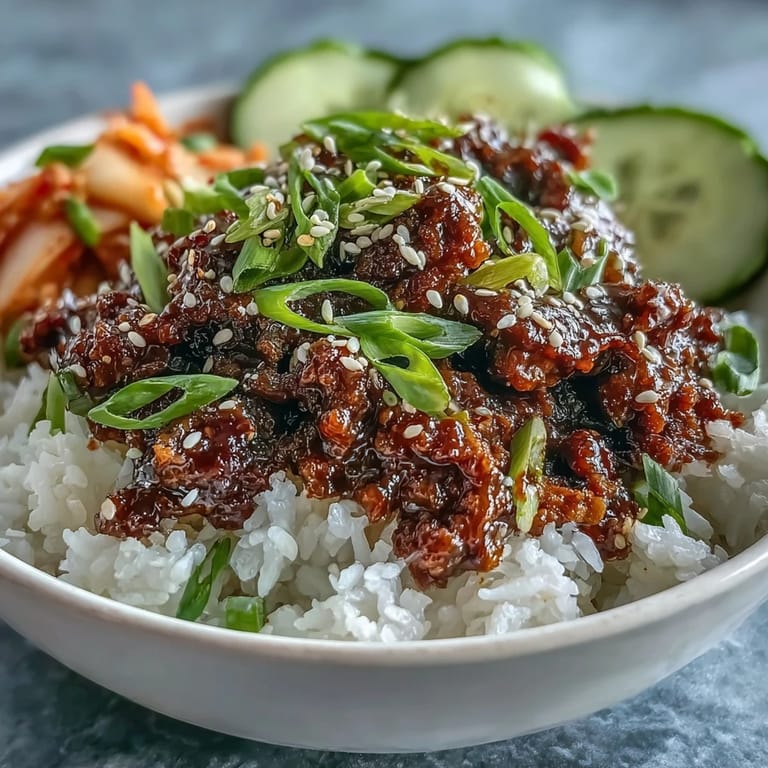
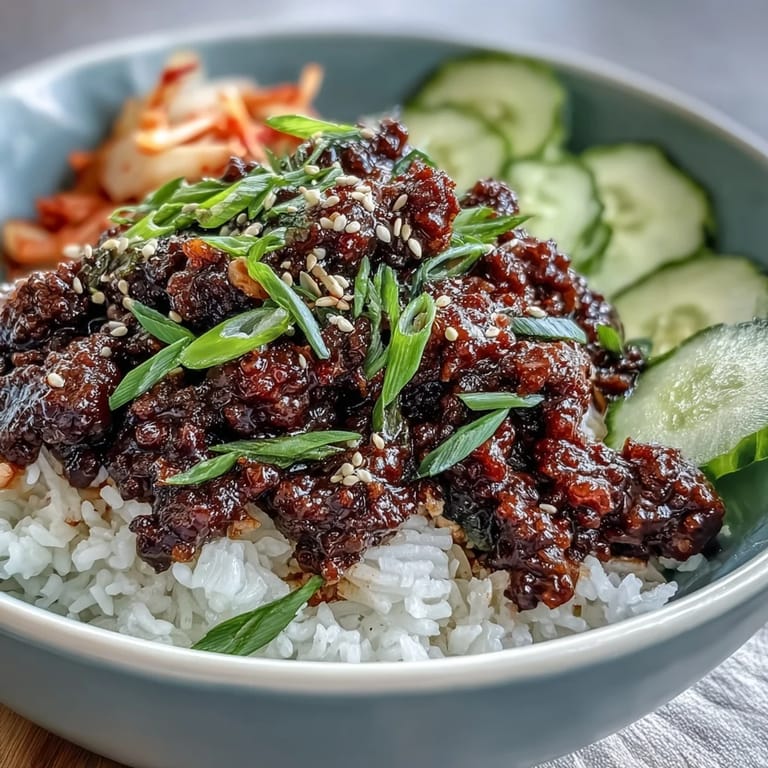
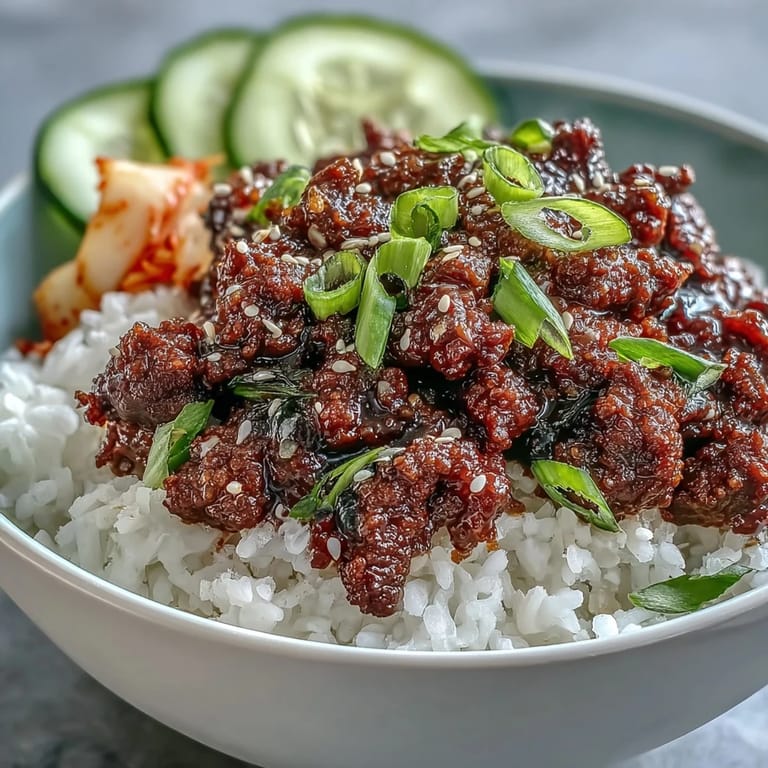
- Scoop warm rice into each bowl, top with a generous heap of beef, then arrange the pickled vegetables, cucumber, radish, and kimchi around the edges. Finish with the remaining green onions and a sprinkle of sesame seeds.
 Save
Save The first time I served this at a dinner party, I worried it was too simple, too weeknight casual for company. But everyone went back for seconds, scraping their bowls clean, and one friend admitted she'd never had Korean food that felt this approachable. It reminded me that the best meals don't have to be complicated, they just have to taste alive.
What to Do With Leftovers
The beef keeps beautifully in the fridge for up to three days and reheats in the microwave or a skillet with a splash of water to loosen the sauce. I've eaten it cold over greens, stuffed into lettuce wraps, and even scrambled into eggs the next morning. The pickled vegetables stay crunchy for about a week and are great on sandwiches or stirred into grain salads.
How to Make It Your Own
If you can't find gochujang, try mixing sriracha with a little miso paste and honey, it won't be the same but it'll get you close. Ground turkey or chicken work well if you want something leaner, just add a tiny bit more oil so it doesn't dry out. I've swapped the white rice for brown rice, cauliflower rice, or even warm farro when I'm feeling grainy and chewy.
Serving and Pairing Ideas
This bowl is a full meal on its own, but sometimes I'll set out extra kimchi, soft boiled eggs, or sliced avocado and let everyone customize their bowls. A cold lager or crisp green tea cuts the heat nicely, and if you're feeding a crowd, everything can be prepped ahead and assembled in minutes.
- Add a fried egg on top for richness and a runny yolk that acts like extra sauce.
- Serve with a side of steamed edamame or miso soup to round out the meal.
- Double the pickled vegetables, they disappear fast and everyone always wants more.
 Save
Save This bowl has become my answer to busy nights, bad moods, and surprise guests, and it never lets me down. I hope it finds a spot in your rotation too.
Recipe Guide
- → What is gochujang?
Gochujang is a Korean fermented chili paste made from glutinous rice, fermented soybeans, salt, and chili powder. It adds a sweet, savory, and spicy flavor that's essential to Korean cooking.
- → Can I make this dish less spicy?
Yes, reduce the amount of gochujang to 1-2 tablespoons or choose a mild variety. You can also add more brown sugar to balance the heat.
- → How long do the pickled vegetables last?
The quick-pickled vegetables will keep in the refrigerator for up to one week in an airtight container. They actually develop more flavor as they sit.
- → Can I use other proteins?
Ground chicken or turkey work well as lighter alternatives. For a vegetarian version, use crumbled tofu or textured vegetable protein prepared the same way.
- → Is this dish gluten-free?
It can be made gluten-free by using tamari instead of soy sauce and ensuring your gochujang is certified gluten-free, as some brands contain wheat.
- → What rice works best?
Short-grain white rice is traditional, but medium-grain or brown rice also work. Just ensure the rice is fluffy and not overly sticky for the best texture.