 Save
Save My neighbor knocked on the door one Thursday evening holding a grocery bag full of fresh salmon she couldn't use before leaving town. I had twenty minutes before a Zoom call and zero dinner plan. That's when this bowl came together, a little frantic and a lot intuitive. The soy-ginger glaze bubbled on the stove while I chopped whatever vegetables were crisp in the crisper drawer. It tasted better than anything I'd ordered in weeks.
I made this for my sister when she came over exhausted from work, the kind of tired where even deciding what to eat feels impossible. She sat at the counter while I brushed glaze on the salmon and told me it smelled like the place we used to get takeout in college. When she took the first bite, she closed her eyes and said nothing for a full minute. That's when I knew this recipe was a keeper.
Ingredients
- Salmon fillets: Look for fillets with bright color and no fishy smell, and if the skin is on, leave it for extra flavor and easier flipping.
- Soy sauce: This is the salty backbone of the glaze, and low sodium works just fine if you want more control over the saltiness.
- Honey: It balances the soy and caramelizes beautifully in the oven, turning golden at the edges of the fish.
- Fresh ginger: Grated ginger releases oils that make the whole kitchen smell alive, and a microplane is your best friend here.
- Garlic: Minced garlic adds a sharp warmth that mellows as it bakes, so don't skip it even if you're tempted.
- Rice vinegar: A splash of this cuts through the richness and adds a subtle tang that keeps the glaze from feeling too heavy.
- Sesame oil: Just a tablespoon brings a toasty, nutty depth that makes everything taste more complex.
- Cornstarch: Optional but helpful if you like a thicker glaze that clings to the salmon instead of pooling on the pan.
- Jasmine or sushi rice: The slight stickiness holds the bowl together, and rinsing it first makes all the difference in fluffiness.
- Carrot, cucumber, red bell pepper: Julienned vegetables add crunch and color, and they stay crisp even under warm rice.
- Edamame: These little green gems add protein and a pop of color, plus they're satisfying to eat.
- Toasted sesame seeds: They add a nutty crunch and make the bowl look like it came from a restaurant.
- Scallions: Thinly sliced green onions bring a fresh bite that wakes up every forkful.
- Lime wedges: A squeeze of lime at the end brightens everything and makes the flavors sharper.
Tired of Takeout? 🥡
Get 10 meals you can make faster than delivery arrives. Seriously.
One email. No spam. Unsubscribe anytime.
Instructions
- Start the rice:
- Rinse the rice under cold water until it runs clear, this removes excess starch so it doesn't turn gummy. Combine it with water in a saucepan, bring to a boil, then cover and simmer on low for 15 minutes before letting it rest off the heat.
- Make the glaze:
- Whisk together soy sauce, honey, grated ginger, garlic, rice vinegar, and sesame oil in a small bowl until everything is smooth and glossy. If you want it thicker, dissolve cornstarch in a tablespoon of water and stir it in.
- Prep the salmon:
- Preheat your oven to 200 degrees Celsius and line a baking sheet with parchment paper so cleanup is effortless. Place the salmon fillets on the sheet and brush them generously with the glaze, saving some for later.
- Bake the fish:
- Slide the salmon into the oven and bake for 12 to 14 minutes, until the edges are caramelized and the center flakes easily with a fork. Don't overbake or it will dry out.
- Thicken the extra glaze:
- Pour the reserved glaze into a small saucepan and bring it to a simmer over medium heat, stirring until it thickens slightly. This takes about a minute or two if you used cornstarch.
- Julienne the vegetables:
- Slice carrots, cucumber, and red bell pepper into thin matchsticks so they're easy to eat and look elegant in the bowl. Keep them separate so you can arrange them in little piles.
- Assemble the bowls:
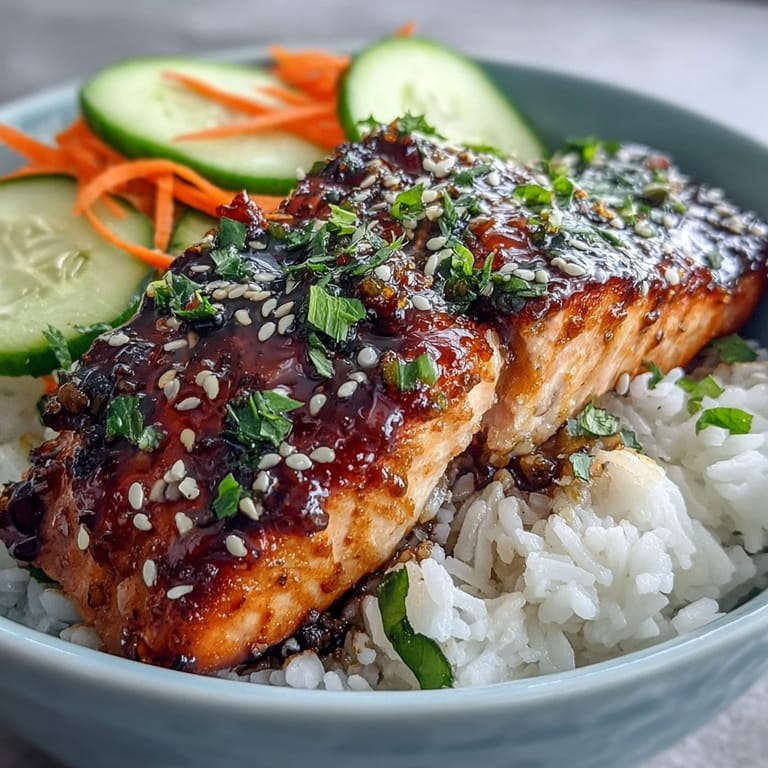
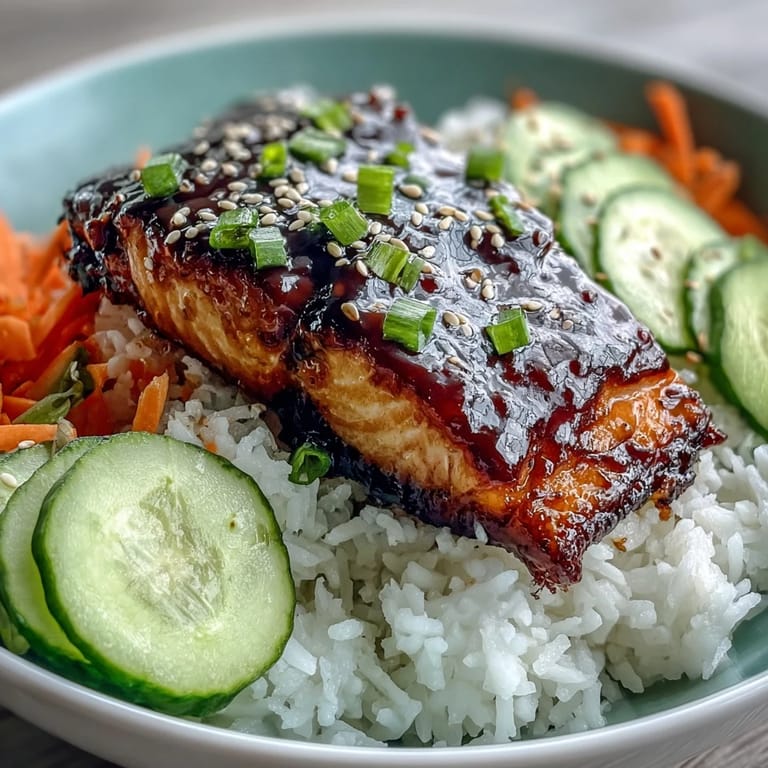
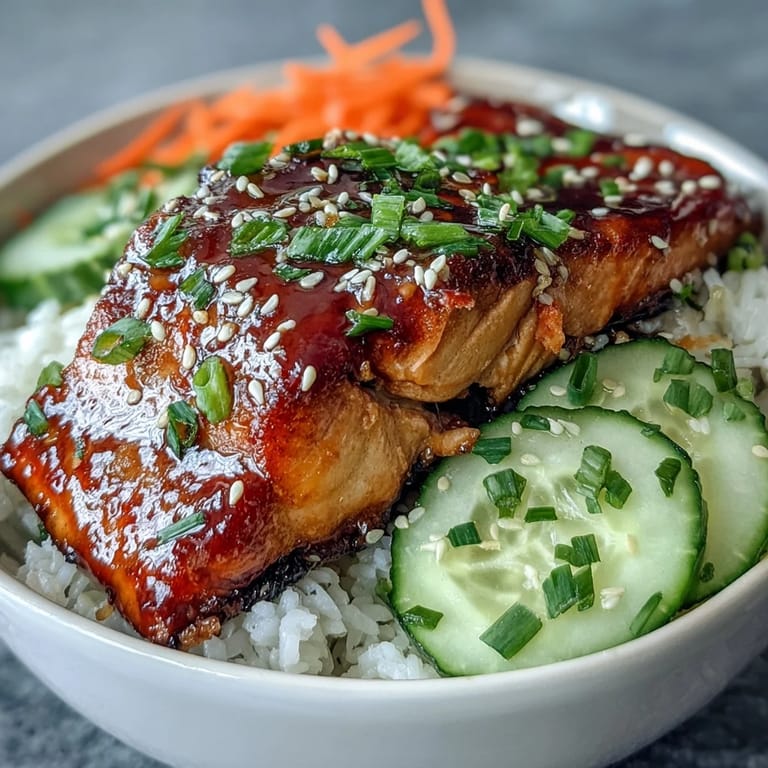
- Divide the fluffy rice among four bowls, then top each with a salmon fillet and arrange the vegetables and edamame around it. Drizzle with the thickened glaze, sprinkle sesame seeds and scallions on top, and add a lime wedge on the side.
 Save
Save The first time I served this to friends, one of them scraped her bowl clean and asked if I'd been hiding a secret chef life. I laughed because an hour earlier I was standing in my kitchen wondering if I had enough vegetables to make it look decent. That's the magic of a bowl like this, it feels special even when it's just good ingredients arranged with a little care.
Choosing Your Salmon
I always look for fillets that are firm to the touch and smell like the ocean, not fishy or sour. Wild caught salmon has a deeper color and richer flavor, but farmed salmon works beautifully and is often more affordable. If you can, ask the fishmonger which fillets came in that day, freshness matters more than anything else. Skin on or off is up to you, but I leave it on because it crisps nicely and keeps the fish from falling apart.
Making It Your Own
I've swapped jasmine rice for brown rice when I want something heartier, and quinoa works if you're in the mood for extra protein. Avocado slices add creaminess that balances the salty glaze, and pickled ginger brings a sharp tang that cuts through the richness. Sometimes I toss in shredded purple cabbage for color or add a soft boiled egg on top because why not. If you're gluten free, use tamari instead of soy sauce and no one will taste the difference.
Storing and Reheating
Leftovers keep in the fridge for up to two days, but I store the components separately so the rice doesn't get soggy and the vegetables stay crisp. Reheat the salmon gently in the oven at a low temperature or eat it cold on top of fresh greens for a quick lunch. The glaze thickens as it cools, so add a splash of water when you rewarm it to bring back that silky texture.
- Store rice, salmon, and vegetables in separate airtight containers.
- Reheat salmon at 150 degrees Celsius for 5 minutes or enjoy it cold.
- Drizzle extra glaze on the bowl right before eating for the best flavor.
 Save
Save This bowl has become my answer to weeknights when I want something nourishing but don't have the energy for anything complicated. It's the kind of meal that makes you feel like you're taking care of yourself, one colorful bite at a time.
Recipe Guide
- → Can I use other fish instead of salmon?
Yes, this glaze works beautifully with other fatty fish like mahi-mahi, Arctic char, or trout. For leaner fish like cod or tilapia, reduce the baking time by 2-3 minutes to prevent drying out.
- → How do I julienne vegetables properly?
Cut vegetables into long, thin matchsticks about 2-3 inches long. For carrots and cucumbers, cut planks first, then stack and slice into strips. A mandoline slicer makes this task faster and more uniform.
- → Can I make this ahead for meal prep?
Absolutely. Store cooked salmon, rice, and vegetables separately in airtight containers for up to 4 days. Reheat salmon gently in the microwave and add fresh toppings before serving.
- → What can I substitute for soy sauce?
For gluten-free options, use tamari or coconut aminos. Both provide similar umami flavor. Coconut aminos are slightly sweeter, so you may reduce the honey slightly.
- → How do I know when the salmon is done?
The salmon is finished when it flakes easily with a fork and reaches an internal temperature of 63°C (145°F). The flesh should turn opaque and slightly pink throughout, with no translucency in the center.
- → Can I grill the salmon instead of baking?
Yes, grill over medium-high heat for 4-5 minutes per side, basting with the glaze. The salmon will develop a nice charred exterior while remaining moist inside.