 Save
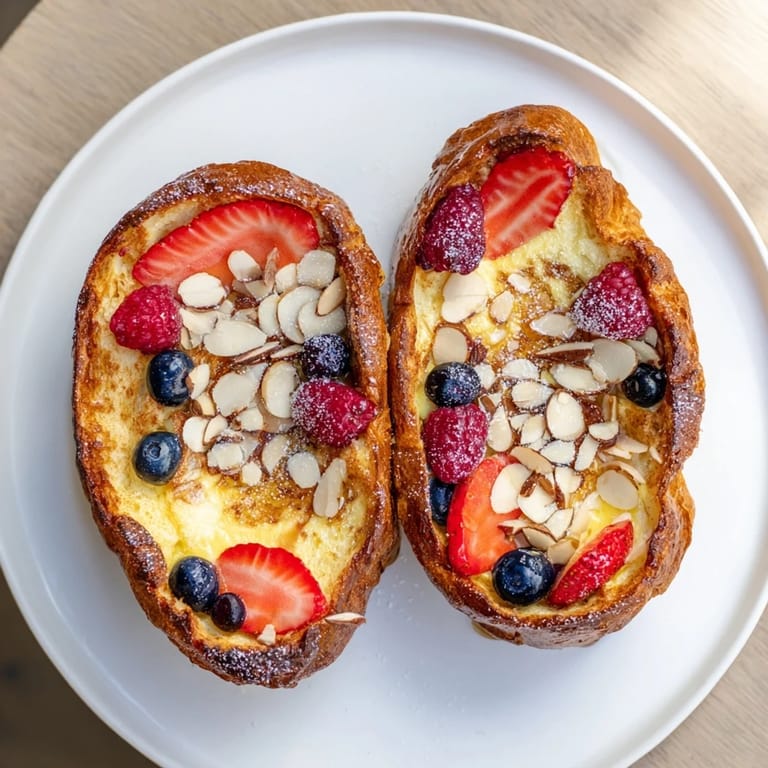
Save There's something about Sunday mornings that calls for a breakfast that feels both indulgent and somehow still virtuous. I discovered custard toast by accident, really—I had brioche going stale and Greek yogurt that needed using, and thought, why not combine them into something warm and golden? That first bite, with the custardy center giving way to crispy edges, changed how I think about breakfast entirely.
I made this for my neighbor last spring when she brought over a new neighbor to welcome them to the building. She took one bite and asked for the recipe before she'd even finished chewing. That's when I realized this wasn't just a way to use up bread—it was something special enough to share.
Ingredients
- Brioche or challah bread (2 thick 1-inch slices): The richness of brioche soaks up the custard while staying tender inside, but challah works beautifully too if that's what you have.
- Large egg: This is your custard's backbone—it sets gently to create that creamy, not-quite-solid center.
- Plain Greek yogurt (3 tbsp): Adds tang and creaminess without making the custard watery like regular yogurt would.
- Honey or maple syrup (1½ tbsp): Sweetens the custard and adds depth; don't skip this even if you're topping with more later.
- Vanilla extract (½ tsp): A small amount that somehow makes everything taste more like itself.
- Salt (pinch): The secret ingredient that makes the sweetness brighter instead of flat.
- Mixed fresh berries (½ cup, optional): Strawberries, blueberries, or raspberries add tartness that balances the richness—save them for topping if they're soft.
- Sliced almonds or pistachios (1 tbsp, optional): Texture matters; they stay crisp even when everything else is warm and tender.
- Powdered sugar (1 tsp, optional): A light dusting at the end catches the light and makes everything look intentional.
- Extra honey or maple syrup (for drizzling): Adds shine and an extra touch of sweetness when you're plating.
Tired of Takeout? 🥡
Get 10 meals you can make faster than delivery arrives. Seriously.
One email. No spam. Unsubscribe anytime.
Instructions
- Heat your oven and prep:
- Preheat to 375°F with a baking sheet lined with parchment paper. The temperature matters—too hot and the edges char before the custard sets; too cool and it never gets that golden crispness.
- Make the custard:
- Whisk the egg, Greek yogurt, honey, vanilla, and salt until completely smooth with no lumps. Take your time here; a few extra seconds makes the difference between silky and grainy.
- Create the wells:
- Place bread slices on the sheet and gently press the back of a spoon into the center of each one, leaving a border all around. You're not going for perfect cups—just shallow indentations that will cradle the custard.
- Fill and top:
- Spoon or pour the custard evenly into each well, then scatter berries and nuts over the top if using. The berries will sink slightly as they bake, nestling into the warm custard.
- Bake until golden:
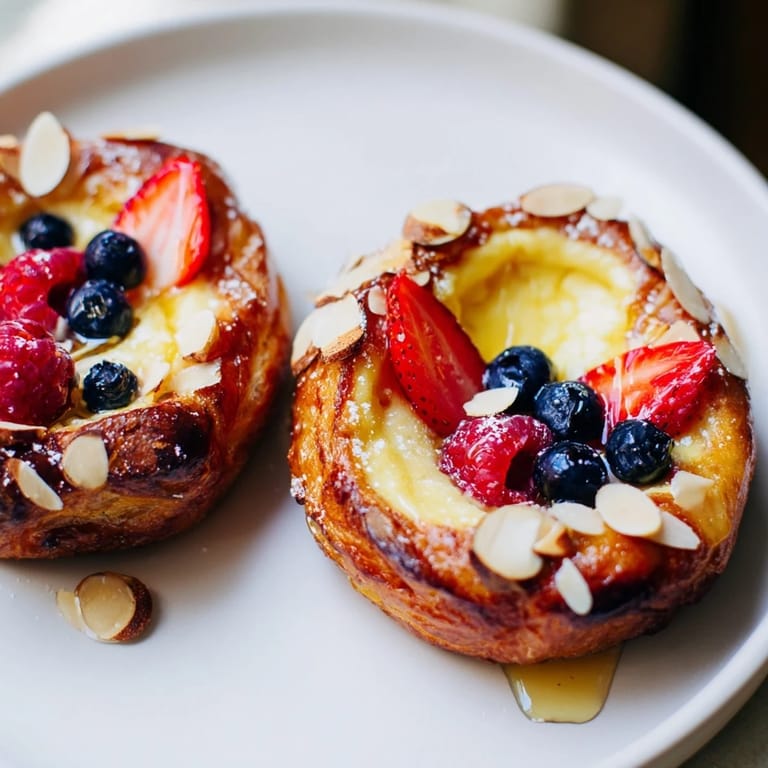
- Bake 12–15 minutes, until the custard is just set (it should jiggle slightly when you gently shake the pan, not slosh) and the bread edges are golden and crisp. This is when your kitchen will smell absolutely incredible.
- Finish and serve:
- Let cool for just a minute or two—you want it warm when you eat it. Dust with powdered sugar and drizzle with extra honey or syrup right before serving.
 Save
Save My favorite memory isn't from making this fancy or for company—it's from a quiet Tuesday when I made it just for myself. I sat by the window with the plate warm in my hands and realized I'd created something that tasted like someone really cared about breakfast. That's the moment this stopped being a recipe and became a ritual.
Why Thick Bread Matters
I learned this the hard way after using regular sandwich bread once. It absorbed the custard and turned into mush instead of developing that contrast between the crispy edges and soft center. Brioche and challah have enough structure and richness to stand up to the moisture while still being tender enough to soak in all the flavor. If you're using day-old bread, it's actually perfect—fresh bread can be too delicate.
The Custard Balance
The magic happens in how much yogurt versus egg you use. Too much yogurt and it never sets properly; too much egg and it becomes rubbery. Greek yogurt is the secret because it's thick enough to add richness without watering things down, and its tang keeps the sweetness from being one-note. I've experimented with other yogurts and nothing gives the same silky, creamy result.
Making It Your Own
This is where the fun begins, once you've made it the traditional way at least once. A pinch of cinnamon warms everything up, while lemon zest adds brightness that makes the custard taste more alive. Some mornings I add a tiny pinch of nutmeg, and other times I toast the almonds first for deeper nuttiness. The formula is flexible as long as you respect the core custard ratio.
- Add a quarter-teaspoon of cinnamon or a whisper of cardamom to the custard mixture for warm spice notes.
- Swap honey for maple syrup or even brown sugar if you're looking for a different flavor profile.
- Bake in a ramekin instead of on bread if you want pure custard—it's still delicious and takes about the same time.
 Save
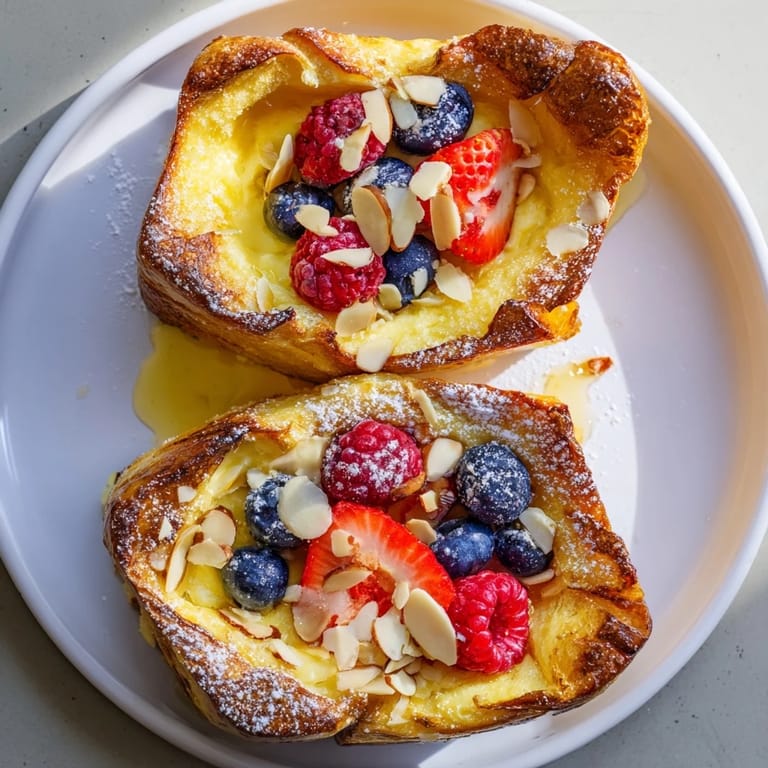
Save This is the kind of breakfast that makes you want to slow down and actually taste what you're eating. Serve it warm, and don't be surprised when it becomes the thing people ask you to make again and again.
Recipe Guide
- → What type of bread works best for custard toast?
Thick slices of brioche or challah work well due to their sturdy texture and slight sweetness, holding the custard without becoming soggy.
- → Can I substitute Greek yogurt in the custard mix?
Yes, dairy-free yogurt can be used as a substitute to accommodate dietary restrictions while maintaining creaminess.
- → How do I ensure the bread edges stay crisp while baking?
Pressing a shallow well in the center keeps custard contained and baking at 375°F helps to crisp the outer edges without overcooking.
- → What toppings complement this dish well?
Fresh mixed berries, sliced almonds or pistachios, and a light dusting of powdered sugar add flavor, texture, and visual appeal.
- → Is it possible to make this dish gluten-free?
Absolutely. Using gluten-free bread allows those with gluten sensitivities to enjoy this custard toast without compromise.
- → How can I add extra flavor to the custard base?
Incorporating a pinch of cinnamon or lemon zest into the custard mix enhances its aromatic qualities and adds depth.