 Save
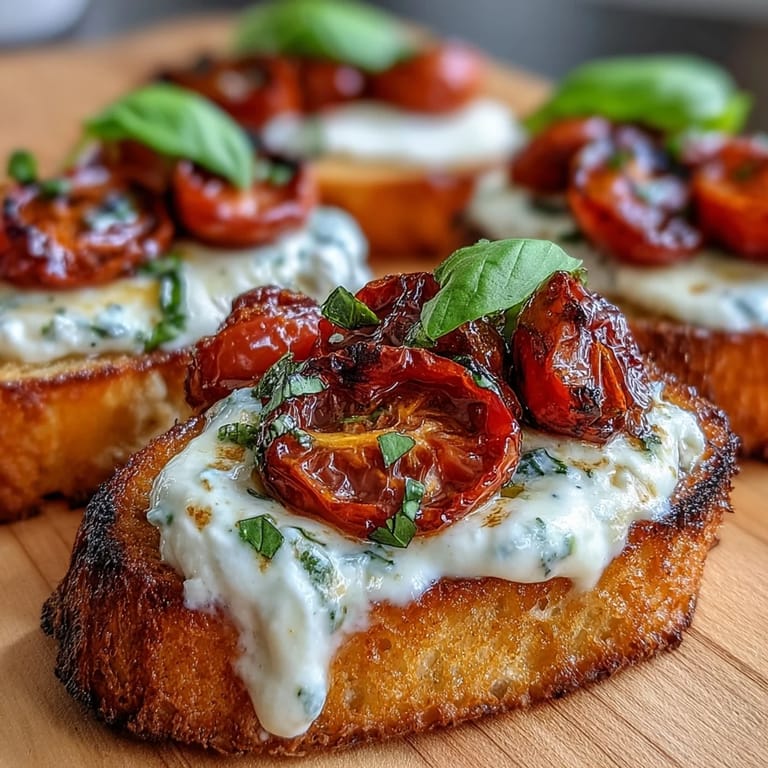
Save There's something almost magical about the moment burrata hits warm crostini—that creamy center just starts to melt into all the crevices. I discovered this combination during an impromptu dinner party when a friend arrived with burrata cheese and I had just pulled a batch of golden bread from the oven. We threw together what we had: roasted cherry tomatoes blistering with sweetness, torn basil leaves, and nothing felt rushed or overthought. It became the kind of appetizer that disappears before anything else hits the table.
My brother once showed up to a potluck insisting I bring something, and I made these crostini in a mild panic thirty minutes before we left. What surprised me wasn't that they were gone first—it's that people kept asking for the recipe with genuine curiosity, as though something this simple deserved to be more complicated. That's when I realized the best dishes are often the ones that let their ingredients speak instead of hiding behind technique.
Ingredients
- Baguette, sliced into 1/2-inch rounds (about 12–16 slices): The thickness matters because too thin and your bread becomes hard as a tile, too thick and the inside stays soft while you're hunting for crunch; 1/2-inch is the sweet spot where every bite has structure.
- Extra virgin olive oil (2 tbsp for bread, plus 1 tbsp for tomatoes): Using good quality oil here makes a real difference since it's not hiding in a sauce—save the questionable stuff for cooking and let the decent oil shine.
- Cherry tomatoes, halved (1 cup): Halving them ensures they roast evenly and develop those slightly caramelized edges without completely collapsing into jam, though honestly, if they burst a little that's not a disaster.
- Balsamic vinegar (2 tsp): This adds depth to the tomatoes without overpowering them; it's the quiet backbone that makes people wonder what makes these taste so good.
- Salt and freshly ground black pepper, to taste: Season the tomatoes before roasting so the flavors meld instead of sitting on top like an afterthought.
- Burrata cheese (8 oz): Room temperature burrata tears into those creamy centers more easily, and the warmth of the crostini will soften it further without making it an oily mess.
- Fresh basil leaves, torn (1/4 cup): Tearing instead of chopping keeps the leaves from bruising and releasing all their flavor into thin air before they reach the plate.
- Flaky sea salt and olive oil for finishing: These final touches aren't optional if you want the dish to feel intentional; they transform it from casual to composed.
Tired of Takeout? 🥡
Get 10 meals you can make faster than delivery arrives. Seriously.
One email. No spam. Unsubscribe anytime.
Instructions
- Heat your oven and prep:
- Preheat to 400°F and line a baking sheet with parchment paper so nothing sticks and cleanup becomes a non-event. This temperature toasts bread quickly without burning it, which feels important the moment you smell that first batch turning golden.
- Toast the bread until it crackles:
- Arrange baguette slices on the sheet, brush both sides lightly with olive oil, then toast for 6–8 minutes flipping halfway through until each piece is golden and sounds crispy when you tap it. The parchment prevents sticking and lets the bottoms toast evenly without that one side being darker than the other.
- Roast the tomatoes while bread toasts:
- In a separate bowl, toss halved cherry tomatoes with a tablespoon of olive oil, balsamic vinegar, salt, and pepper, then spread on another section of the sheet or a second sheet. Let them roast for 10–12 minutes until their skins just start to split and the edges caramelize slightly, which concentrates their sweetness into something almost candy-like.
- Cool everything slightly:
- Remove both the bread and tomatoes from the oven and let them rest for a minute or two so you're not burning your fingers and the burrata doesn't melt into an uncontrollable puddle the moment it touches the heat.
- Assemble with intention:
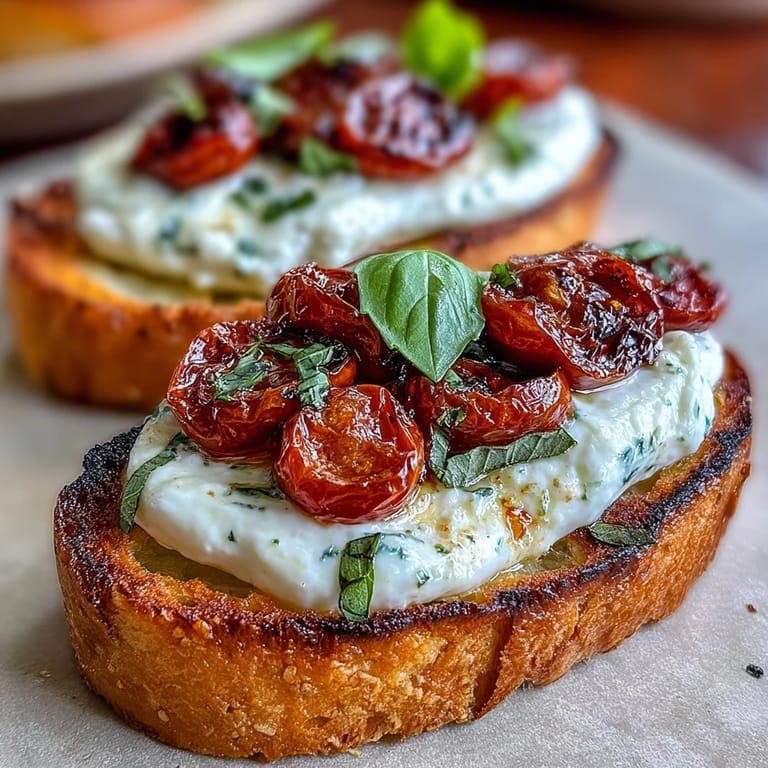
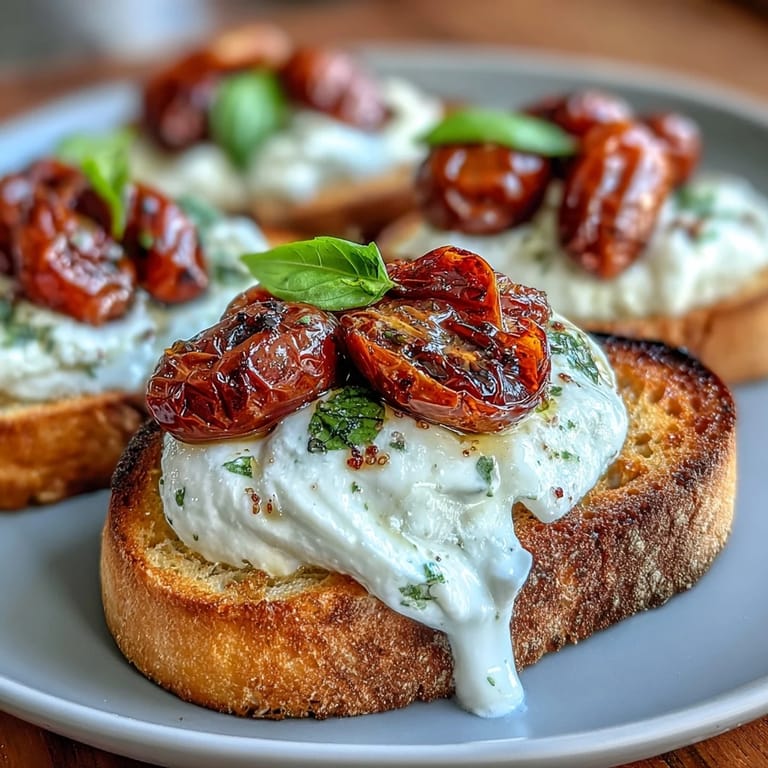
- Gently tear the burrata into pieces and spoon onto each crostini, then top with a few roasted tomato halves, letting the warmth soften the cheese just enough that it clings to the bread. The tearing is important—cutting it cleanses the creamy interior, which we're trying to avoid.
- Finish like you mean it:
- Scatter fresh basil over everything, drizzle with a touch more olive oil, and finish with flaky sea salt if you have it, then serve immediately while the bread is still warm and everything is in conversation with each other.
 Save
Save There was an evening when my sister brought her new partner over and I made these crostini, and watching him close his eyes after that first bite—like he was searching for whatever just happened in his mouth—made me understand why simple food done right stays with people. It wasn't the complexity, it was the clarity.
Why the Warm Bread Matters
Pulling bread from the oven and topping it immediately is the difference between this dish feeling fresh and composed versus feeling like leftovers assembled. The warmth softens the burrata just enough that it becomes workable without becoming greasy, and that small window is when everything tastes like it belongs together. If you're making this for guests and wondering whether you can do it all ahead—you can't, not really, but the actual assembly takes about ninety seconds so the timing works out perfectly.
Playing With Variations
The beauty of this recipe is that it's more of a template than a prescription, which I discovered when I was out of basil one day and used arugula instead and nothing fell apart. Some people add a thin slice of prosciutto folded underneath the tomatoes, others swear by a small drizzle of aged balsamic syrup instead of regular vinegar, and someone once suggested a tiny dollop of pesto. The only constant is that whatever you add should complement rather than compete with the burrata, since that's the star.
Building Your Crostini Station
If you're making these for a gathering, set up your toppings on the counter so they're visible and accessible, which somehow makes people feel like they could make this themselves if they needed to. It keeps things from feeling overly fussy or precious, which is exactly the opposite of what this dish should be. The bread can sit in a warm bread basket, the tomatoes in their bowl, burrata in another, and suddenly what took you thirty minutes seems infinitely more approachable to everyone watching.
- Have all ingredients room temperature or just-cooled before assembly so nothing shocking happens when temperatures meet.
- If you're feeding more than four people, you can roast double the tomatoes since they keep beautifully and the bread quantities scale easily upward.
- Serve with something cold and crisp to drink—the brightness cuts through the richness of the burrata and makes everything taste cleaner.
 Save
Save This recipe taught me that sometimes the best moments in the kitchen come from knowing when to stop adding things and start paying attention instead. It's become my go-to when I want to feed people something that tastes both intentional and effortless.
Recipe Guide
- → What type of bread works best for the crostini?
A baguette sliced into thin rounds works best, providing a sturdy yet crispy base when toasted.
- → How can I make the cherry tomatoes more flavorful?
Toss cherry tomatoes with olive oil, balsamic vinegar, salt, and pepper before roasting to enhance their natural sweetness and depth.
- → Can I substitute burrata with another cheese?
Fresh mozzarella can be used as a milder alternative, but burrata’s creamy texture offers a richer mouthfeel.
- → Is there a way to add extra aroma to the crostini?
Rubbing warm toasted bread with a garlic clove before assembling adds a lovely aromatic touch.
- → What herbs complement this dish aside from basil?
Fresh oregano or thyme can complement the flavors, but basil’s sweet and peppery notes are ideal for balance.