 Save
Save My mother has always been the type to say she doesn't need fussing over, but the year I decided to make pavlova for Mother's Day, something shifted. I'd watched her eyes light up at a dinner party when someone brought this impossibly crisp, cloud-like dessert to the table—the way she smiled suggested she was remembering something distant and lovely. That morning, I stood in my kitchen with four egg whites at room temperature, nervous but determined, because this time I wanted to create something that felt as special as she deserved.
I'll never forget my neighbor poking her head over the fence as I was arranging berries on top, asking what on earth I was making that smelled like sweet nothing but looked so fancy. When I served it that Mother's Day, my mom took one bite and got genuinely quiet—the kind of quiet that meant more than words ever could. She asked me to write down what I did, which I did, but I think what she really wanted was to know why I'd bothered with something so intricate.
Ingredients
- Egg whites (4 large, room temperature): Room temperature whites whip faster and hold more air—cold ones are stubborn and will make you question your choices halfway through beating them.
- Superfine sugar (1 cup/200 g): Don't skip the superfine grind; regular sugar takes longer to dissolve and can create a grainy texture that cracks when you bite into it.
- Cornstarch (1 tsp): This humble ingredient is what keeps the inside soft and marshmallow-like while the outside shatters—the real secret no one talks about.
- White vinegar (1 tsp): Stabilizes the meringue and helps it stay glossy; I learned this the hard way after making rubbery pavlovas for two years.
- Pure vanilla extract (1 tsp for meringue, 1 tsp for cream): Adds a subtle depth that makes people ask what the mysterious flavor is.
- Salt (pinch for meringue): Brings out sweetness and prevents that occasional soapy aftertaste some meringues develop.
- Heavy whipping cream (1 cup/240 ml, chilled): Cold cream whips to those perfect soft peaks; warm cream becomes butter, which I discovered the very first time I made this.
- Powdered sugar (2 tbsp for cream, 1 tbsp for dusting): Dissolves instantly into cream without making it grainy like granulated sugar would.
- Mixed berries (4 cups total): Strawberries, raspberries, blueberries, and blackberries together create a visual feast and flavor complexity—use whatever's at its peak at your farmer's market.
- Fresh mint leaves (optional): A whisper of mint bridges the flavors and adds an elegant finishing touch that looks intentional.
Tired of Takeout? 🥡
Get 10 meals you can make faster than delivery arrives. Seriously.
One email. No spam. Unsubscribe anytime.
Instructions
- Set the stage:
- Preheat your oven to 250°F (120°C) and line a baking sheet with parchment paper. Trace a 9-inch circle as your guide—this gives you something to follow without overthinking the shape.
- Beat the egg whites:
- In a completely clean, dry bowl (any trace of yolk or moisture will sabotage you), beat the egg whites with a pinch of salt until soft peaks form, about 2–3 minutes. This is the moment where you realize why people say patience matters in the kitchen.
- Build the meringue gradually:
- Add the superfine sugar one tablespoon at a time while beating continuously. This slow incorporation is what transforms the mixture into something glossy and stable—rushing this step is the number one mistake I see people make. You'll know you're done when stiff peaks form and the mixture looks like glossy, thick clouds, roughly 5–6 minutes total.
- Fold in the secret ingredients:
- Gently fold in the cornstarch, vinegar, and vanilla extract using a spatula—fold means turning the mixture over itself slowly, not stirring. These three additions are barely noticeable but absolutely essential to the final texture.
- Shape your nest:
- Spoon the meringue onto the parchment, keeping it within your circle guide. Create slightly raised edges all the way around so it looks like a nest waiting to be filled—don't worry about perfection; rustic edges actually look more elegant.
- Bake and cool:
- Bake for 1 hour 15 minutes until the outside is dry and pale cream-colored. Turn off the oven and crack the door open slightly, then let the pavlova cool completely inside—this gradual cooling prevents cracking. This is where patience truly matters; removing it too early ruins the texture.
- Prepare the topping while waiting:
- While the pavlova cools, chill your mixing bowl and whip the heavy cream with powdered sugar and vanilla until soft peaks form. You want it billowy and light, not stiff—stop before you accidentally make butter.
- Assemble the magic:
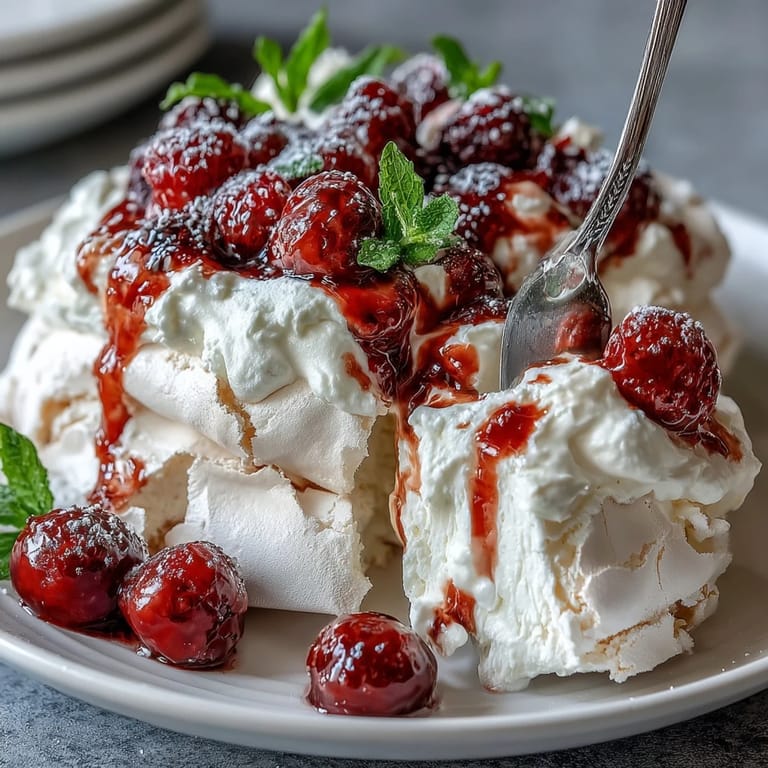
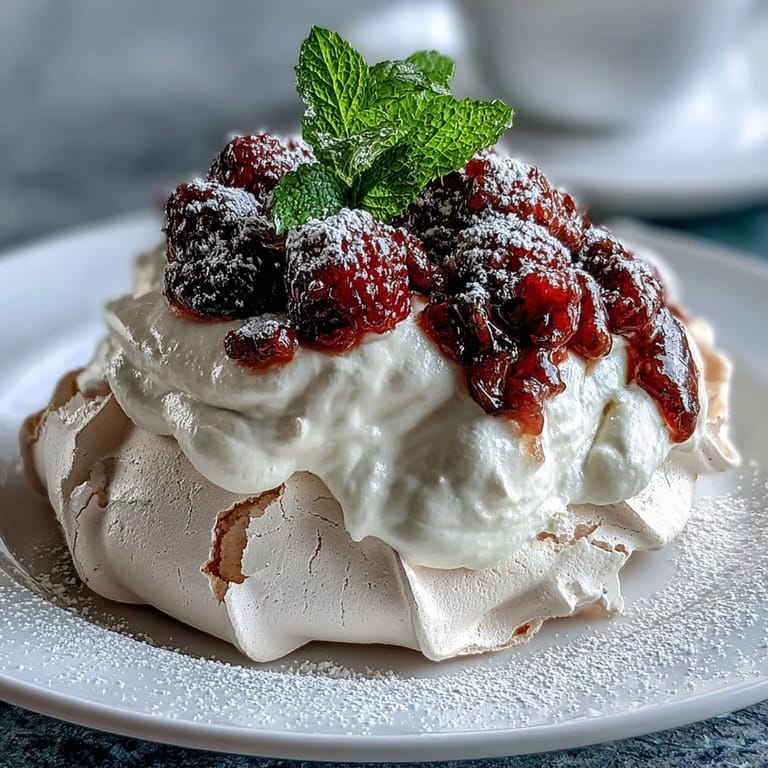
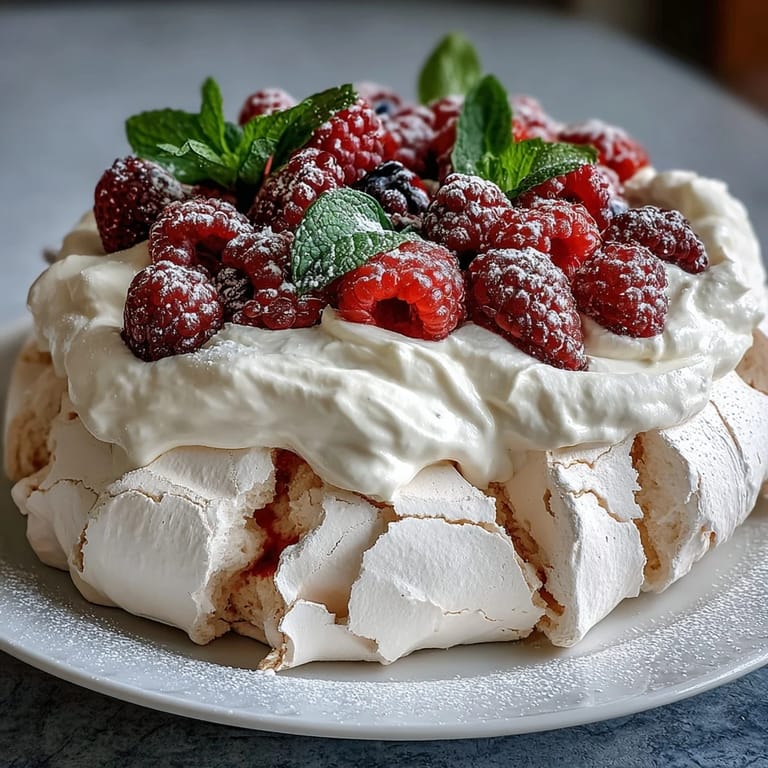
- Once the meringue is completely cool, transfer it carefully to a serving platter. Top with the whipped cream in soft, generous dollops, then arrange your mixed berries and mint leaves across the surface in whatever pattern feels right to you. If desired, dust lightly with powdered sugar just before serving—this final touch catches the light beautifully.
 Save
Save After that Mother's Day, my mom started making pavlovas herself, and now when our family gathers, she makes them and tells everyone that her daughter taught her. What started as my attempt to impress her became something we share—a small ritual that tastes like love and looks like celebration.
Choosing Your Berries Wisely
The beauty of pavlova is that it adapts to whatever berries are singing at your market that day. I've made it with early spring strawberries when they're still slightly tart, and with summer raspberries at their peak sweetness. The key is choosing berries that are ripe but still firm enough that they won't weep juice all over the pavlova before serving—soft, overripe berries will slide right through the cream.
The Humidity Question
The first time someone warned me about humidity affecting pavlova, I thought they were being overly fussy. Then I made it on a rainy afternoon and ended up with a meringue that stayed slightly tacky no matter how long I baked it. Now I check the weather forecast before committing to pavlova, and on humid days, I move on to chocolate mousse or berry trifle instead.
Why This Tastes Like Celebration
Pavlova exists in that rare category of desserts that feels both indulgent and light—you can have a generous slice without feeling heavy afterward. There's something about the combination of crispy and soft, sweetness and the natural tartness of berries, that makes it feel less like regular dessert and more like an occasion. Every time you serve it, people slow down and actually pay attention to what they're eating, which is perhaps the highest compliment food can receive.
- Make the pavlova base up to a day ahead and store it in an airtight container—it actually stays crispier that way.
- Add the whipped cream and berries no more than an hour before serving to prevent the bottom from softening.
- If your pavlova cracks during cooling, simply break it into two pieces, add extra cream in the middle, and call it rustic—no one will know it wasn't intentional.
 Save
Save Make this for someone you love, or make it for yourself on an ordinary Tuesday when you deserve something that tastes like celebration. Either way, the effort becomes invisible once people taste it.
Recipe Guide
- → How do you achieve a crisp meringue shell?
Slow baking at low temperature and allowing the meringue to cool gently inside the turned-off oven produces a crisp exterior and a soft center.
- → Can I use other fruits instead of mixed berries?
Yes, seasonal fruits like kiwi, peaches, or passionfruit can be used to tailor the fresh topping to your preference.
- → What is the purpose of cornstarch and vinegar in the meringue?
Cornstarch adds a marshmallow-like softness to the meringue’s center while vinegar helps stabilize the egg whites for better structure.
- → How should the whipped cream be prepared?
Chill the cream before whipping with powdered sugar and vanilla until soft peaks form to create a light and fluffy topping.
- → Are there tips for ensuring the meringue doesn’t crack?
Cooling the pavlova slowly in the oven with the door slightly ajar prevents sudden temperature changes that can cause cracks.