 Save
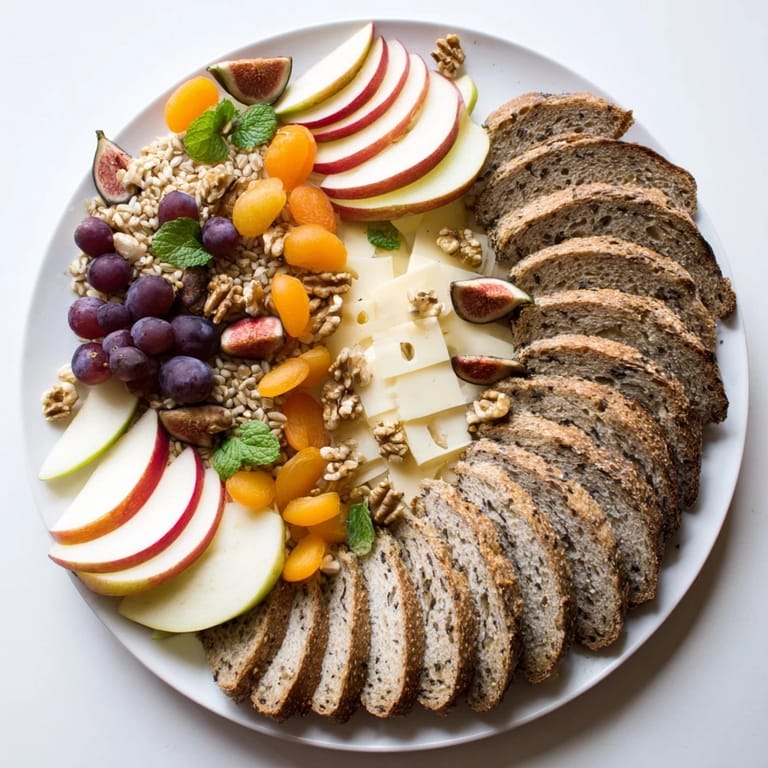
Save The first time I arranged a board like this, I wasn't thinking about it being beautiful—I was thinking about how to feed eight people with whatever bread and fruit I had on hand. As I started placing a baguette here, some grapes there, something clicked. The sweeping curve I made with the sliced bread felt intentional, almost like it was pulling the eye across the platter in one graceful motion. That's when The Harvest Scythe was born, not from a recipe book, but from the simple act of trying to make something practical look like art.
I made this for my sister's birthday picnic last summer, and I remember she cried—not because of the platter itself, but because it meant I'd stopped stressing about cooking something complicated and just gathered what mattered. We sat under an oak tree, the afternoon light turning everything golden, and people kept coming back not just for the food but to admire how it looked. That's when I realized this isn't really a recipe; it's a way of saying "I'm glad you're here."
Ingredients
- Baguette, sliced: The foundation of your board—its slight crunch and subtle tang provide the perfect anchor for everything else. Cut it on a diagonal to create longer, more elegant slices that catch the light.
- Multi-grain crackers: These add visual texture and give you another grain option for people who want variety; they're also sturdier than bread for holding toppings.
- Seeded rye bread, thinly sliced: The dark color creates dramatic contrast and brings an earthy depth that lighter breads can't match.
- Farro or barley, cooked and cooled: This is your secret weapon for that "field of grain" moment—it adds substance and an almost rustic beauty to the platter.
- Seedless red grapes: Their jewel-like color draws the eye, and they're forgiving because they don't brown or oxidize quickly.
- Pears and apples, sliced: Slice these just before assembly and consider a light lemon juice toss to keep them from browning; their pale flesh provides beautiful contrast to darker breads.
- Dried apricots: These concentrated bursts of sweetness don't wilt, making them reliable elements you can place early.
- Fresh or dried figs: Figs are the jewels of any board—if you can get fresh ones, their deep color and soft texture are worth it, but dried ones keep indefinitely and still impress.
- Brie and aged cheddar: These are optional but worth including; brie softens as it sits, becoming more spreadable, while sharp cheddar adds a salty counterpoint to the fruits.
- Honey or fig jam: A small bowl of this drizzled over cheese or bread becomes a moment of indulgence for your guests.
- Fresh mint and roasted nuts: These final touches add aroma and texture—the mint looks alive, and the nuts give you something to hear when you bite down.
Tired of Takeout? 🥡
Get 10 meals you can make faster than delivery arrives. Seriously.
One email. No spam. Unsubscribe anytime.
Instructions
- Create your scythe curve:
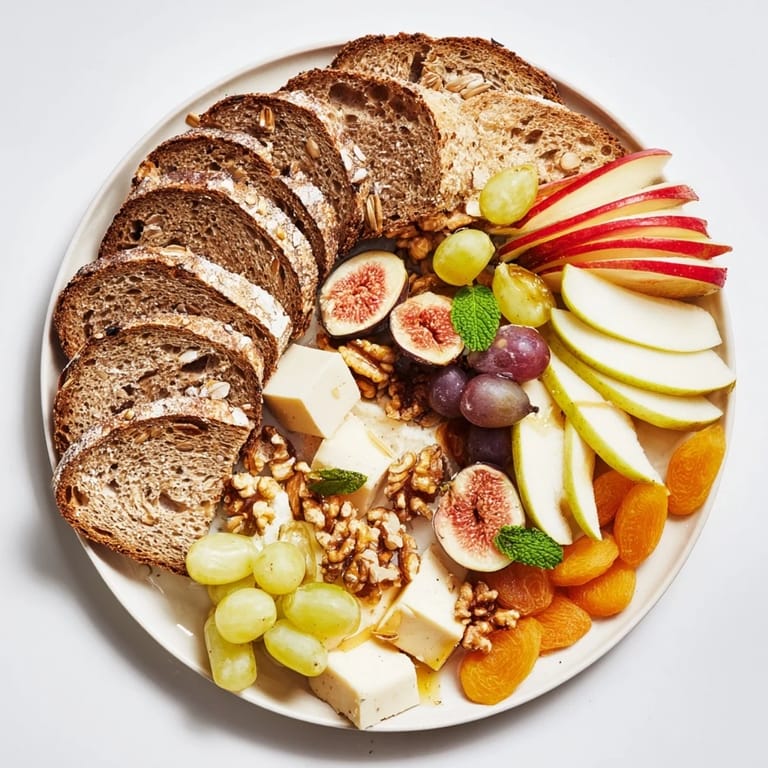
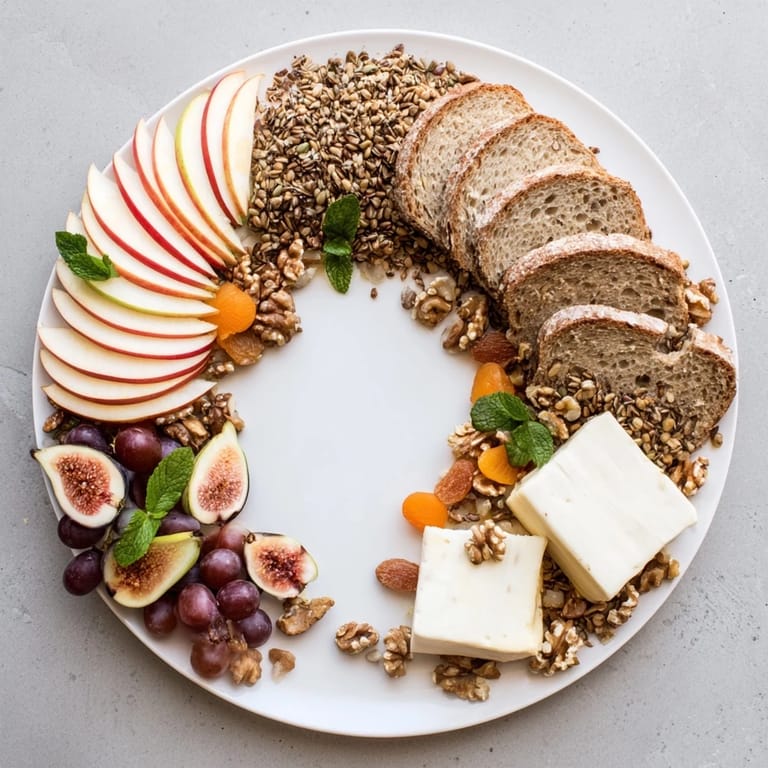
- On your largest board or platter, arrange the sliced baguette, rye bread, and crackers in a sweeping arc that curves from one corner toward the center—as if a scythe blade just swept through golden wheat. Step back and look at it; this curve is your composition's backbone.
- Build the grain field:
- Along the inner curve of your bread arrangement, spread the cooled farro or barley in a thin, intentional layer. It should look like you've captured an actual field, so let some grains cluster while other areas stay sparse.
- Arrange the fruits with intention:
- Place your grapes in small clusters, fan the pear and apple slices so they overlap slightly, and scatter dried apricots and figs between everything. Let colors and textures talk to each other—dark figs next to pale pears, bright grapes next to golden apricots.
- Add cheese thoughtfully:
- If using cheese, create two or three small clusters near the bread rather than spreading it thinly everywhere. This makes it easier for guests to serve themselves and looks more intentional.
- Place your honey or jam:
- Set small bowls or ramekins at the edge of the platter, filled with honey or fig jam. Position them where they're easy to reach but feel like they belong in the composition.
- Garnish with life:
- Scatter fresh mint leaves across the board and finish with roasted nuts sprinkled throughout. The green of the mint makes everything look fresher, and the nuts add a final note of texture and aroma.
- Serve immediately:
- The moment you finish, bring it to the table while the fruits are still cool and the breads still have their texture. This is peak presentation time.
 Save
Save There was a moment at my cousin's wedding reception when I noticed someone had taken a photo of the platter before touching it. She sent it to me months later with the caption "Remember when we made art and called it lunch?" That's when I understood: this isn't about technique or ingredients. It's about the permission you give yourself to arrange things beautifully and call it dinner.
Choosing Your Breads Wisely
The bread is your canvas, so choose varieties that have personality. A good baguette should be crusty outside and open-crumbed inside—this texture matters because it feels good to bite into and looks beautiful when sliced. Seeded rye brings visual drama and an earthy flavor that makes people slow down and taste it properly. If you're shopping, skip soft sandwich breads and reach for artisanal options; the crust and structure will hold up through the gathering and actually look impressive. I learned this the hard way when I once used a soft white bread that looked floppy by hour two.
The Art of Fruit Selection
Seasonal fruit will always be superior, but that doesn't mean you can't make this platter year-round. In winter, rely on grapes, dried apricots, figs, and crisp pears that have been stored well. In summer, add berries, stone fruits, and sliced stone fruits for brightness. The key is buying fruit that's ripe but still firm enough to handle, and understanding that softer fruits like berries should go on last. I once put fresh raspberries on a board two hours early, and they practically dissolved into jam by the time people arrived. Now I treat delicate fruits like the final signature on a painting—saved for the very end.
Making It Your Own
This platter works because it's a framework, not a prescription. Want to add roasted vegetables like charred beets or grilled zucchini? They fit beautifully between the fruits. Thinking about adding hummus, ricotta, or whipped feta in small bowls? Yes, absolutely. Your board becomes a conversation about what you love and what your guests need. One friend made this with only dried fruits and nuts because her guests had different dietary needs, and it was somehow even more striking.
- Swap seasonal fruits freely—plums, berries, melon, or citrus slices all work within this design.
- Add roasted chickpeas, candied nuts, or olives if you want more savory elements mixed in.
- Consider wine pairings—a crisp Riesling, dry rosé, or sparkling wine all sing alongside this platter.
 Save
Save Every time I make this platter, I remember why I stopped looking for complex recipes. This is the kind of food that brings people together not because of what's in it, but because of how it looks, how it tastes, and what it says about the person who made it. I hope it does the same for you.
Recipe Guide
- → Can I make this platter vegan-friendly?
Yes, simply omit the cheeses or replace them with plant-based alternatives for a fully vegan option.
- → What breads work best for this arrangement?
Use a variety of fresh breads like small baguette slices, seeded rye, and multi-grain crackers for texture contrast.
- → How should I store leftovers?
Cover any remaining breads and fruits tightly and refrigerate. Consume within a day for best freshness.
- → Are there suitable substitutions for the fruits?
Seasonal fruits like plums, berries, or stone fruits can be used to suit availability and taste preferences.
- → What drinks pair well with this platter?
A crisp white wine or light sparkling beverage enhances the fresh and rustic flavors of the platter.