 Save
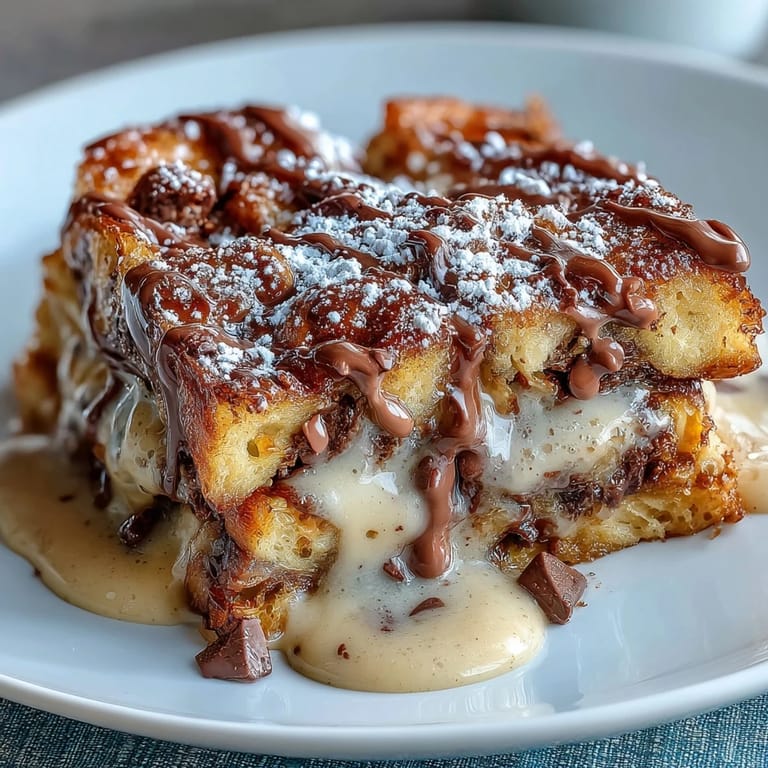
Save My sister texted me at 7 AM on a Sunday asking if I could make something impressive for brunch, and all I had in my kitchen were three-day-old croissants she'd bought from the bakery down the street. Instead of letting them go stale in the cabinet, I remembered a trick I'd learned years ago about transforming yesterday's baked goods into something entirely new. Within an hour, the smell of chocolate and butter had filled my apartment, and she arrived to find this golden, custardy masterpiece cooling on the counter. It became her go-to request every time she visits now.
There was this one morning when my neighbor knocked on my door because the smell had drifted into the hallway, and within ten minutes she was sitting at my kitchen table with a fork in hand. We didn't exchange many words, just quiet appreciation for how the golden-brown top crackled under her spoon and released that custardy center. That's when I realized this dish does something special—it stops people mid-conversation.
Ingredients
- Croissants (6 large, day-old): The older the better, honestly, because they soak up custard without falling apart, but if you only have fresh ones, pop them in a 300°F oven for 5 minutes to dry them out slightly.
- Semisweet or dark chocolate (1 cup): I prefer chopping my own from a bar rather than using chips because they melt more evenly, but chips work fine if that's what you have.
- Whole milk (2 cups): This is your base, and it matters more than you'd think—don't use skim because you need that richness to carry the custard.
- Heavy cream (1 cup): This is what makes it feel decadent instead of just custardy, so don't skip it or substitute it.
- Large eggs (4): Room temperature is ideal because they whisk more smoothly, but I've never waited long enough and it's turned out fine anyway.
- Granulated sugar (1/2 cup): Measure it and then taste your custard before baking—you can always add a touch more if you like it sweeter.
- Vanilla extract (1 tsp): Real vanilla makes a difference you can taste, especially since the custard is so simple otherwise.
- Kosher salt (1/4 tsp): This small amount balances the sweetness and makes the chocolate flavor pop in a way people can't quite identify.
Tired of Takeout? 🥡
Get 10 meals you can make faster than delivery arrives. Seriously.
One email. No spam. Unsubscribe anytime.
Instructions
- Prepare Your Stage:
- Preheat your oven to 350°F and butter a 9x13-inch baking dish—this takes two minutes and sets up the whole process. While it warms, cut your croissants into rough 2-inch pieces, letting them be a little uneven because that's what creates pockets for chocolate and custard to hide in.
- Layer Your Foundation:
- Scatter the croissant pieces across the bottom of your baking dish, then generously sprinkle chocolate over and between them like you're being a little reckless about it. This isn't the time to be precise—just make sure chocolate is distributed enough that every spoonful will have some.
- Whisk Your Custard:
- Combine milk, cream, eggs, sugar, vanilla, and salt in a bowl and whisk until the mixture is smooth and the sugar dissolves—this takes about two minutes of steady whisking. You'll notice the mixture getting slightly paler and thicker as the eggs incorporate, which is exactly what you want.
- The Soak:
- Pour the custard evenly over everything, then use a spatula to gently press the croissant pieces down so they're submerged and can actually absorb the liquid. Let it sit for exactly ten minutes while you make toast or check your phone, because this resting period is non-negotiable for texture.
- Into the Oven:
- Slide it in and bake for 35 to 40 minutes—you'll know it's done when the top turns golden brown and the center jiggles just slightly when you nudge the pan. If it still looks pale at 35 minutes, give it another five because ovens vary wildly and you'd rather have it slightly overdone than custardy in the center.
- The Cool Down:
- Pull it out and let it rest for 10 minutes before serving, which is harder than it sounds because the smell will make you impatient. This resting time lets the custard set just enough so it holds together instead of collapsing onto your plate.
 Save
Save I made this for my best friend's birthday brunch last spring, and it became the thing everyone asked about for months afterward instead of the fancy mimosas I'd stressed over. There's something about food that transforms leftover ingredients into a moment worth remembering.
The Croissant Choice
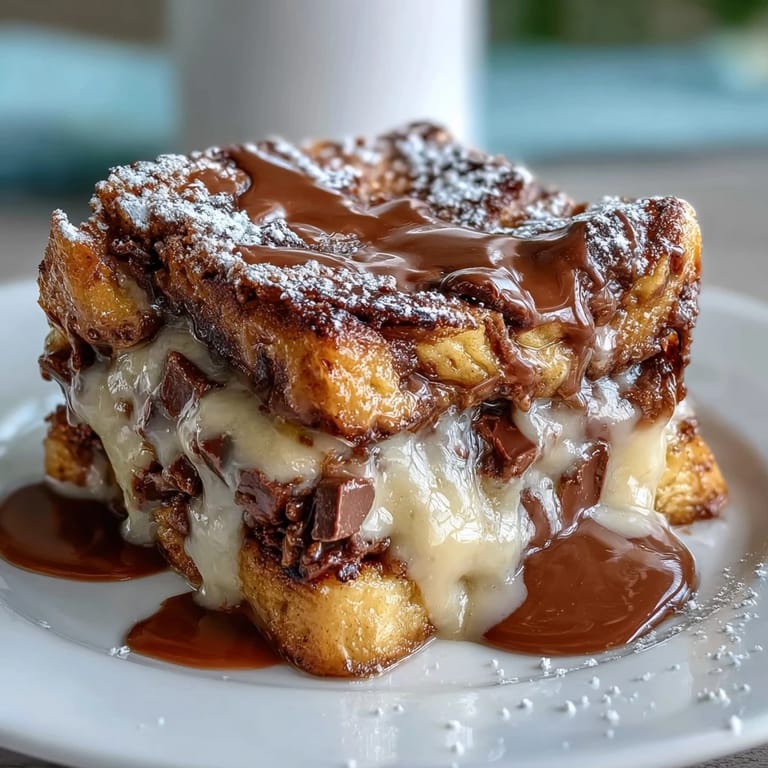
Croissants are the secret weapon here, and I learned this the hard way by trying to substitute brioche once. The croissants have all those laminated butter layers that create texture and pockets where chocolate and custard pool, whereas brioche just turns into porridge. The architecture matters more than I expected.
Timing and Temperature Matters
I've made this at high altitude where everything takes longer, and I've made it at sea level in a grandmother's ancient oven that runs hot. The 35 to 40 minute window is real, but trust your eyes and nose more than the timer—when it smells like caramelized butter and custard, you're close. The top should be golden and set, and the very center should have just the tiniest wobble.
Make It Your Own
This is one of those recipes that invites tinkering without falling apart, so I've experimented more with this than most things in my kitchen. Add orange zest or a splash of Grand Marnier to the custard if you want it to taste like a French café, or steep some Earl Grey tea in your milk before whisking it together for something unexpected. Some mornings I toast the croissants lightly before assembly, and other times I add a pinch of nutmeg to the custard because I'm feeling it.
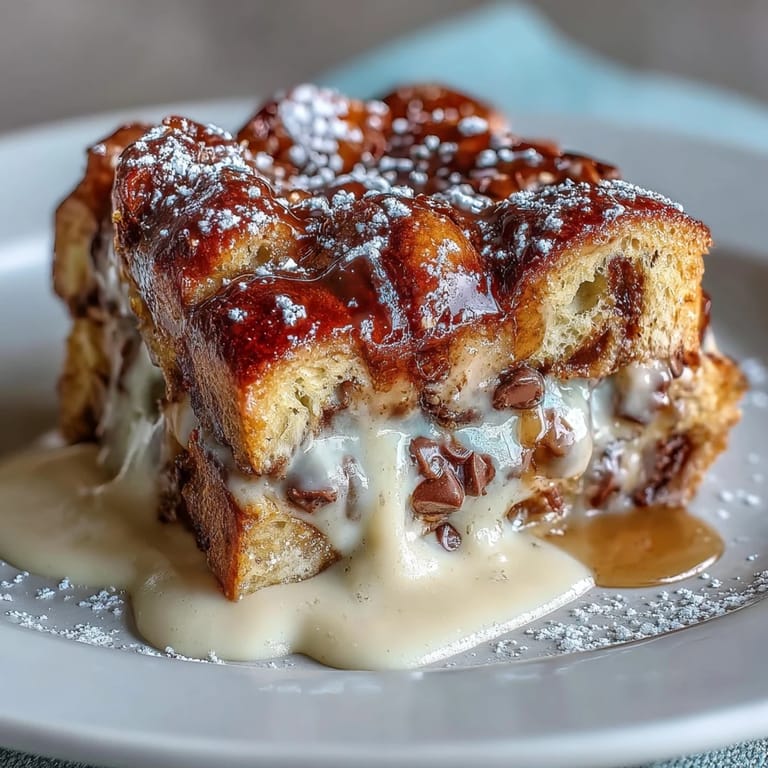
- If you want it fancier, dust with powdered sugar right before serving and add fresh raspberries or a dollop of whipped cream.
- Leftovers refrigerate beautifully and reheat in a 300°F oven for about 15 minutes without drying out.
- Make it the day before and let it soak overnight in the refrigerator for an even more custard-soaked result.
 Save
Save This dish taught me that the best brunch moments aren't about having all the right ingredients or hours to spend cooking—they're about knowing what to do with what's sitting in your kitchen. Make it, and watch people slow down.
Recipe Guide
- → What type of croissants work best?
Day-old croissants are ideal as they absorb the custard better without becoming too soggy. Fresh croissants can also be used if slightly dried before baking.
- → Can I substitute the chocolate used?
Yes, semisweet chocolate chips or chopped dark chocolate both work well to add richness and balance the custard's sweetness.
- → Is it necessary to let the croissants soak before baking?
Allowing the croissants to soak in the custard for about 10 minutes ensures they absorb the flavors and create a moist, tender texture after baking.
- → What are some suggested toppings?
Light dustings of powdered sugar, fresh berries, or a dollop of whipped cream add freshness and a pleasant contrast to the warm custard bake.
- → Can I prepare this ahead of time?
Yes, you can assemble the custard and croissants a few hours ahead and refrigerate before baking to save time on the day of serving.