 Save
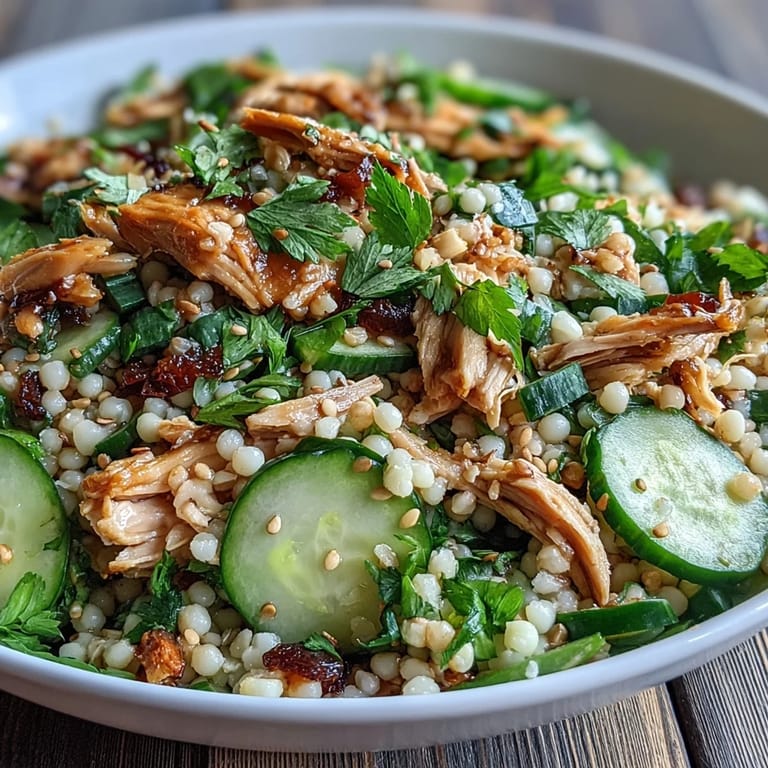
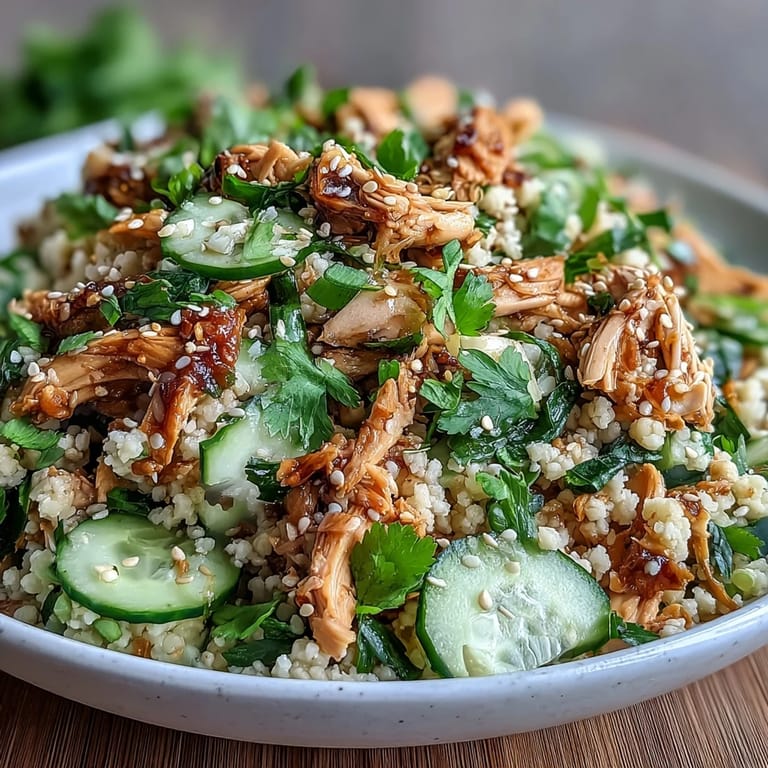
Save There's something about a bowl of couscous that makes me feel like I've traveled somewhere warm and bright, even when I'm standing in my own kitchen on a grey afternoon. I discovered this particular salad during one of those moments when the fridge held promise but not much else—some rotisserie chicken from the grocery store, a cucumber that needed using, and a jar of sesame oil catching the light on the shelf. What started as a practical lunch became something I kept making, something my friends started asking for, something that tasted like intentionality even though it came together in barely half an hour.
I served this to my neighbor once when she dropped by unexpectedly with her daughter, both of them tired from a long day of errands. Twenty minutes later, they were sitting on my porch with full bowls, talking and laughing, and the daughter asked if I could teach her how to make it. That moment—when a simple salad became a little bridge between us—is when I knew this recipe was more than just food.
Ingredients
- Pearl couscous (Israeli couscous): These little round grains are chewy and substantial in a way that regular couscous isn't, which means they hold up beautifully to the dressing without getting mushy or disappearing into nothing.
- Water or low-sodium chicken broth: Broth adds a whisper of flavor that makes the whole salad taste more complete, though water works perfectly fine if that's what you have on hand.
- Rotisserie chicken, shredded: The rotisserie does the work for you—seasoned, tender, and ready to go—which is exactly the point of this recipe when you need something quick.
- Cucumber: Slice it thin so it cools as you work, and seeding it prevents any watery mess that might dilute your dressing.
- Scallions and fresh cilantro: These are the brightness that stops the salad from feeling heavy, so don't skip them even if you think you might.
- Toasted sesame seeds: The toasting is crucial—it wakes up their flavor and gives you that satisfying crunch that makes every forkful feel intentional.
- Soy sauce: Low-sodium means you control the salt, which matters more than you'd think when you're building a dressing from scratch.
- Toasted sesame oil: This is where half the magic lives—its nutty, deep flavor is what makes people pause mid-bite and ask what they're tasting.
- Rice vinegar: Gentler and slightly sweeter than white vinegar, it balances the soy without making the dressing sharp or one-note.
- Honey or maple syrup: A small amount adds roundness and helps the flavors blend instead of competing with each other.
- Fresh ginger and garlic: These should be fresh—the difference between ginger from a jar and freshly grated is the difference between a whisper and a real voice in the dressing.
- Sriracha: Optional, but it adds a gentle heat that plays beautifully with the sesame if you want a little edge.
- Neutral oil: This carries the other flavors and keeps the dressing from being too thick or bitter.
Tired of Takeout? 🥡
Get 10 meals you can make faster than delivery arrives. Seriously.
One email. No spam. Unsubscribe anytime.
Instructions
- Bring your liquid to a boil and welcome the couscous:
- Listen for that rolling boil before you stir in the couscous—it matters for even cooking. Once you add it, the grains will drink up all that liquid quickly, so keep an eye on the timer and resist the urge to check it too early.
- Let it cool while you build the dressing:
- Spread the warm couscous on a baking sheet if you're in a hurry—it cools in minutes that way. While it's cooling, whisk together your dressing ingredients in a small bowl, tasting as you go so you catch the balance between salty, tangy, and sweet.
- Combine everything with gentleness:
- Warm couscous actually absorbs dressing better than cold couscous, so don't wait too long after it cools. Toss it all together gently, letting the couscous mingle with the chicken, cucumber, and herbs without crushing anything.
- Finish with sesame seeds and serve:
- Those toasted seeds go on last because they stay crunchier that way. Serve it at room temperature while the flavors are still bright, or chill it if you prefer—it's good both ways, though room temperature is where it really sings.
 Save
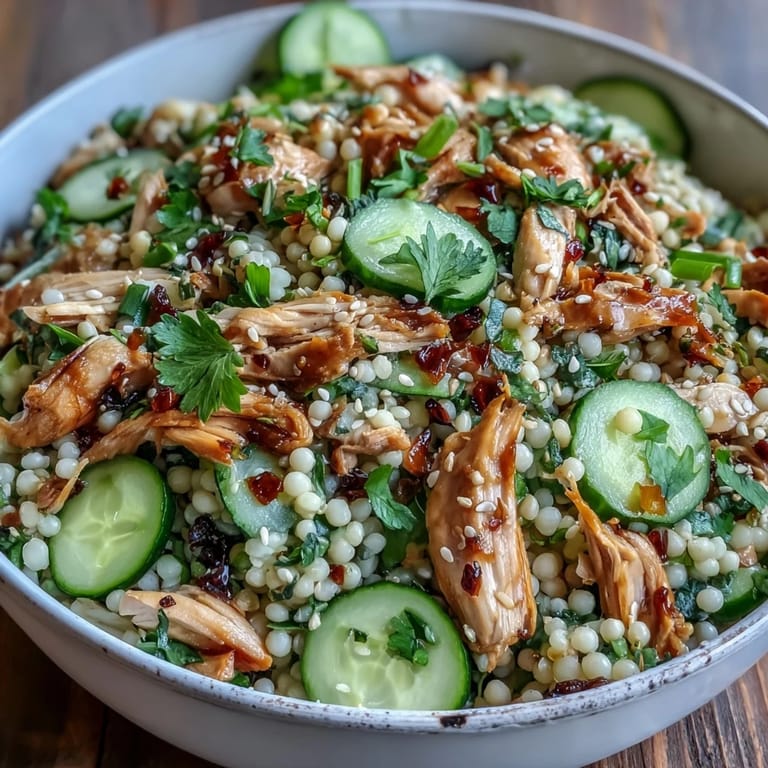
Save There was a moment last summer when I brought this to a potluck and watched someone go back for thirds, then ask for the recipe because they wanted to understand how something so simple could taste so complete. That's when I realized this salad is one of those quiet victories—nothing fancy, nothing fussy, just honest flavors that happen to work beautifully together.
The Magic of Sesame Oil in Your Dressing
Sesame oil is not an ingredient to use casually—a little goes so far that you can almost hear it singing if you listen. When you whisk it with soy sauce and rice vinegar, something transforms; the vinegar becomes less sharp, the soy becomes more rounded, and suddenly you have a dressing that tastes sophisticated without tasting like it came from anywhere other than your own kitchen. The key is toasted sesame oil, never the untoasted kind, because the toasting is where all the flavor lives.
Couscous: Why Pearl Changes Everything
Regular couscous is fine in a pinch, but pearl couscous—those little round grains also called Israeli couscous—has a texture that actually improves when you dress it. It chewy and almost pasta-like, which means it stands up to the dressing instead of absorbing it and disappearing. The first time I made this salad, I used regular couscous and was disappointed; switching to pearl was the moment everything clicked into place.
Making It Your Own and Keeping It Fresh
This salad is forgiving enough to welcome changes without losing its identity, which is one of my favorite things about it. You can add shredded carrots for color, swap in baked tofu if chicken isn't in the plan, or throw in some edamame for extra protein and texture. If you're making it ahead, hold back on the sesame seeds until just before serving so they stay crispy instead of going soft.
- Bell peppers add sweetness and crunch if you want more vegetables in the mix.
- A handful of crushed peanuts or cashews can replace the sesame seeds if you want to go a different direction.
- Store it in the fridge for up to three days, and stir it gently before serving since the couscous settles as it sits.
 Save
Save This salad has become one of those recipes I make without thinking, the way you might make a grilled cheese or pour a glass of water. It feeds people, it's kind to your schedule, and it tastes like you put more thought into it than you actually did.
Recipe Guide
- → Can I make this ahead of time?
Yes, prepare up to 24 hours in advance. Store in an airtight container in the refrigerator and add fresh cilantro and sesame seeds just before serving for optimal texture.
- → What can I substitute for rotisserie chicken?
Use leftover cooked chicken, poached chicken breast, or for a vegetarian version, swap in edamame, baked tofu, or chickpeas for protein.
- → Is pearl couscous the same as regular couscous?
No, pearl couscous (Israeli couscous) consists of larger, chewier spheres that require simmering, while regular couscous is smaller and steams quickly. Don't substitute directly—cooking times differ.
- → How do I prevent the couscous from becoming mushy?
Cool the cooked couscous on a baking sheet to stop the cooking process and prevent clumping. Add dressing just before serving to maintain the fluffy texture.
- → Can this be served warm?
Absolutely. While traditionally served at room temperature or chilled, you can serve it slightly warm—just toss the dressing with warm couscous and chicken for a comforting variation.
- → Is the dressing spicy?
The base dressing has mild heat from ginger and garlic. The optional Sriracha adds customizable spice—start with ½ teaspoon if you're sensitive to heat.