 Save
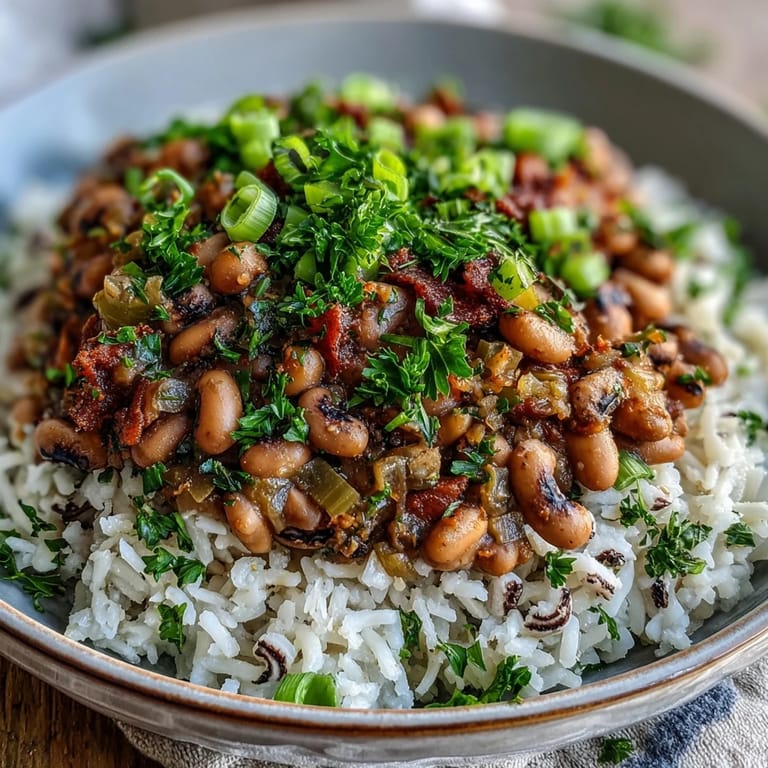
Save My friend Marcus brought a pot of Hoppin John to a New Year's potluck, and I watched people go back for thirds without hesitation. When I asked for the recipe, he laughed and said his grandmother would never forgive him for sharing, but then he did anyway, whispering that he'd made it vegetarian because his daughter had gone plant-based. That first time I made it, my kitchen filled with a warmth that felt almost ceremonial, like I was cooking something that mattered beyond just filling bellies.
I made this for my neighbors after their baby arrived, and watching them eat something hot and real while sleep-deprived reminded me why this dish exists. It's the kind of food that says I see you and I'm not going anywhere, all without needing to say a word.
Ingredients
- Olive oil: Just a tablespoon anchors the sauté without overwhelming the vegetables, so use something you actually like the taste of.
- Onion, bell pepper, and celery: This trinity is called the holy trinity in Southern cooking for good reason, and together they build the foundation that everything else rests on.
- Garlic: Three cloves minced fine so they disappear into the oil and become pure flavor rather than chunks.
- Black-eyed peas: Canned and rinsed work beautifully here, though if you're feeling ambitious, soaked dried ones give a slightly firmer texture and feel less watery.
- Smoked paprika: This is where the soul comes from, so don't skip it or swap it for regular paprika, which tastes flat and one-dimensional by comparison.
- Thyme, oregano, and cumin: Dried herbs work perfectly since they meld into the broth rather than get lost like fresh ones might.
- Cayenne pepper: Optional but recommended, as a tiny pinch adds intrigue without heat if you're cooking for mixed tastes.
- Bay leaves: Two leaves add a subtle woodsy note, but remember to fish them out before serving or your guests will wonder what that leaf is doing on their plate.
- Vegetable broth: Low-sodium is crucial because you're controlling the salt level, and store-bought broth can be aggressively salty.
- Soy sauce or tamari: Just a tablespoon adds umami depth, making the dish feel savory and complete rather than one-note.
- Rice: Fluffy white or nutty brown both work, but cook it separately so you control the texture and don't end up with mushy grains.
- Fresh parsley or cilantro: The garnish is where brightness comes from, cutting through the richness and waking everything back up.
- Green onions: A thin scatter across the top adds a whisper of sharpness and color that makes the bowl actually look finished.
Tired of Takeout? 🥡
Get 10 meals you can make faster than delivery arrives. Seriously.
One email. No spam. Unsubscribe anytime.
Instructions
- Build the base:
- Heat your oil over medium until it shimmers slightly, then add the onion, bell pepper, and celery all at once. You'll know it's working when the vegetables soften and the kitchen starts smelling like something good is happening, which takes about five to six minutes of occasional stirring.
- Wake up the garlic:
- Scatter your minced garlic across the vegetables and stir constantly for just one minute, long enough for it to become fragrant but not so long that it browns and turns bitter.
- Coat everything in spice:
- Add all your dried spices at once and stir like you're coating each piece of vegetable in the mixture. This blooming technique releases the oils in the spices and makes them taste alive rather than dusty.
- Bring it together:
- Pour in your rinsed black-eyed peas, vegetable broth, soy sauce, and toss in those bay leaves. The liquid should mostly cover everything, and the soy sauce will darken it slightly, which is exactly right.
- Let it simmer and marry:
- Reduce the heat to low and let it bubble gently uncovered for twenty to twenty-five minutes, stirring now and then so nothing sticks. You'll know it's ready when the broth thickens slightly and tastes like all the flavors have finally decided to get along.
- Finish and taste:
- Fish out those bay leaves with a fork, then taste a spoonful and adjust your salt or spices if needed. This is your moment to make it exactly right.
- Serve with intention:
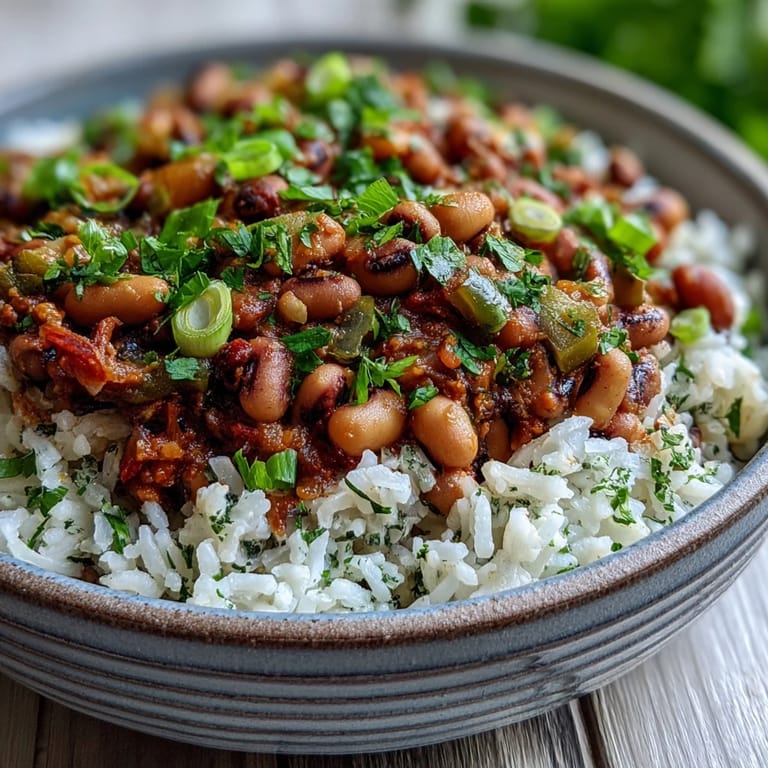
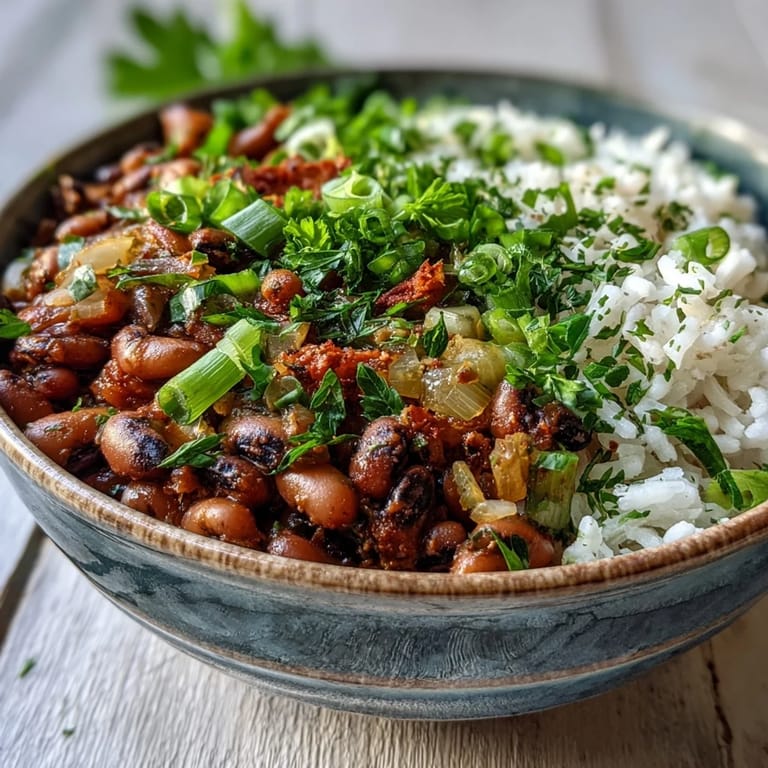
- Spoon the Hoppin John over warm rice, letting the broth settle around the grains. Scatter your fresh herbs across the top so each bite has that brightness, and set out lemon wedges for anyone who wants to add a sharp finish.
 Save
Save There's something about Hoppin John that makes people slower down and actually taste their food instead of just eating it. Last time I made it, my quiet teenager put down her phone without being asked, and we talked about her day while eating, which felt like the real blessing.
The Story Behind This Southern Classic
Hoppin John comes from the Low Country of the Carolinas and Georgia, traditionally eaten on New Year's Day for luck and prosperity. The original version included bacon or salt pork, but this plant-based take honors the spirit of the dish while opening it up to anyone looking for that same warmth and meaning. The combination of legumes and rice also creates a complete protein, which is a practical benefit hidden inside a centuries-old tradition.
Timing and Make-Ahead Magic
This dish actually tastes better the next day once the flavors have had time to truly get to know each other. You can make it completely ahead, store it in the fridge for three days, and simply reheat it gently on the stove with a splash of broth if it's gotten too thick. Rice, on the other hand, is best made fresh or reheated separately so it doesn't absorb too much moisture and turn gummy.
Variations Worth Trying
The beauty of Hoppin John is that it's flexible enough to take on your preferences without losing its soul. You can swap the black-eyed peas for pinto beans or kidney beans if that's what you have, use chipotle powder instead of cayenne for a smokier heat, or add a dash of liquid smoke if you really want to lean into that richness. If you're cooking for someone avoiding soy, coconut aminos works perfectly in place of tamari and adds its own subtle sweetness.
- Try adding diced tomatoes in the last few minutes of cooking for brightness and body.
- A handful of collard greens or kale stirred in at the end turns this into a one-pot meal that's even more complete.
- If your crowd enjoys heat, keep hot sauce on the table and let everyone dial in their own level of fire.
 Save
Save This is the kind of recipe that gets better every time you make it because you learn what your stove does and what your palate actually wants. Serve it with pride and watch what happens when comfort food gets a second chance.
Recipe Guide
- → What makes this Hoppin John vegetarian?
This version uses vegetable broth instead of traditional meat-based broth, and relies on smoked paprika and soy sauce for depth of flavor rather than bacon or ham hocks. The result maintains the savory, smoky essence while being completely plant-based.
- → Can I use dried black-eyed peas instead of canned?
Absolutely. Soak 1 cup dried black-eyed peas overnight, then cook them in simmering water for about 45-60 minutes until tender before adding them to the pot. You may need slightly less vegetable broth since the peas won't absorb as much liquid during cooking.
- → How do I store and reheat leftovers?
Store the black-eyed pea mixture and rice separately in airtight containers in the refrigerator for up to 4 days. Reheat gently on the stovetop with a splash of water or broth to loosen the mixture. The flavors often develop and taste even better the next day.
- → What sides pair well with this dish?
Traditional Southern sides like collard greens, cornbread, or roasted sweet potatoes complement this dish beautifully. A simple green salad with vinaigrette or sautéed okra also works well. For extra heat, serve with your favorite hot sauce.
- → Can I make this dish spicy?
The optional cayenne pepper adds gentle heat. For more spice, increase the cayenne to 1 teaspoon, add diced jalapeño with the vegetables, or incorporate chipotle powder instead of cayenne for a smoky heat. Fresh hot sauce at the table lets everyone adjust to their preference.
- → Is this dish freezer-friendly?
Yes, the black-eyed pea mixture freezes well for up to 3 months. Let it cool completely before transferring to freezer-safe containers. Thaw overnight in the refrigerator and reheat on the stovetop. Cook fresh rice when serving for the best texture.