 Save
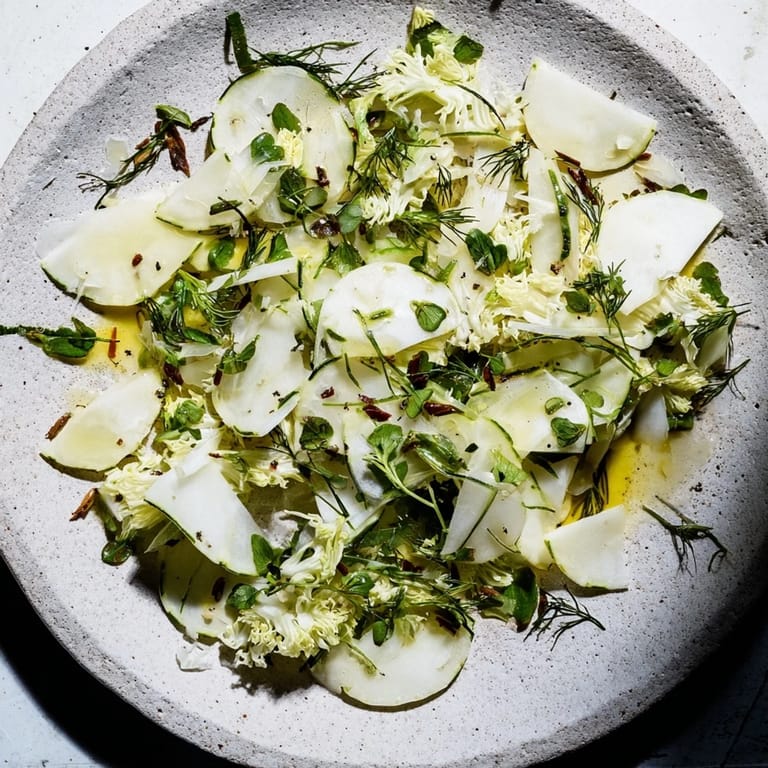
Save I discovered this dish on a snowy afternoon when I was trying to capture something about silence on a plate. There's a particular kind of beauty in the Arctic that pulls at you—endless white, with only the smallest variations of shape and texture breaking the monotony. That's when I started playing with pale vegetables, arranging them like I was composing a landscape. What began as a visual experiment became something I actually wanted to eat, and now it's one of those dishes I make when I want to slow down and really look at food.
I served this to my sister on her birthday last winter, plated on this stone she'd brought back from Iceland years before. She sat there for a full minute just looking at it, fork in hand, like she was afraid to disturb the arrangement. When she finally took a bite, she laughed because it was so much lighter and more delicate than it appeared. That single moment—when she realized the quiet elegance wasn't sacrificing flavor—is exactly what this dish is meant to do.
Ingredients
- Daikon radish: Slice it paper-thin so it has that translucent, icy quality that defines the whole dish; a mandoline makes this effortless.
- Kohlrabi: This underrated vegetable has a subtle sweetness and stays wonderfully crisp when cold; peel generously to remove the fibrous outer layer.
- Belgian endive: The pale leaves are already beautiful, but keeping them cold until the last moment preserves their slight bitterness, which balances everything else.
- Cauliflower florets: Chop them fine so they scatter like delicate snowflakes across the plate; raw and cold, they're almost nutty.
- Coconut flakes: Unsweetened is essential here—you want the toasted, earthy notes, not sweetness that would throw off the whole composition.
- White and black sesame seeds: Toast the white ones lightly in a dry pan until fragrant, then let them cool completely; the black seeds add visual contrast and a slightly earthier flavor.
- Microgreens: Add them only at the very end so they stay tender; pea shoots or radish sprouts both work beautifully here.
- Extra-virgin olive oil: This is your primary flavoring, so choose one you genuinely enjoy; something grassy and peppery works best.
- Lemon juice and white wine vinegar: Together they brighten everything without overpowering; white vinegar gives you that Arctic clarity without harshness.
- White pepper: It's milder and more refined than black, dissolving invisibly into the dressing while still delivering warmth.
- Flaky sea salt: Applied at the very end, it adds texture and enhances each component individually.
Tired of Takeout? 🥡
Get 10 meals you can make faster than delivery arrives. Seriously.
One email. No spam. Unsubscribe anytime.
Instructions
- Chill your stage:
- Pop the stone or marble platter into the freezer while you prep everything else. A cold surface keeps the vegetables crisp and actually changes how the flavors register on your tongue—it's not just theatrical, it's sensory.
- Mix the dressing:
- Whisk the olive oil, lemon juice, vinegar, and white pepper together in a small bowl. It should look pale and translucent, almost like you're hardly adding anything at all.
- Scatter with intention:
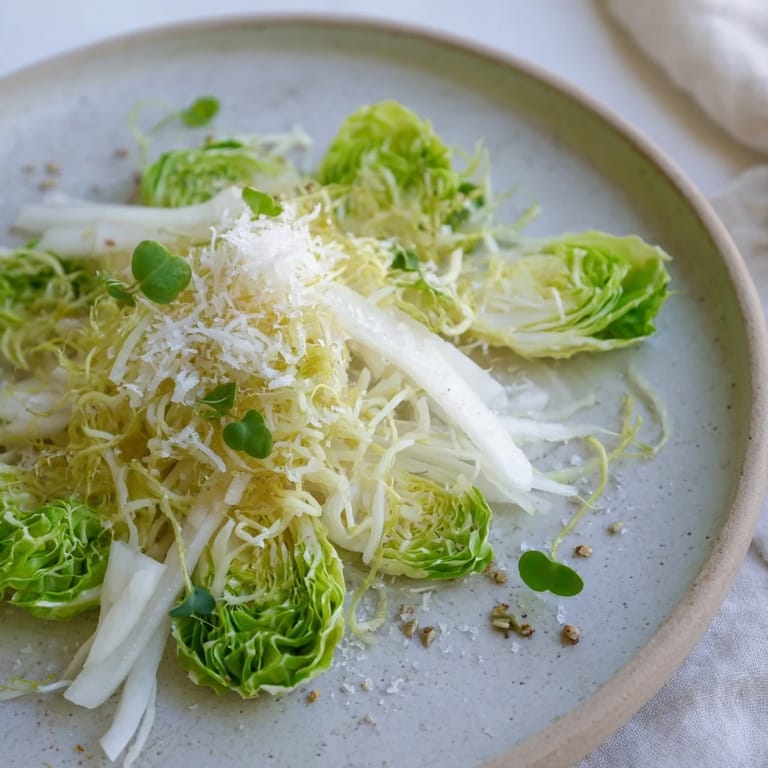
- Remove the chilled platter and begin arranging the daikon, kohlrabi, and endive leaves sparsely across it. Think windswept, not crowded—leave negative space.
- Layer texture:
- Sprinkle the finely chopped cauliflower, coconut flakes, and sesame seeds in a random pattern, letting them fall naturally between the vegetables. Don't fuss with perfect placement; the imperfection is what makes it look real.
- Dress gently:
- Drizzle the dressing lightly and evenly across the arrangement. You want moisture, not pooling—a light hand is your friend here.
- Final touches:
- Scatter the microgreens over the top and finish with just a pinch of flaky sea salt. Serve immediately while everything is still cold and the textures are at their crispest.
 Save
Save There's a moment early in winter when everything outside turns quiet and colorless, and this is the dish that brings that feeling inside. It's not complicated or loud, but it stays with you because it asks you to slow down and actually taste instead of just eating.
The Art of Minimalist Plating
This dish taught me that white space on a plate is as important as what you put on it. When you're not crowding elements, each one gets to be itself—the radish tastes more radish-like, the sesame feels more distinctly nutty. There's a reason high-end restaurants leave blank areas on the plate; it lets the eye rest and the flavors speak individually before they come together in your mouth.
Vegetables That Shine Raw
Cooking can sometimes muffle a vegetable's voice, but these pale, delicate ones actually become more interesting when served raw and cold. Daikon and kohlrabi have a crisp, almost juicy quality that you lose the moment heat touches them. Cauliflower raw is something most people skip, but it has this subtle, almost floral sweetness that gets buried when roasted. Learning to appreciate them this way opened up an entirely different approach to vegetables in my kitchen.
Dressing and Balance
The dressing here is deliberately pale and understated because the vegetables are the main conversation. White wine vinegar, lemon juice, and white pepper create brightness without aggression, while the olive oil carries everything and adds richness. I learned by over-dressing early versions that even a beautiful dish can get drowned—sometimes less really is more, and the restraint is what makes people lean in closer to taste.
- Make the dressing just before serving so the acid is sharp and alive.
- If you prefer more acidity, swap the white wine vinegar for rice vinegar or add a touch of yuzu juice for something more delicate.
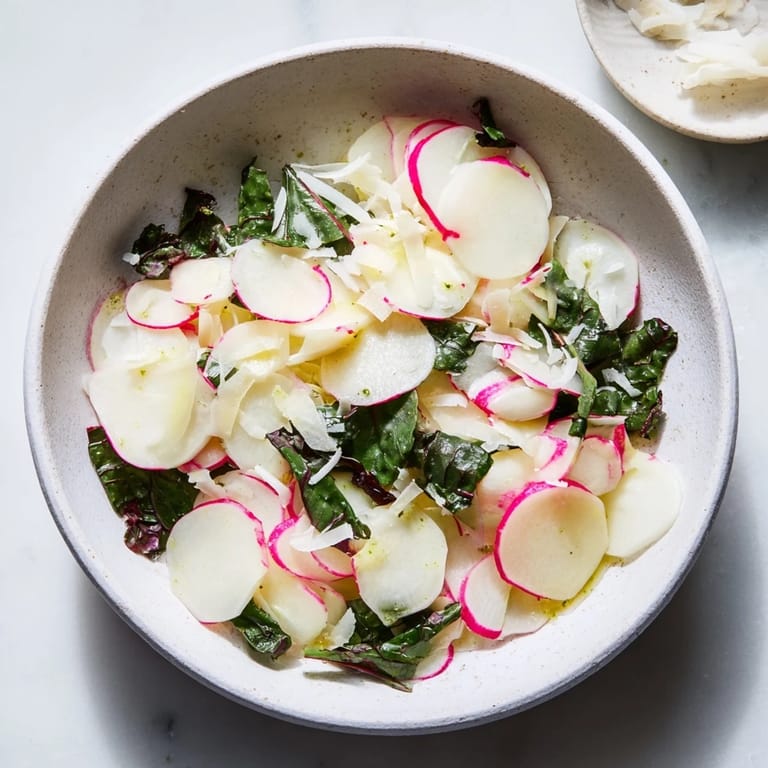
- Drizzle from height and at an angle to distribute it unevenly; patchy dressing looks more intentional and artistic.
 Save
Save This is the kind of dish that makes people pause before eating, and that moment of appreciation is half the point. Make it when you want dinner to feel like something more than sustenance.
Recipe Guide
- → What makes the vegetables in this dish unique?
The vegetables are thinly sliced and arranged to evoke the sparse beauty of tundra flora, emphasizing crisp textures and pale colors.
- → How is the dressing prepared for optimal flavor balance?
The dressing combines extra-virgin olive oil, fresh lemon juice, white wine vinegar, and white pepper, whisked together to complement the subtle flavors without overpowering them.
- → Why is the stone or marble platter chilled before serving?
Chilling the serving surface keeps the vegetables crisp and fresh, enhancing the sensory experience with a cool presentation that echoes arctic landscapes.
- → Can this dish be adapted for added protein?
Yes, flakes of smoked whitefish or chilled poached shrimp can be scattered for additional protein, though this alters the vegetarian profile.
- → What garnishes add to the dish’s texture and flavor?
Toasted white and black sesame seeds, unsweetened coconut flakes, microgreens, and flaky sea salt provide varied textures and subtle bursts of flavor.