 Save
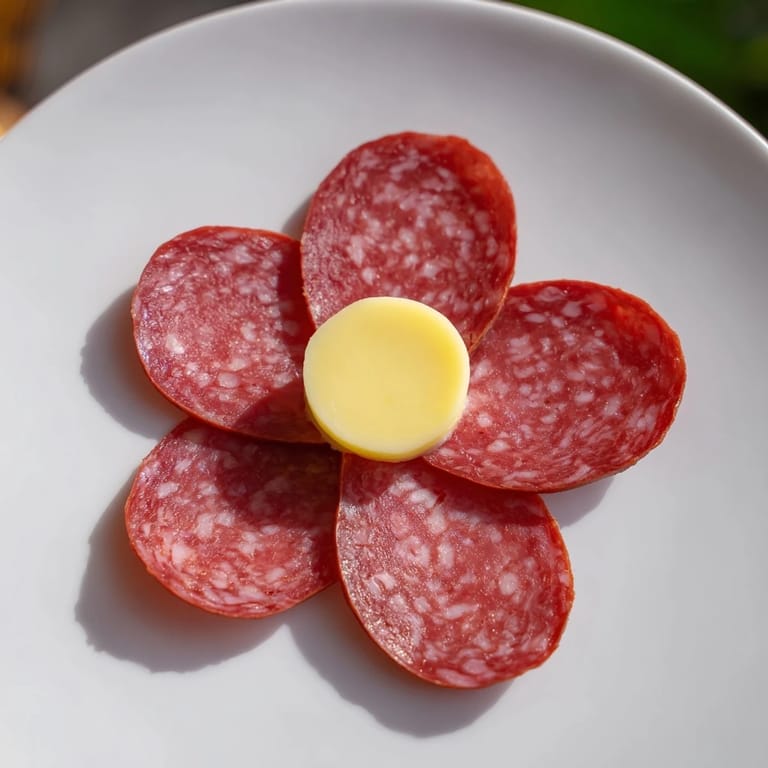
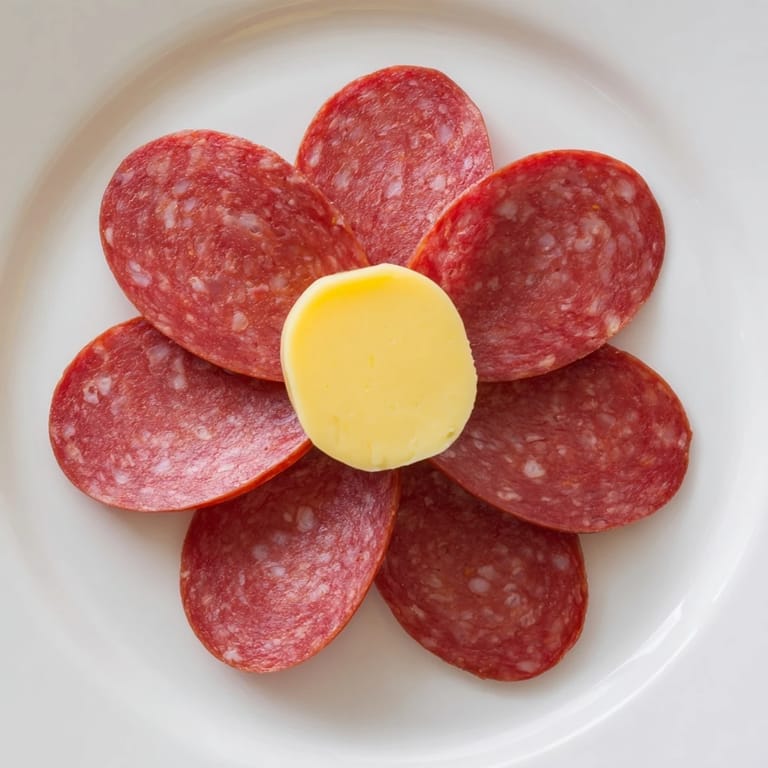
Save There's something about arranging food into shapes that stops people mid-conversation. I discovered this the night I was assembling a charcuterie board for neighbors, running late as usual, and absent-mindedly began overlapping salami slices into petals around a chunk of cheese. Within seconds, someone pointed and said, 'That's a rose.' It wasn't planned—just five circles of cured meat and cheese creating something that looked intentional and beautiful, taking barely ten minutes from bare plate to showstopper.
I brought this to a dinner party once where someone was vegetarian, and I worried I'd mistepped—until I realized the beauty of it is that each petal can be moved, shared, or set aside entirely. My friend's daughter asked if she could just have the cheese button. That single moment taught me that the simplest things often work because they're honest: good salami, good cheese, nothing pretending to be something else.
Ingredients
- 5 slices of salami (about 6–8 cm diameter each): The thinner cuts work best—they fold naturally without cracking, and you want them supple enough to create that petal effect without struggling.
- 1 small round slice of yellow cheese (Gouda, Cheddar, or similar; about 3–4 cm diameter, 0.5 cm thick): This is your anchor and your center, so pick something with enough substance that it won't slide around, and flavor that stands up to the salt of the salami.
Tired of Takeout? 🥡
Get 10 meals you can make faster than delivery arrives. Seriously.
One email. No spam. Unsubscribe anytime.
Instructions
- Arrange your petals:
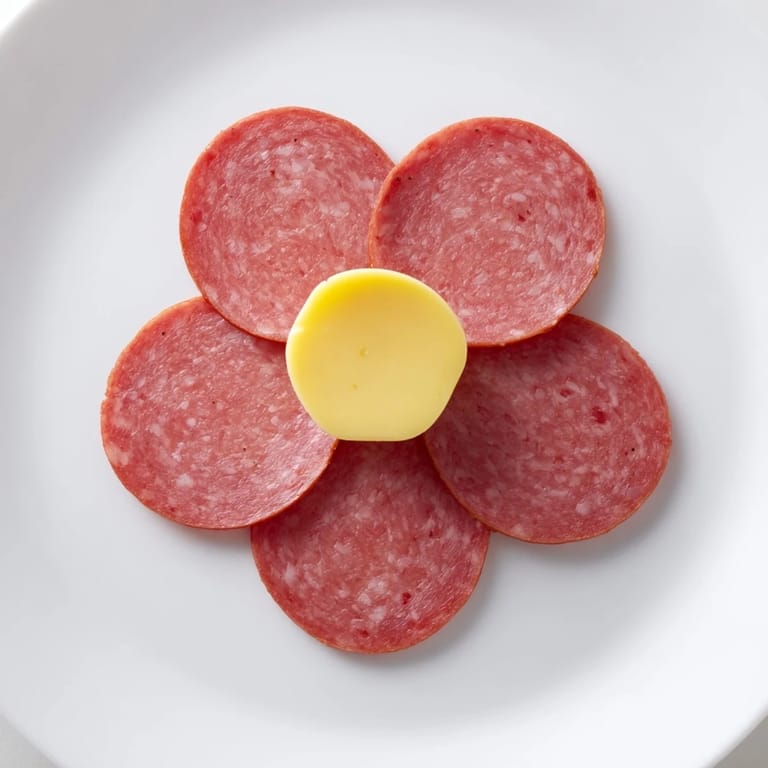
- On a clean serving plate, lay out your five salami slices in a rough circle, overlapping each one slightly so they fan outward like flower petals. You're not looking for perfection here—slight irregularity makes it feel intentional, like you actually made something.
- Place the cheese center:
- Set the round cheese slice right where all those overlapping edges meet in the middle. It should cover the messy center point and sit proudly as the flower's button, anchoring everything into one cohesive shape.
- Step back and adjust:
- Take a moment to look at it from above. Nudge any petals that feel off-balance, rotate the cheese slightly if needed, and trust that small imperfections read as charm, not sloppiness.
- Serve straight away:
- This doesn't need time to set or cool—it's ready to go the moment it's plated, which is one of its greatest gifts.
 Save
Save I once brought this to a catered event where the caterer actually asked me for the recipe, thinking it required some professional technique. I still smile remembering that moment—proof that something beautiful doesn't need to be complicated.
When to Make This
This is a weeknight-before-a-gathering move, a last-minute addition to any board that suddenly elevates everything around it. It works just as well in summer when everything is lighter and you're building spreads for casual eating, and it holds its own on winter platters too, where the richness of salami and aged cheese feels deeply satisfying.
Small Variations That Work
Once you've made the basic rose, you start seeing possibilities. Different cured meats—prosciutto, soppressata, even thinly sliced pâté—each create a subtly different effect. Cheese can shift from mild Gouda to sharp Cheddar to creamy brie (though softer cheeses need a firmer base). Some people tuck fresh herbs between the petals—basil and parsley are traditional, but a small green leaf does something quietly elegant.
Serving and Pairing
The Tudor Rose sits naturally on a charcuterie board alongside other cured meats, cheeses, and pickled things. It also works beautifully as a standalone appetizer on a small plate at a dinner party, or nestled into a larger spread at a wedding or event where people are grazing. Pair it with something crisp—good crackers, thin bread, or simple water crackers that don't compete with the flavors already on the plate.
- Serve it at room temperature so the cheese isn't too stiff and the salami's flavors come through fully.
- Don't make it more than 30 minutes before serving if your kitchen is warm; the cheese can get soft and things can slide.
- Have a small knife nearby for people who want to cut their own portions rather than eating it whole.
 Save
Save This small thing has become one of my go-to moves when I want to feel capable without actually cooking. It's the kind of recipe that reminds you that good food doesn't always need time, heat, or complexity—sometimes it just needs attention and arrangement.
Recipe Guide
- → How can I keep the salami petals in place?
Arrange the salami slices slightly overlapping to create a stable floral shape; the cheese center helps hold them together.
- → What types of cheese work best for the center button?
Small, round slices of yellow cheeses like Gouda or Cheddar are ideal due to their firm texture and color contrast.
- → Can I add garnishes to enhance the presentation?
Fresh herbs such as basil or parsley tucked between petals add color and aroma without overpowering the flavors.
- → Is this dish suitable for gluten-free diets?
Yes, it contains no gluten ingredients, making it suitable for gluten-sensitive individuals.
- → What are some serving suggestions for this appetizer?
Place it on a charcuterie board alongside crackers or fresh bread to complement the textures and flavors.