 Save
Save I'll never forget the crisp autumn Saturday when my buddy Jake called asking me to bring something to his tailgate that could feed a crowd without requiring constant supervision. I'd been thinking about this for weeks—what if I stacked everything people actually wanted to eat on one incredible board? That's when the Tailgate Party Power Stack was born. It became the thing everyone talked about at the parking lot, the board that got passed around more than the actual game highlights.
I remember standing in the parking lot watching grown adults literally fight over the last piece of smoked sausage while simultaneously dunking a pretzel chip in ranch, and thinking, 'This is it. This is the perfect food.' My friend Sarah, who usually skips tailgates, showed up specifically because she heard about this board. That's when I knew I'd stumbled onto something special.
Ingredients
- Smoked sausage (12 oz, sliced): This is your hearty anchor—buy quality smoked sausage and slice it thick enough that it feels substantial. The smokiness adds that savory depth that makes people keep coming back for more.
- Roasted turkey breast (8 oz, sliced): Turkey seems lighter than it is, which lets people graze longer without feeling heavy. I learned to buy it from the deli counter, sliced fresh, because pre-packaged gets weirdly rubbery.
- Sharp cheddar cheese (8 oz, cubed): Sharp is the only way—mild cheddar disappears into the background. Cut them into cubes rather than slices so they stack beautifully between the meats.
- Pepper jack cheese (8 oz, cubed): This brings the surprise kick that makes people say, 'Wait, what cheese was that?' The heat pairs perfectly with the pickled elements.
- Crusty baguette (1 large, sliced): A truly crusty baguette toasts differently than soft bread—it becomes a vehicle rather than falling apart. Don't skip the toasting step; it's what prevents everything from getting soggy by the third inning.
- Pretzel chips (2 cups): Sturdier than regular pretzels and way more forgiving in the stacking process. They hold up to humidity and handling better than anything else.
- Pita chips (2 cups): These add a different texture note and work beautifully with the hummus. The slight saltiness plays well against the creamy dips.
- Baby carrots (1 cup): Keep them whole—they're easier to grab and they add brightness that cuts through all the richness. The orange color matters more than you'd think when you're building this visually.
- Celery sticks (1 cup): Raw celery is refreshing and necessary. Slice them into proper sticks, not coins, because they're structural elements on this board.
- Cherry tomatoes (1 cup): These should be ripe but firm enough not to burst when grabbed. They're the jewels that make the whole thing look intentional rather than thrown together.
- Dill pickle spears (1 cup): Dill is non-negotiable here. The brine adds a tangy counterpoint and helps cleanse the palate between bites. I patted mine dry slightly so they don't make the crackers soggy.
- Pickled banana peppers (1 cup): These are my secret weapon. They add heat and vinegar brightness that makes everything taste like it was seasoned perfectly. Don't use sweet banana peppers—you need the ones with actual flavor.
- Ranch dip (1 cup): Make it or buy it, but this is the comfort dip. It's the one people return to between exploring everything else.
- Spicy mustard (1 cup): This is for the people who want something bold. A good spicy mustard has actual mustard flavor, not just heat.
- Roasted red pepper hummus (1 cup): This bridges the gap for anyone wanting something slightly lighter. The sweetness of roasted peppers works beautifully with the salty proteins.
- Fresh parsley (½ cup, chopped): This isn't decoration—it adds a fresh herbal note that elevates the whole thing. Roughly chop it so the pieces are visible and substantial.
- Mixed nuts (½ cup): Almonds, cashews, whatever you prefer. They add crunch and keep hands from getting too messy.
Tired of Takeout? 🥡
Get 10 meals you can make faster than delivery arrives. Seriously.
One email. No spam. Unsubscribe anytime.
Instructions
- Get your baguette ready:
- Preheat your oven to 350°F. Slice your baguette at a slight angle—this gives you more surface area and makes each piece feel intentional. Arrange the slices on a baking sheet and slide them in for 8-10 minutes. You're listening for that snap when you press one—that's when you know they're done. Let them cool completely; warm bread will make everything around it soggy, and we're building something that lasts.
- Create your edible foundation:
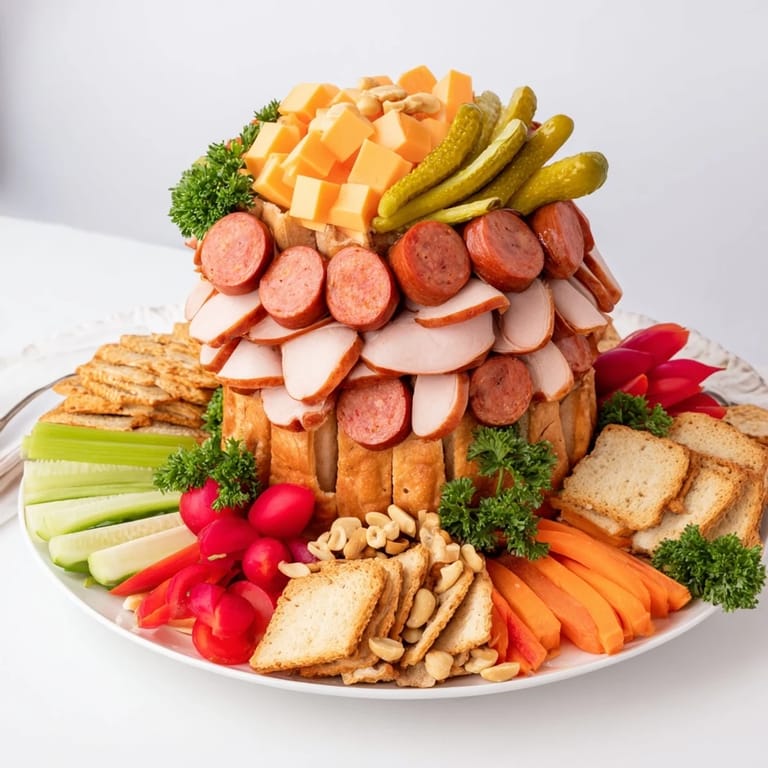
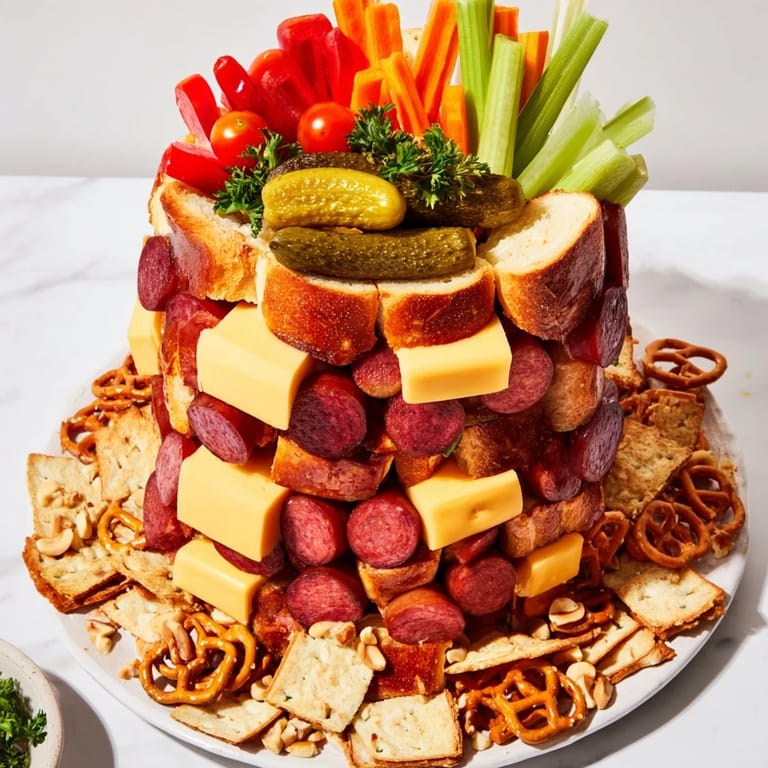
- Find your sturdiest board or platter—this is genuinely important because you're building architecture here. Start with a solid base layer of pretzel chips scattered across the surface. These aren't going to shift. Layer your pita chips next, slightly overlapping, creating texture. Then arrange your toasted baguette slices, standing some up slightly at angles so they look abundant and inviting. This base layer is crucial—it catches everything and prevents collapse.
- Build your protein tower:
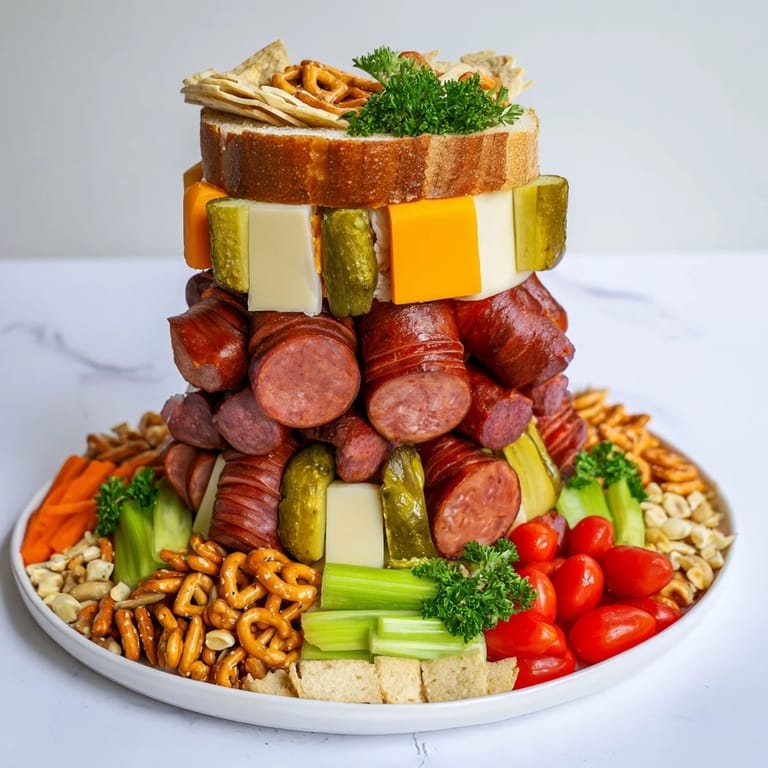
- Now comes the fun part where this transforms from a board into a statement. Start with a layer of smoked sausage slices, fanning them slightly. Then add turkey breast, creating a new level. Next comes sharp cheddar cubes, then pepper jack. Don't arrange these in military precision—alternating the layers creates visual interest and functional ease. Someone should be able to grab a piece without triggering an avalanche. The slight randomness actually works better than perfect organization.
- Tuck in the vegetables and pickles:
- This is where you fill in the gaps between your protein stacks. The baby carrots stand upright in clusters. The celery sticks lean against the protein tower like they belong there. Cherry tomatoes nestle into small pockets. Dill pickle spears fan out in one section. Pickled banana peppers scatter across, their bright color adding visual maps that show people where to explore. You're not filling empty space—you're creating visual trails that guide people through the flavors.
- Position your dips strategically:
- Use small bowls and nestle them securely so they won't tip when someone reaches across the board. I place ranch where most people will hit first, mustard where it can accompany meats, and hummus near the vegetable section. Prop them slightly into the architecture so they feel integrated, not just placed on top.
- Finish with flourish:
- Sprinkle your roughly chopped parsley across the entire board—this does two things: it adds color that makes everything look fresher, and it gives people who are worried about nutrition something to grab. Scatter your mixed nuts in small clusters. Step back and look at it. Does it look abundant? Does it look like you care about feeding people well? That's when you know you're done.
- Serve with confidence:
- Bring this board out proud. It's meant to be the center of attention. During the party, you'll notice people treating it like a landscape to navigate rather than just grabbing random things. Watch how their faces light up when they find that combination they didn't know they needed. Keep an eye on the layers and replenish what's missing so it always looks intentional and abundant.
 Save
Save What really got me was watching my grandmother—who usually stays inside cooking—pull up a chair to the tailgate just to sit near this board. She grabbed a piece of everything, tried the combinations, and told me this was the first thing at a tailgate that made her feel welcome. That moment taught me that food isn't really about feeding people. It's about making them feel like they belong.
Why Stacking Works Better Than Spreading
There's something about vertical architecture that changes how people eat. When everything is spread flat, it feels like everyone's competing for the same space. But when you stack, you create depth and layers. People can grab without worrying they're taking someone else's food. The stacking also means you can fit more into a smaller footprint, which matters when you're eating standing up at a parking lot. The visual interest keeps people coming back, discovering new combinations with each layer they explore.
Making It Ahead and Transport
One of the best parts about this power stack is that you can assemble it almost entirely at home. Prep all your ingredients, toast your bread the morning of, and slice everything the night before. Keep your proteins, cheese, and dips in separate containers, then assemble the board when you arrive. The only thing that might suffer is the cracker crispness, so pack those separately and add them on-site if you're traveling more than twenty minutes. I've even had success wrapping the assembled board loosely with plastic wrap and setting it in a cooler with a frozen water bottle nearby—it keeps everything cool without getting wet, and the board stays perfect for hours.
The Secret to Endless Variation
The beauty of this board is that it's infinitely customizable to your crowd and what you have on hand. For vegetarians, replace the meats with smoked tofu, marinated tempeh, or extra cheese varieties. Swap turkey for ham, pastrami, or even thinly sliced roast beef. Add roasted vegetables, marinated artichoke hearts, or grilled zucchini if you want more substance. The principles stay the same: create a stable base, build vertical interest, fill gaps with vegetables and pickles, and include dips that work across different flavor profiles. I've done versions with spicy elements for crowds that like heat, and mild versions for families with kids. The template is flexible, but the architecture is what makes it work.
- Keep your dips cold by nestling the bowls into a shallow bed of ice tucked around the back of the board
- If you're serving this outside in heat, refresh the vegetables and pickles halfway through the event so they stay crisp
- Label your spicy elements if you're feeding a mixed crowd—put a small note next to pepper jack and banana peppers so people know what they're getting into
 Save
Save This board has become my tailgate signature because it solves the real problem of feeding people who are standing, talking, and moving around. It's not precious or complicated, but it tastes like you put thought into it. That's what keeps people coming back.
Recipe Guide
- → How should I prepare the base for the stack?
Toast baguette slices until crisp and layer them with pretzel and pita chips to create a sturdy, flavorful foundation for the ingredients.
- → Can I substitute the meats in the platter?
Yes, you can replace the turkey with ham, roast beef, or omit meats entirely for a vegetarian-friendly version with additional cheeses or grilled vegetables.
- → What dips pair well with this stacked platter?
Ranch dip, spicy mustard, and roasted red pepper hummus complement the savory layers and add contrasting flavors and textures.
- → How can I keep the platter fresh during a tailgate event?
Assemble layers securely and serve on a sturdy board. Replenish ingredients as needed and keep dips covered to maintain freshness.
- → Are there allergen considerations to keep in mind?
The platter contains dairy, gluten, and nuts. Some dips may include eggs or soy. Always check labels if allergies are a concern.