 Save
Save I discovered the power of a single, confident line on a plate during a late-night scroll through food photography that stopped me mid-scroll. There was something about the boldness of it—no fussy clusters, no apologetic dots scattered about, just one stripe of color declaring itself across white space. When I finally attempted it in my own kitchen, I realized I was learning a entirely different language of cooking, one where restraint and precision mattered more than abundance. The modernist stripe became my meditation, a way to prove that vegetables could be utterly transformative without hiding behind cream sauces or complicated techniques.
I remember making this for a friend who'd been stressed about hosting her first dinner party, and she watched me spread that first stripe of beet purée with such intense focus that she burst out laughing at how seriously I was taking a vegetable smear. By the time we finished layering and garnishing, she'd stopped laughing and started believing she could actually pull off something this beautiful. When her guests arrived and saw the board, there was this moment of genuine quiet—that kind of silence that means food has done something beyond just feeding people.
Ingredients
- Medium beets: Choose firm ones with unblemished skin; they'll roast evenly and give you that jewel-toned purée that's almost too pretty to eat.
- Olive oil: Use a good one here since it's tasting oil, not just a cooking medium.
- Large carrots: The sweeter the carrot, the more forgiving your purée becomes if you ever second-guess yourself.
- Fresh ginger: Grate it just before blending; the aroma that rises when you do is a preview of what's coming.
- Unsalted butter: It adds richness without the harshness that salted butter can bring to a delicate purée.
- Ripe avocado: This is non-negotiable; an underripe avocado will sulk in your piping bag and refuse to cooperate.
- Greek yogurt: It keeps the avocado cream stable and prevents that grainy texture that comes from mashing avocado alone.
- Microgreens: They're your punctuation mark—choose ones with color contrast to the stripe itself.
- Edible flowers: They're optional but worth finding; they transform the plate from modern to magical.
- Crushed pistachios: Toast them lightly first if you want them to taste like they know what they're doing.
- Flaky sea salt: The finish that says you understand that salt isn't just seasoning, it's jewelry for food.
Tired of Takeout? 🥡
Get 10 meals you can make faster than delivery arrives. Seriously.
One email. No spam. Unsubscribe anytime.
Instructions
- Prepare and roast the beets:
- Get your oven breathing at 400°F while you toss those diced beets with oil and salt, then let them sit in a hot oven for 30 to 35 minutes until they're so tender a fork slides through them like butter. Your kitchen will smell like concentrated earth and sweetness—that's how you know they're ready.
- Soften the carrots:
- While the beets do their thing, steam or boil your carrot slices until they're almost falling apart; they need to be soft enough that a blender will turn them into silk. Drain them well and let them cool just enough that you won't burn yourself tasting them straight from the pot.
- Blend the beet purée:
- Add your roasted beets and lemon juice to a blender and let it run until you can't see a single fiber, adding just a splash of water if it seems thick and stubborn. Stop and taste it; the beets should taste even more like themselves now, concentrated and bold.
- Create the carrot purée:
- Blend the cooled carrots with ginger, butter, and salt until the whole thing glows like sunset and feels silky against the back of a spoon. If you have a hand-held immersion blender, this is where you might love it.
- Make the avocado cream:
- Mash your ripe avocado in a small bowl with Greek yogurt and lime juice until it's smooth and almost cloud-like, then transfer it into a piping bag or squeeze bottle so you can control exactly where it lands on the stripe. This step is where precision meets creativity; don't rush it.
- Build the stripe:
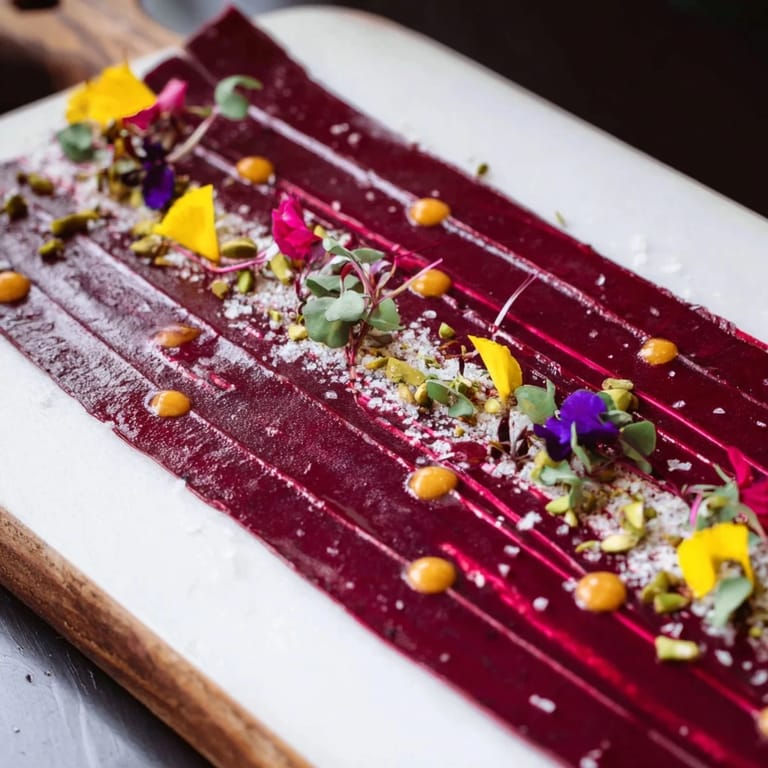
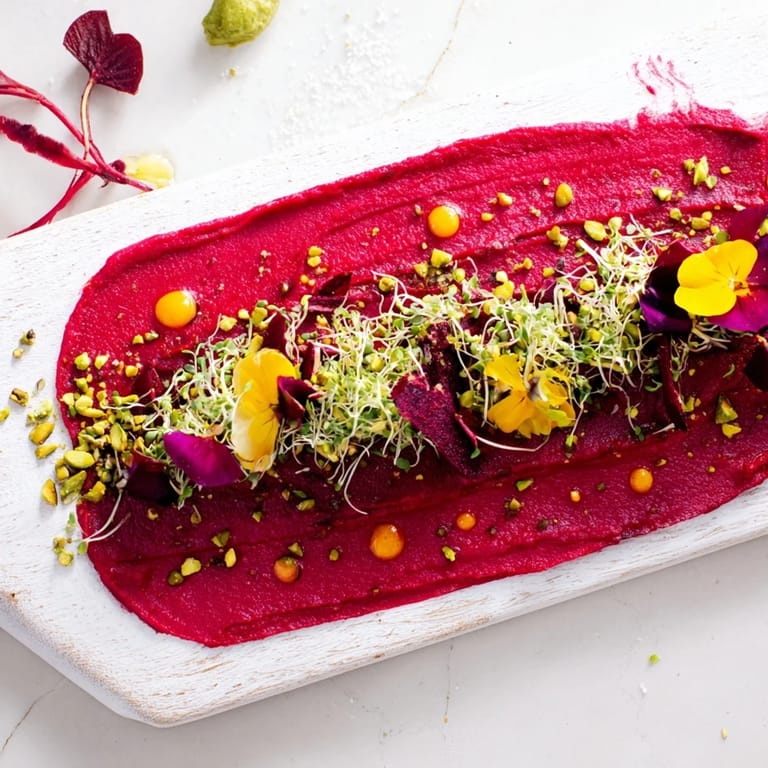
- On a clean, empty serving board, use an offset spatula or the back of a large spoon to spread the beet purée in one confident, thick stripe down the center—think three inches wide, and don't be timid about it. Let it be the star; everything else is going to dance on top of it.
- Layer with intention:
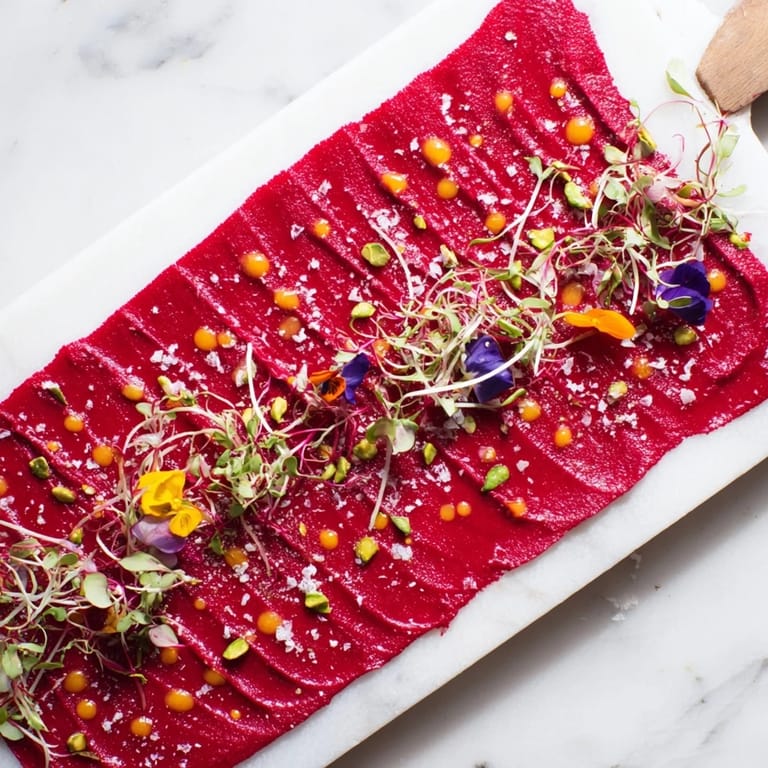
- Now comes the part where you become the artist; pipe or drizzle the carrot purée and avocado cream in strokes, dots, or lines that feel right to you, letting the colors play against each other.
- Finish with flourish:
- Crown it all with microgreens, edible flowers, crushed pistachios, and a scattered handful of flaky sea salt, then step back and look at what you made before anyone else gets to.
- Serve with confidence:
- Bring it to the table immediately and encourage your guests to scoop directly from the stripe with a spoon or piece of bread, breaking that beautiful line together.
 Save
Save There was a moment when a normally skeptical family member dipped a piece of bread into that stripe and then closed their eyes, and I understood that I'd made something that transcended the food itself. It became permission for all of us to see vegetables as not just nourishment but as pure expression.
The Architecture of Color
This dish is really about understanding how color on a plate tells a story before anyone tastes anything. The deep crimson of the beet stripe creates a foundation that's almost grounding, and then the golden carrot and pale avocado layers add brightness and complexity without chaos. I've learned that when you remove the clutter and let three colors speak clearly, they become louder than ten competing elements ever could.
Timing and Composition
The beauty of this recipe is that it forgives a flexible timeline better than fussy dishes usually do. You can roast beets in the morning, blend everything an hour before service, and then take your time with the actual plating when there's no rush or panic clouding your judgment. I've found that rushing the plating step defeats the whole purpose of choosing restraint in the first place.
Playing with Variations
Once you understand the fundamentals of this stripe, it becomes a template rather than a prescription, and that's when the real fun starts. I've tried roasted squash purée, pea purée, even a vibrant green based on herbs and spinach, and each one taught me something different about how flavor and color interact. The modernist approach isn't about rigidity; it's about intentionality, and you can be intentional with any combination your farmers market hands you.
- Roasted sweet potato creates a gentler, earthier alternative to the beet stripe if you want to shift the mood.
- A drizzle of good balsamic or a squeeze of different citrus can completely change how the palate reads the whole plate.
- Don't skip the flaky salt finish—it's the difference between a pretty plate and a plate that tastes confident.
 Save
Save This dish taught me that sometimes the most modern approach is the oldest one of all: letting good ingredients speak for themselves. Serve it with attention and watch how people respond when food is presented as something worth pausing for.
Recipe Guide
- → How long should the beets be roasted?
Roast diced beets at 400°F (200°C) for 30 to 35 minutes until tender.
- → Can I use alternatives for dairy in the avocado cream?
Yes, substitute Greek yogurt with coconut yogurt or other plant-based options for a vegan-friendly cream.
- → What garnishes complement the stripe best?
Microgreens, edible flowers, crushed pistachios, and flaky sea salt enhance both flavor and presentation.
- → How is the carrot & ginger purée prepared?
Cook carrots until soft, then blend with fresh ginger, butter or olive oil, and sea salt until smooth.
- → What tools are essential for plating the stripe?
An offset spatula or the back of a large spoon helps spread the purées precisely on the serving board.
- → Are there recommended ingredient substitutions?
Try roasted sweet potato or squash purées to replace or complement the existing flavors and textures.