 Save
Save I remember the day we got the keys to our new place—a crisp autumn afternoon with sunlight streaming through empty rooms. My partner and I stood in the middle of the bare living room, absolutely overwhelmed by the thought of unpacking everything, let alone throwing a housewarming party. But then my mother called and reminded me of something she always said: you don't need a finished home to welcome people, you need good cheese and good company. That's when it clicked. An open house spread isn't about perfection—it's about abundance, choice, and making people feel like they can relax and help themselves to whatever brings them joy. That day, I realized this simple grazing board became our way of saying, "Welcome to our home, make yourself comfortable."
The first time I set up a board like this, I was so nervous about whether there would be enough food, whether the arrangement looked elegant enough. My neighbor popped over early to drop off a gift, and I was almost embarrassed to show her the spread because it seemed so simple. But she took one look, grabbed a small plate, and spent twenty minutes quietly exploring every corner of that board like it was a treasure hunt. That's when I understood: people don't remember perfect presentations, they remember feeling welcomed and cared for.
Ingredients
- Sharp Cheddar, 250 g cut into blocks: This is your anchor cheese—bold enough to stand on its own, friendly enough that even cautious eaters will try it. Cutting it into blocks (rather than shreds) makes it feel intentional and elegant.
- Creamy Brie, 250 g cut into wedges: The gateway cheese for people who think they don't like strong cheeses. There's something about its soft, buttery texture that makes people keep coming back for one more tiny slice.
- Manchego, 200 g sliced: This Spanish cheese has a slightly nutty sweetness that pairs beautifully with quince paste if you want to add it later. It's the sophisticated friend at the party.
- Blue cheese, 200 g crumbled or in blocks: Don't be shy with this one. The people who love it will seek it out, and the people who don't will happily skip it. That's the beauty of a board.
- Smoked Gouda, 200 g cubed: The unexpected crowd-pleaser. Its subtle smokiness makes people pause and say, "What is that amazing cheese?" Cube it for easy grabbing.
- Assorted crackers, 1 large box (350 g): Choose at least three different types—thin ones for delicate pairing, heartier ones for bold cheeses, and maybe some seeded ones for visual interest and texture variety.
- Baguette, 1 sliced thinly: Fresh bread is non-negotiable. If you're making this more than a couple hours ahead, slice it just before guests arrive or it'll go stale. Toast it lightly if you're prepping far in advance.
- Breadsticks, 1 packet (150 g): These are your backup dancers—they fill visual gaps and give guests who might be tired of crackers another option for holding cheese.
- Red grapes, 1 cup in small clusters: Grapes are the palate cleansers of the board. Wash and separate them into small clusters so people can grab just a few without feeling like they're taking a huge bunch.
- Green grapes, 1 cup in small clusters: The color contrast matters more than you'd think. Together, red and green grapes create visual rhythm on the board.
- Apples, 2 sliced and tossed with lemon juice: The lemon juice isn't just about preventing browning—it adds a subtle brightness that cuts through rich cheeses perfectly. Slice them right before arranging, or do it up to 30 minutes ahead.
- Dried apricots, 1/2 cup: These are your sweet-savory bridge. They work with almost every cheese and add chewy texture that contrasts with creamy ones.
- Dried figs, 1/2 cup: Figs have this almost mysterious elegance that makes people feel like you went to special effort, even though you just opened a package.
- Roasted almonds, 1 cup: Unsalted or lightly salted—your choice. They add crunch and protein, and their mild flavor complements rather than competes.
- Walnuts, 1 cup: These have more personality than almonds. They pair especially well with blue cheese and dried fruit combinations.
- Honey, 1/2 cup: Pour this into a small bowl with a small spoon or spreader. Honey transforms how people interact with cheese—suddenly they're creating flavor combinations instead of just eating.
- Fig or apricot jam, 1/2 cup: This is your secret weapon. A tiny spoonful with sharp Cheddar and a walnut is a flavor moment people won't forget.
- Whole grain mustard, 1/3 cup: The texture of whole grain mustard makes it more interesting than smooth mustard. It pairs surprisingly well with smoked Gouda and crackers.
- Cherry tomatoes, 1 cup: These add necessary freshness and bright color. They're also the thing guests grab when they want something light after eating several cheese and cracker combinations.
- Baby carrots, 1 cup: Raw vegetables might seem simple, but they're essential. They give people who want something crunchy and clean a guilt-free option.
- Fresh herbs (rosemary, thyme) for garnish: Sprigs of herbs tucked around the board do something magical—they make everything look like it came from a magazine. Plus, their aroma adds to the sensory experience.
Tired of Takeout? 🥡
Get 10 meals you can make faster than delivery arrives. Seriously.
One email. No spam. Unsubscribe anytime.
Instructions
- Build your foundation with cheese:
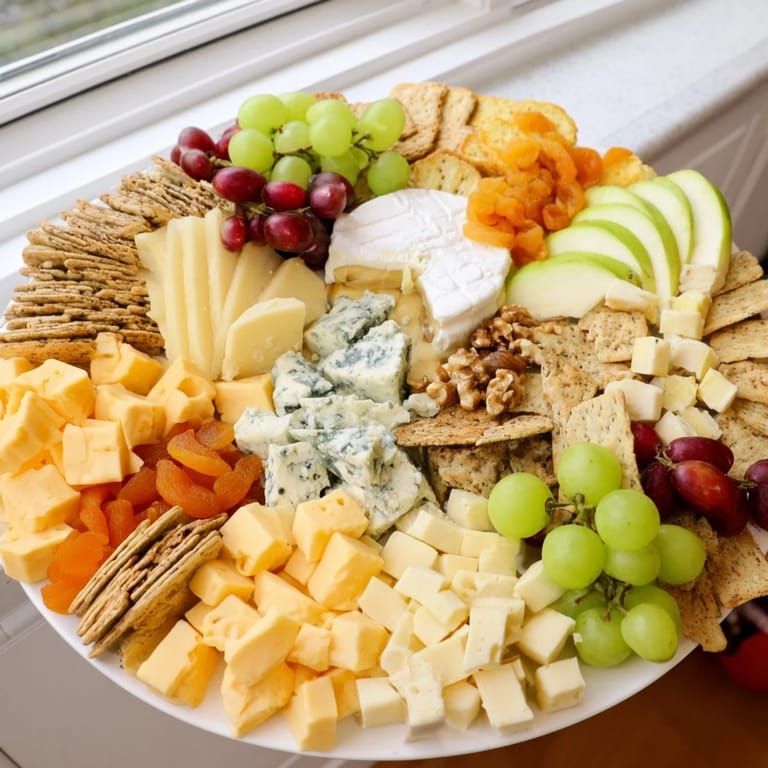
- Start by placing your cheese blocks and wedges on the board, imagining you're creating little islands of flavor. Leave space between them—this isn't about fitting as much as possible, it's about giving each cheese room to be appreciated. You'll feel the difference between a cramped board and one that breathes.
- Create texture with crackers and bread:
- Nestle generous piles of different crackers into the spaces between cheeses. Include your baguette slices and breadsticks. As you do this, you're creating little pathways for your eyes and hands to follow. The arrangement should feel natural, like these things belong together.
- Add sweetness and freshness with fruit:
- This is where the board comes alive. Arrange grape clusters in little bunches, scatter your apple slices, and tuck dried fruit into gaps. You're creating color contrast and visual movement. Step back and look at it—does it feel balanced? If one area looks too dense, spread things out.
- Introduce the condiments and nuts:
- Place small bowls of honey, jam, and mustard in strategic spots. Scatter nuts in little piles. These are the flavor multipliers—they transform simple pairings into memorable ones. You want them visible and accessible, but not overwhelming.
- Fill in with vegetables and garnish:
- Cherry tomatoes and carrots go in the remaining gaps. They add freshness visually and nutritionally. Now tuck those herb sprigs around the board. This final step takes it from "nice spread" to "someone put thought and care into this."
- Provide the tools for self-service:
- Set out small cheese knives, spreaders, toothpicks, and cocktail forks near the board. Include a small stack of napkins. The ease with which guests can serve themselves sets the entire tone for how relaxed they'll feel.
- Refresh as the party flows:
- Every hour or so, take a gentle look at the board. Top up the crackers, refresh the grapes, make sure the jam bowl still has a clean spoon. This isn't busywork—it's a quiet way of showing you're paying attention and want everyone to have the best experience.
 Save
Save I'll never forget my friend Sarah's face at that housewarming party. She'd been recently diagnosed with lactose intolerance and had stopped going to social events because she felt excluded from the food. But at our board, she discovered aged Gouda, which she could eat, and spent the whole evening pairing it with different crackers and fruits, actually enjoying herself. That's when this simple spread stopped being about entertaining and became about making sure everyone belonged.
Choosing and Arranging Your Cheeses
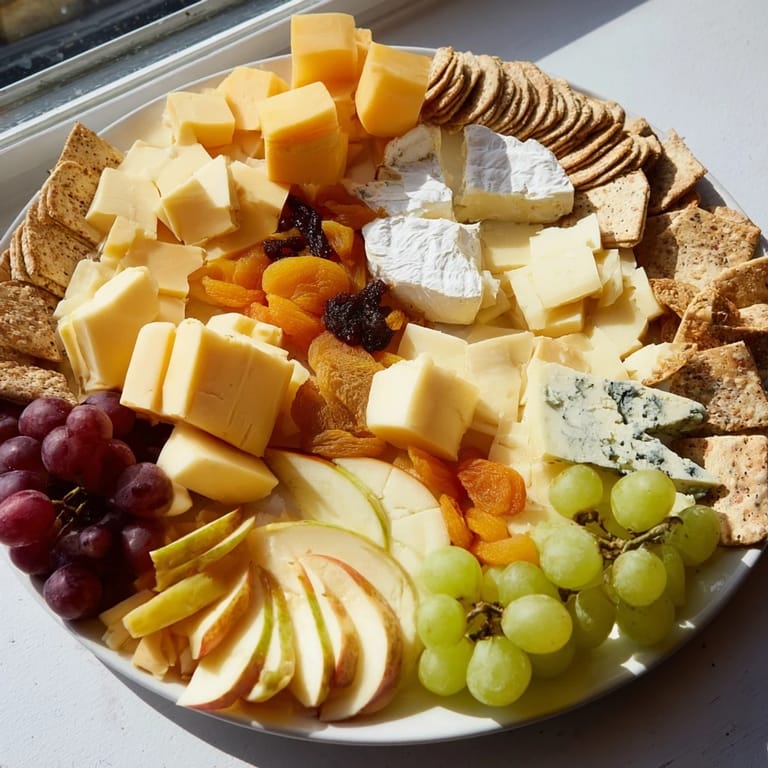
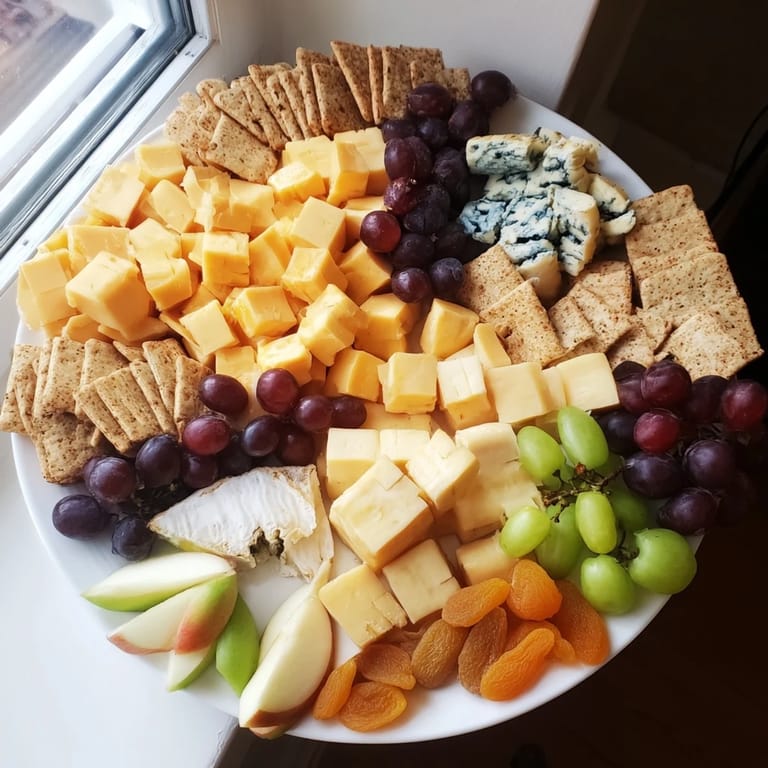
The secret to a stunning cheese board is contrast—in flavor, texture, and color. You want something sharp to wake up the palate, something creamy to balance it, something crumbly for textural interest, and something with a little funk to make people curious. When you arrange them, imagine you're creating a journey. Don't put two similar cheeses next to each other. Instead, let each one stand out. The Manchego's pale gold looks beautiful next to the deep blue cheese. The creamy Brie glows against the rustic texture of the Cheddar block. This isn't about being precious—it's about letting each cheese be its best self.
The Art of Piling and Spacing
There's a real skill to making a board look abundant without looking chaotic. Think of it like a garden—you want clusters and piles, not a thin, scattered layer. When you bunch grapes together in little clusters, they create visual interest and are actually easier for guests to grab. When you create small mountains of crackers rather than spreading them thin, they look intentional and feel generous. Leave breathing room, though. A board that's completely packed looks stressed. One with strategic empty spaces that you fill as the evening goes on looks like it was designed by someone who understands pacing.
Making It Work for Everyone
The magic of this spread is that it accommodates so many different needs without requiring you to make entirely separate platters. Need to include cured meats for non-vegetarian guests? Add them alongside the cheeses. Have someone who's gluten-free? Set out a small bowl of sliced cucumbers and gluten-free crackers in a dedicated spot. Nut allergies? Those go away without leaving a gap. Prefer seasonal fruits? Swap the apples for pears in fall, berries in summer. This board is generous enough to flex with your crowd.
- Keep a small notepad nearby and ask guests about dietary restrictions as they arrive—it takes thirty seconds and makes people feel genuinely cared for
- If you're doubtful about quantities, remember that people eat less at a grazing board than you'd think, especially if there's wine and conversation keeping them occupied
- The best parties are the ones where the host isn't stressed in the kitchen, so don't overthink this—your relaxation is the real ingredient that makes people feel welcome
 Save
Save Every time someone tells me later that they still think about a flavor combination they discovered on one of my boards—like that person who learned they love blue cheese with dried figs—I'm reminded that hospitality doesn't have to be complicated to be meaningful. Sometimes the most welcoming thing you can do is give people beautiful options and let them create their own perfect bite.
Recipe Guide
- → What cheeses work best for this spread?
Sharp Cheddar, creamy Brie, Manchego, blue cheese, and smoked Gouda provide a balanced variety of flavors and textures for a dynamic selection.
- → How should I arrange the items on the board?
Space cheeses evenly and fill gaps with crackers, bread slices, clusters of fruit, nuts, and small bowls of condiments for easy access and appealing presentation.
- → Can I accommodate dietary restrictions?
Yes, swap out crackers for gluten-free options or add cured meats for non-vegetarian guests as needed to suit different preferences.
- → How do I keep fresh fruit from browning?
Toss sliced apples with lemon juice to prevent discoloration and maintain a fresh appearance throughout the event.
- → What tools are recommended for serving?
Provide cheese knives, spreaders, toothpicks, or cocktail forks along with serving tongs to make self-service simple and neat.
- → How can I add color and freshness?
Include cherry tomatoes, baby carrots, and fresh herbs like rosemary and thyme to brighten the board and add fresh aromas.