 Save
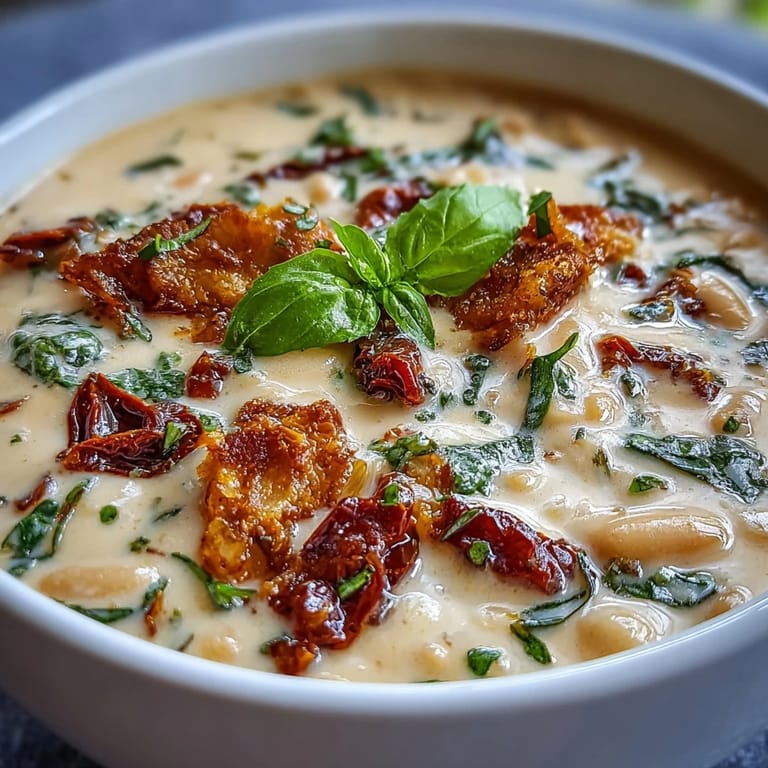
Save There's a Tuesday evening I can't quite shake from memory—the kind where nothing was planned, but I opened the pantry and found a half-empty can of sun-dried tomatoes staring back at me. My partner was coming home tired from work, and somehow I knew this creamy Tuscan white bean soup would be exactly what we both needed. The smell of pancetta crisping in the pot filled our tiny kitchen within minutes, and by the time they walked through the door, the whole apartment felt warm and intentional. That night taught me that the best meals aren't always the ones you plan weeks in advance; sometimes they're born from what's already hiding in your shelves.
I made this soup for my book club once, and it became the thing people actually remembered instead of whatever literary merit we discussed that night. One guest asked for the recipe three separate times, which I took as high praise. What I didn't expect was how the conversation shifted around the table once we were all holding warm bowls—suddenly everyone was sharing their own kitchen disasters and victories, and the soup became this unexpected thread connecting us all.
Ingredients
- Pancetta, diced (100 g): This is your secret weapon for depth; it renders fat that seasons everything else, so don't skip it or substitute with bacon (the smoke changes the flavor entirely).
- Yellow onion, finely chopped (1 medium): The foundation of everything savory that follows, and finely chopped means it dissolves into the broth rather than sitting as chunks.
- Garlic cloves, minced (2): Added after the onions so it doesn't burn, which I learned the hard way when I got impatient.
- Celery and carrot, diced (2 stalks and 1 medium): The holy trio with onion, and their sweetness plays beautifully against the savory sun-dried tomatoes.
- Sun-dried tomatoes, drained and chopped (75 g): These concentrate flavor in a way fresh tomatoes simply can't, and the oil they're packed in is liquid gold for this soup.
- Cannellini beans, drained and rinsed (2 x 400 g cans): Always rinse canned beans to remove the starchy liquid that can make the soup murky instead of creamy.
- Low-sodium chicken broth (800 ml): The low-sodium version lets you control the salt and taste the actual beans, not just seasoning.
- Heavy cream (120 ml): This transforms the soup from rustic to luxurious without being heavy; it also mellows the tomato tang.
- Dried Italian herbs (1 tsp): A blend of oregano, basil, and thyme if you want to mix your own, which honestly tastes fresher than most commercial Italian seasoning.
- Bay leaf (1): It seems small, but remove it before blending or you'll notice a slightly bitter note.
- Salt, black pepper, and red pepper flakes: Season at the end so you can taste as you go, not guessing before you've blended.
Tired of Takeout? 🥡
Get 10 meals you can make faster than delivery arrives. Seriously.
One email. No spam. Unsubscribe anytime.
Instructions
- Crisp the pancetta until golden:
- Let it render slowly over medium heat until the edges curl slightly and the fat is fully released, about 4 to 5 minutes. Resist the urge to crank the heat; good things need patience.
- Build your flavor base with onion, celery, and carrot:
- Sauté these in the pancetta fat for about 5 minutes until they're soft and the kitchen smells like actual cooking. The rendered fat is doing the heavy lifting here, so don't drain it.
- Add garlic and sun-dried tomatoes:
- Cook for just 1 minute after adding the garlic so it softens without browning, then let the sun-dried tomatoes meld into the fat. You'll notice the color deepen and the smell shift into something richer.
- Combine beans, broth, and bay leaf:
- Bring everything to a gentle boil, then lower the heat to a simmer for 15 minutes. This simmering time lets the flavors marry without breaking down the beans into mush.
- Blend to your preferred texture:
- Remove the bay leaf first, then use an immersion blender to puree until smooth if you want velvety, or leave it chunky if you prefer texture. I usually do a hybrid—most blended with some beans left whole.
- Finish with cream and pancetta:
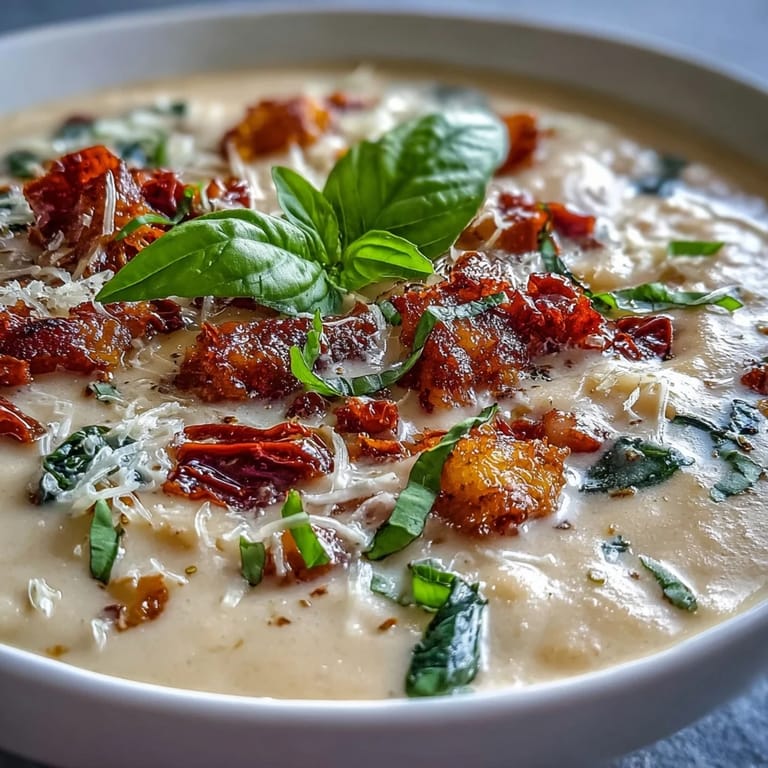
- Stir in the heavy cream and about half the pancetta, then simmer for 5 more minutes so the flavors integrate. Taste and adjust seasoning—salt last, always, because the pancetta was already salty.
- Serve with all the garnishes:
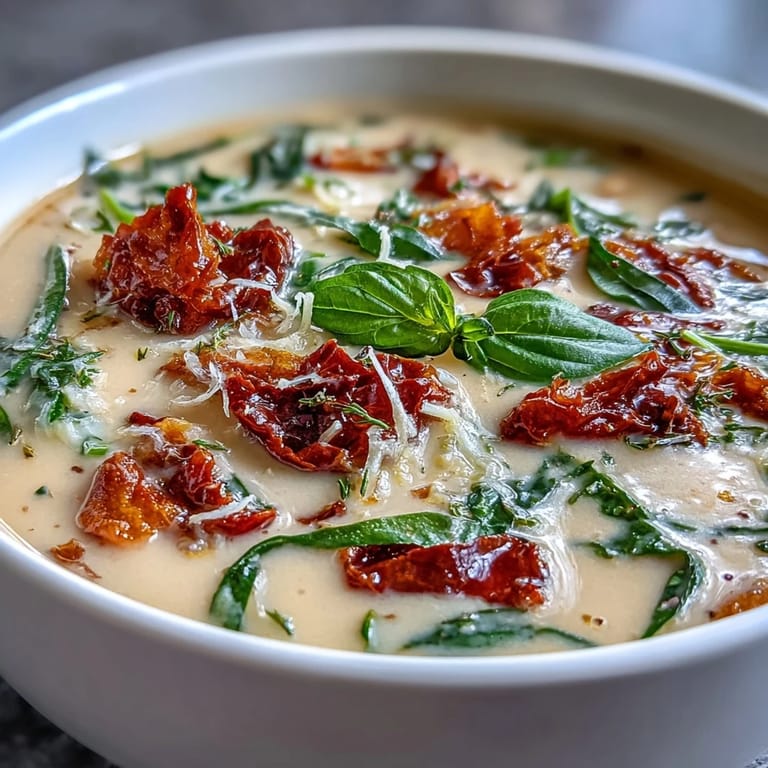
- A drizzle of olive oil, the remaining pancetta, fresh basil, and Parmesan transform the bowl into something restaurant-quality. Serve immediately while it's still steaming.
 Save
Save There was a rainy Saturday when I made this soup for my neighbor who had just moved in, and we ended up sitting on her half-unpacked kitchen with bowls in our laps, talking about everything except the move. Food has this strange way of saying things you can't quite articulate—this soup said welcome, rest, you're going to be fine here.
The Pancetta Question
I get asked often if you can make this vegetarian, and the answer is yes, but you lose something essential. Pancetta isn't just meat; it's a flavor amplifier that makes everything taste more like itself. If you're skipping it, compensate by using vegetable broth and adding a splash of good olive oil or a parmesan rind while simmering to build that savory depth. I've had it both ways, and they're honestly different dishes—not better or worse, just different intentions.
Why Immersion Blenders Changed My Cooking
Before I owned an immersion blender, I was terrified of pureeing hot liquids in a traditional blender, which meant I ate a lot of chunky soups that wanted to be smooth. The immersion blender removed that friction entirely—you work directly in the pot, control the texture, and taste as you go. It's become one of my most-used tools, and this soup is honestly the reason I keep coming back to it.
Variations and Additions
This soup is a canvas more than a formula, and I've learned that the best variations come from what's actually in your kitchen. Some nights I stir in fresh spinach at the very end, letting it wilt into the cream for color and iron. Other times I've added roasted red peppers, or swapped the chicken broth for vegetable broth and made it completely plant-based. The core—the pancetta, the sun-dried tomatoes, the beans—stays constant, but everything else bends to your needs and preferences.
- Stir in fresh spinach, kale, or escarole in the last 2 minutes for added greens and nutrition.
- A parmesan rind simmered with the broth deepens the savory notes without adding dairy if you're using cream.
- Serve alongside crusty bread or focaccia for dipping, which turns soup into a complete meal.
 Save
Save This soup has become one of those recipes I return to when I want to feel capable in the kitchen without spending hours there. It's comfort that takes you seriously, warmth that doesn't require sacrifice.
Recipe Guide
- → Can I make this soup vegetarian?
Absolutely. Simply omit the pancetta and substitute vegetable broth for the chicken broth. Start with olive oil instead of rendered pancetta fat when sautéing the vegetables.
- → What's the best way to blend the soup?
An immersion blender works perfectly for achieving that velvety texture while leaving some beans whole for added heartiness. If using a countertop blender, blend in batches and be careful with hot liquids.
- → Can I freeze leftovers?
The soup freezes well for up to 3 months, though the cream may separate slightly upon reheating. Simply reheat gently while stirring to recombine, or add a splash of fresh cream when reheating.
- → What can I serve with this soup?
Crusty bread, focaccia, or garlic bread make excellent accompaniments for soaking up the creamy broth. A simple green salad with vinaigrette provides a fresh contrast to the rich soup.
- → Can I use dried beans instead of canned?
Yes, soak and cook about 1 cup dried cannellini beans until tender before adding them in step 4. This will extend the total time but yields excellent flavor and texture.
- → How spicy is this soup?
The red pepper flakes are optional and provide just a gentle warmth. Add more if you prefer heat, or omit entirely for a family-friendly version that focuses on the creamy, herbed flavors.