 Save
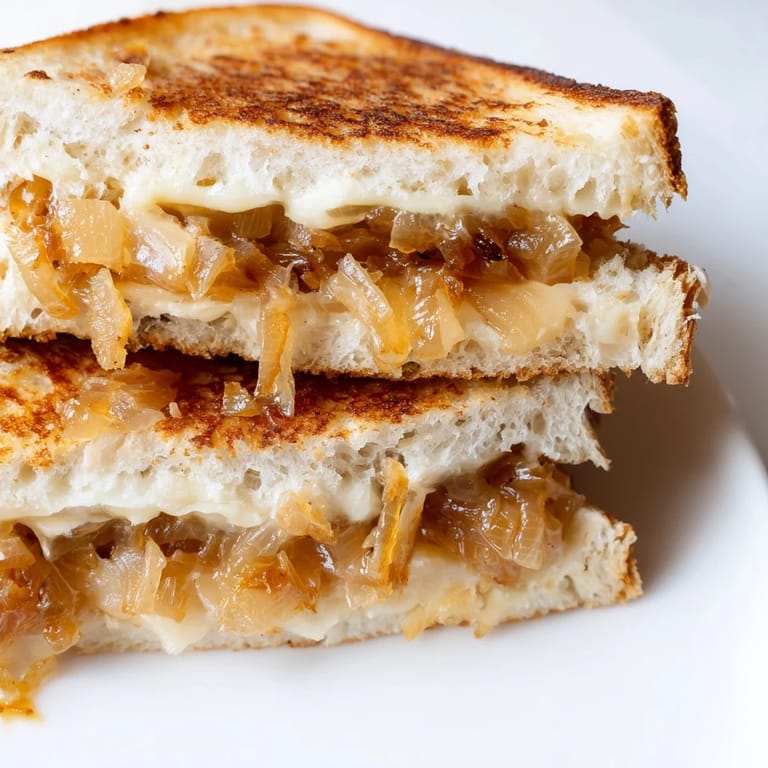
Save The smell of onions turning sweet and sticky in butter is what made me stop scrolling through my phone one rainy Tuesday. I had dumped the sliced pile into the pan without much thought, but twenty minutes later, the kitchen smelled like a bistro. I stood there, wooden spoon in hand, watching them go from sharp and white to soft, amber, and impossibly fragrant. That night, I made the best grilled cheese of my life, and I've never looked at an onion the same way since.
I made this sandwich for my neighbor after she helped me move a couch up three flights of stairs. She took one bite, closed her eyes, and said it tasted like patience. I laughed, but she was right. The onions don't rush, the cheese doesn't hurry, and somehow that slowness ends up tasting like comfort itself. We sat on my kitchen floor, legs crossed, splitting the second sandwich in silence.
Ingredients
- Sourdough or country bread: A sturdy, slightly tangy bread holds up to all that melted cheese and soft onion without turning soggy, and it crisps beautifully in the pan.
- Unsalted butter, softened: Softened butter spreads evenly across the bread without tearing it, giving you that perfect golden crust every single time.
- Sharp white cheddar cheese, grated: Sharp cheddar has the tangy punch needed to balance the sweetness of the onions, and grating it helps it melt faster and more evenly.
- Yellow onions, thinly sliced: Yellow onions have the right balance of sugar and sulfur to caramelize into deep, sweet flavor without turning bitter.
- Olive oil: A little fat to start the onions cooking gently and prevent them from burning before they soften.
- Salt: Draws out moisture from the onions and speeds up the caramelization process while seasoning them from the inside out.
- Sugar (optional): A pinch helps the onions brown a little faster and deepens their sweetness, though they will caramelize naturally without it.
- Freshly ground black pepper: A few cracks of pepper add just enough bite to keep the sandwich from tasting one note.
Tired of Takeout? 🥡
Get 10 meals you can make faster than delivery arrives. Seriously.
One email. No spam. Unsubscribe anytime.
Instructions
- Caramelize the onions:
- Heat the olive oil in a large skillet over medium heat, then add the sliced onions and salt, stirring to coat them evenly. Cook them low and slow, stirring every few minutes, for 20 to 25 minutes until they turn deeply golden and jammy, adding the sugar halfway through if you want a little extra sweetness and color.
- Set onions aside:
- Once the onions are caramelized, remove them from the heat and set them aside in a small bowl. Wipe out the skillet if there are any dark bits stuck to the bottom.
- Butter the bread:
- Spread softened butter evenly on one side of each slice of bread. Lay two slices buttered side down on your counter or cutting board.
- Assemble the sandwiches:
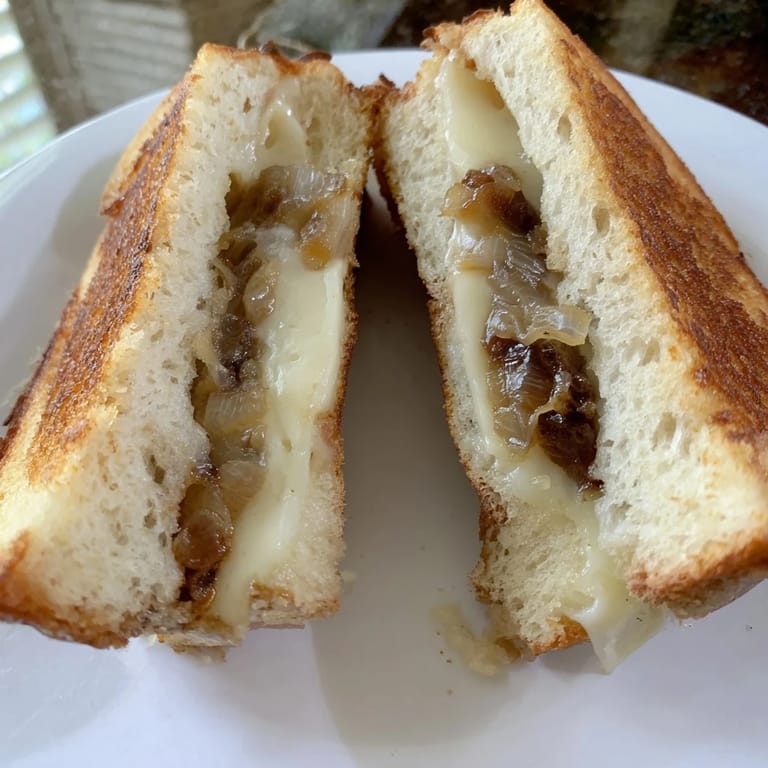
- Divide the grated cheddar evenly between the two slices, then pile the caramelized onions on top of the cheese. Sprinkle with freshly ground black pepper, then top with the remaining bread slices, buttered side facing up.
- Grill the sandwiches:
- Heat the skillet over medium low heat and place both sandwiches in the pan. Cook for 3 to 4 minutes per side, pressing gently with a spatula, until the bread is crisp and golden and the cheese has melted completely.
- Rest and serve:
- Remove the sandwiches from the pan and let them rest for 2 minutes before slicing. Serve hot while the cheese is still gooey.
 Save
Save The first time I served this to my brother, he said it tasted like something our mom would have made if she had been fancy. It wasn't fancy, just patient. But I understood what he meant. Sometimes the simplest things, done slowly, feel like love. We didn't talk much after that, just ate and passed the hot sauce back and forth.
What to Serve It With
This sandwich is rich and sweet, so it loves something bright and acidic on the side. A bowl of tomato soup is the obvious pairing, but a simple green salad with lemon vinaigrette cuts through the butter and cheese in the best way. I have also served it with pickles, potato chips, or just a cold beer on nights when I did not want to think too hard about balance.
How to Store Leftovers
Grilled cheese never reheats quite the same, but if you have leftover caramelized onions, store them in an airtight container in the fridge for up to five days. They are incredible stirred into scrambled eggs, folded into omelets, or spread on toast with goat cheese. I have even eaten them cold, straight from the container, standing in front of the fridge at midnight.
Ways to Make It Your Own
Once you have the base down, this sandwich becomes a template. I have added fresh thyme leaves to the onions while they cooked, smeared Dijon mustard on the inside of the bread, and swapped sharp cheddar for Gruyere or fontina when I wanted something creamier. A handful of arugula tucked inside right before serving adds a peppery bite that makes the whole thing feel a little more grown up.
- Add a drizzle of balsamic vinegar to the onions in the last minute of cooking for a tangy sweetness.
- Try mixing two cheeses, like cheddar and mozzarella, for extra melt and flavor.
- Use rye or whole grain bread if you want a deeper, earthier flavor that stands up to the rich filling.
 Save
Save This sandwich does not need much, just good bread, patience, and a little butter. It is the kind of thing that makes you sit down at the table instead of eating over the sink, and that is worth something.
Recipe Guide
- → How do you caramelize onions properly?
Slice onions thinly and cook in olive oil over medium heat for 20-25 minutes, stirring occasionally. They'll release moisture first, then gradually turn golden brown. Add salt and optional sugar halfway through to enhance browning and sweetness. The key is patience—don't rush the process over high heat.
- → What bread works best for this sandwich?
Sourdough and country bread are ideal for their sturdy structure and tangy flavor that complements the sweet onions. Brioche, ciabatta, or thick-cut pullman loaf also work well. Avoid very soft bread that will squish when pressed during cooking.
- → Can I prepare caramelized onions ahead of time?
Yes, caramelize onions up to 3 days ahead and store in an airtight container in the refrigerator. You can also freeze them for up to 3 months. Reheat gently before assembling sandwiches.
- → What temperature should the skillet be for cooking?
Use medium-low heat to cook the assembled sandwiches so the cheese melts completely before the bread burns. This typically takes 3-4 minutes per side. Adjust heat as needed—too high will brown the bread before cheese melts, too low will leave it pale.
- → Which cheeses pair well as alternatives?
Gruyère, fontina, and Emmental are excellent substitutes for sharp cheddar. Fontina is particularly creamy, while Gruyère offers a nuttier profile. Avoid American cheese singles, which don't melt as smoothly and lack depth of flavor.
- → How do I prevent the bread from burning while melting cheese?
Butter the bread generously and cook over medium-low heat, pressing gently to promote contact with the skillet. Watch closely and adjust heat downward if browning too quickly. Covering the skillet briefly with a lid traps heat and helps cheese melt faster without over-browning bread.