 Save
Save I still remember the afternoon my book club decided to elevate our usual wine and cheese night. Someone suggested we create a platter that actually complemented the wines we were drinking, not just threw everything together. That's when I discovered the magic of intentional pairing—how a perfectly placed slice of crisp apple could make a sip of Chardonnay taste like pure sunshine, and how the right cured meat next to a bold red wine could create a moment of genuine delight. That day, a simple gathering became something more memorable.
I'll never forget the moment one of our book club members took a bite of apple, followed by a sip of Chardonnay, and her eyes just lit up. She said, "Wait, is this supposed to taste this good together?" That's when I realized that good food isn't just about following a recipe—it's about understanding how flavors dance with each other, and creating moments where people feel genuinely cared for.
Ingredients
- Triple-cream brie: This is your luxurious anchor for the first section—it's rich enough to stand up to Chardonnay without overwhelming it. Let it sit at room temperature for about 15 minutes before serving so it becomes soft and spreadable.
- Gruyère cheese: The nutty complexity here complements crisp whites beautifully, and the cubes are easier to portion than slices.
- Green grapes: Their slight tartness cuts through the richness of the brie like a palate cleanser, and their crispness brings textural contrast.
- Crisp apple: Choose a variety with acidity—Granny Smith or Honeycrisp work wonderfully—as it bridges the flavors and prevents things from feeling too heavy.
- Marcona almonds: These are buttery and slightly sweet, which is why they're worth the splurge over regular almonds for this particular pairing.
- Aged cheddar: The sharpness pairs perfectly with Pinot Noir's earthy notes. Don't skimp on aging—at least two years makes a difference.
- Smoked gouda: The smoke adds depth that red wines enhance rather than fight against.
- Prosciutto and salami: These cured meats have a concentrated umami that makes red wine taste richer. Slice them as thinly as possible for maximum elegance.
- Cherry tomatoes: Their bright acidity and slight sweetness are the secret to balancing the heaviness of the cured meats in this section.
- Herbed goat cheese: The tanginess here is your sparkling wine's best friend—it cuts through the bubbles' richness while the herbs add complexity.
- Dried apricots: Sweet and tangy simultaneously, they complement the delicate nature of sparkling wines without overpowering them.
- Roasted pistachios: Their subtle sweetness and buttery texture work beautifully with rosé's delicate flavor profile.
- Mixed olives: Choose varieties with personality—Castelvetrano, Kalamata, or something brined in herbs. The brininess is essential for cutting through richness.
- Cucumber slices: Fresh and cooling, they provide hydration and a palate reset between sips.
- Fresh rosemary sprigs: These aren't just decorative—they're functional dividers that release their oils as the platter sits, creating an aromatic experience that makes people unconsciously slow down and savor.
- Baguette and crackers: Choose artisanal options if possible. The vessels matter as much as what goes on them.
Tired of Takeout? 🥡
Get 10 meals you can make faster than delivery arrives. Seriously.
One email. No spam. Unsubscribe anytime.
Instructions
- Choose Your Canvas:
- Start with your largest, most beautiful platter or board. This is the stage where your flavors will perform, so pick something that actually makes you happy to look at. I learned the hard way that a wooden board with character photographs better and feels more welcoming than a plain white plate.
- Create the Division:
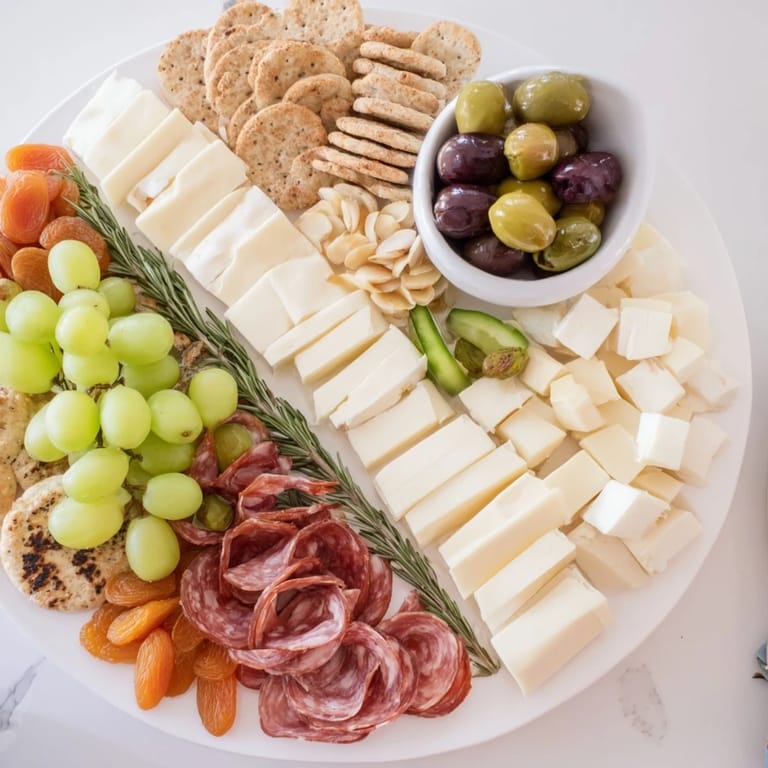
- Take those fresh rosemary sprigs and arrange them to create three distinct sections. Let them overlap slightly and position them in natural lines—think of them as rivers dividing three countries rather than rigid borders. Run your fingers gently over them so they release their fragrance, and take a moment to appreciate how much better your workspace already smells.
- Build Section One with Intention:
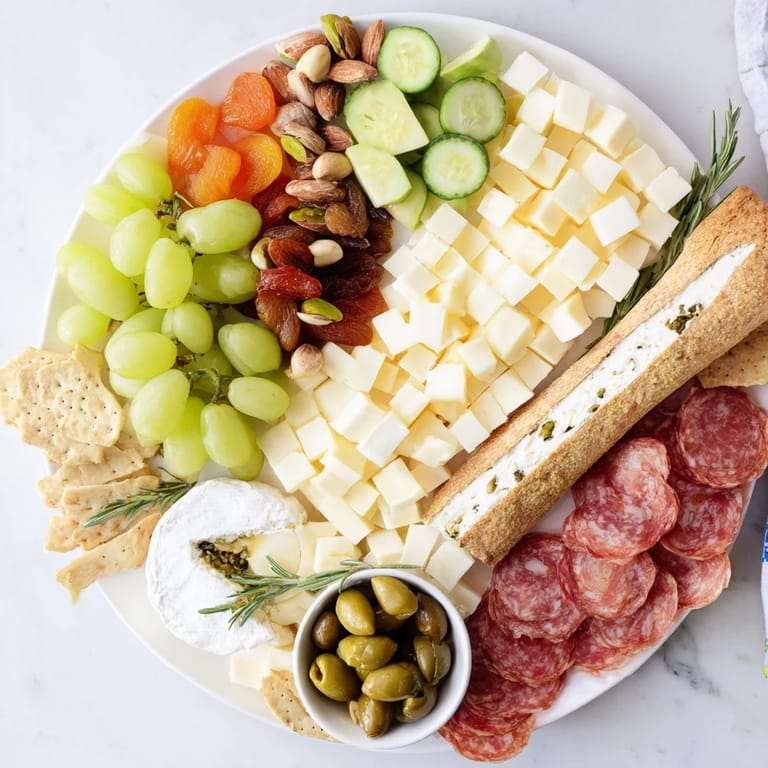
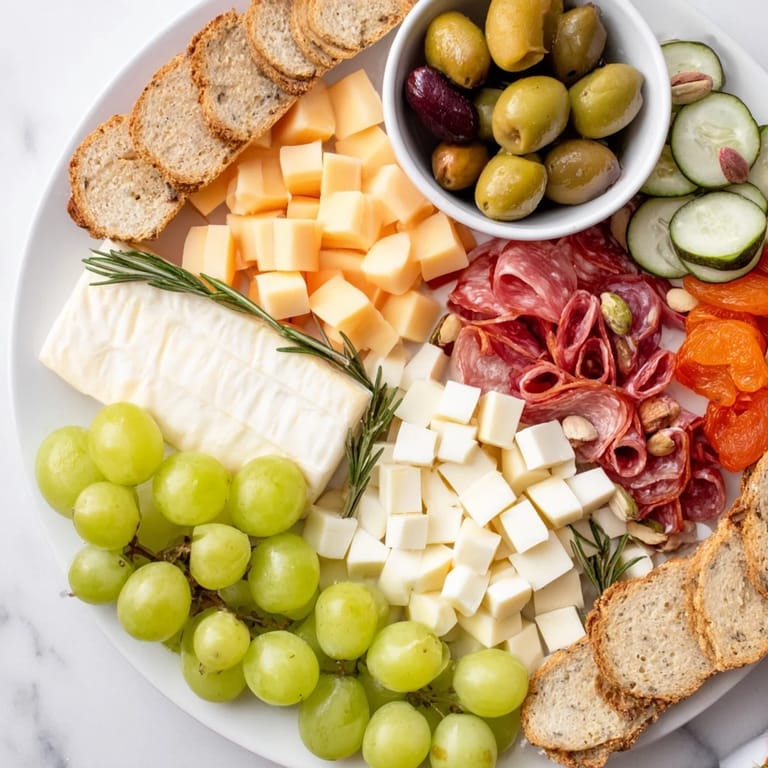
- This is your Chardonnay section, so think "bright and creamy." Arrange the brie slices so they have room to breathe, scatter the Gruyère cubes nearby, then create little clusters of grapes and apple slices throughout. The almonds should be scattered like treasures—not uniformly, but with happy little pockets of them appearing as someone moves around the platter. This section should feel light and welcoming, like a conversation between friends.
- Compose Section Two with Confidence:
- This is where the deeper, earthier flavors live. Layer the cheddar and gouda, then drape the prosciutto and salami with gentle folds—as if you're arranging silk scarves. They should look both abundant and refined. Nestle the cherry tomatoes into the spaces between, letting them roll slightly so they catch the light. This section has drama and weight, so your arrangement should reflect that confidence.
- Finalize Section Three with Elegance:
- Form your goat cheese into a beautiful log (or small rounds if you prefer) and position it as an anchor. Arrange the dried apricots in clusters, scatter the pistachios with a generous hand, and place the olives in a small bowl or nestled directly on the board. Fan your cucumber slices so they overlap slightly. This section should feel fresh, light, and special—almost like the grand finale of a meal.
- Fill the Negative Space:
- Now take your baguette slices and crackers and fill in the remaining gaps, creating a flow that leads the eye naturally around the board. This isn't about packing every space—it's about creating pathways. Leave a little breathing room so the colors can sing.
- Add the Final Flourishes:
- Place small bowls of honey and fig jam in strategic spots, perhaps one near Section One and one near Section Two. These aren't required, but they're the kind of detail that makes people realize you've thought about this. They're your conversation starters.
- The Sacred Pause:
- Step back and look at what you've created. Adjust anything that feels off-balance. Let the platter sit for just a few moments before serving—this allows all the elements to settle and the aromas to fully develop. This moment of pause is when you go from assembling ingredients to creating an experience.
 Save
Save There's something almost sacred about the moment when a table goes quiet around a shared platter. Not awkwardly quiet, but that comfortable silence where everyone's tasting, thinking, making their own discoveries. That's when food becomes more than sustenance—it becomes a thread connecting people, a reason to linger a little longer and talk a little deeper.
Understanding Wine and Cheese Pairing
The beautiful secret about wine and cheese pairings is that they follow sensible rules rooted in chemistry. Crisp white wines like Chardonnay have high acidity and lighter body, which means they need partners that won't overwhelm them—delicate cheeses, fresh fruits, and bright flavors are their natural companions. Red wines like Pinot Noir are earthier and more structured, so they crave richer, more intense flavors that match their complexity. Sparkling wines are all about balance and cutting through richness, so they pair beautifully with anything slightly acidic, sweet, or briny. Once you understand these principles, you stop following rules and start trusting your instincts.
The Art of Platter Arrangement
I used to think a beautiful platter was about making everything look perfect and symmetrical, but I've learned it's actually the opposite. The most visually appealing platters have rhythm and movement—some clustered abundance, some negative space, some elements standing out while others recede. Think of it like creating a small landscape on a flat surface. Height variations, color contrasts, and the way light hits different surfaces all matter. When you arrange with intention, people don't just eat from your platter—they admire it first, which changes the entire mood of the gathering.
Making It Your Own
The three-section format here is just a framework—the real magic happens when you make it personal. Swap the specific cheeses for varieties you love or can easily find. If someone in your group is vegetarian, the second section is delicious without the meats and just as impressive. If you're pairing with different wines entirely, the same logic applies: bright wines want fresh, acidic elements; heavier wines want rich, concentrated flavors; bubbly wants something to cut through its sweetness. You might even theme your sections around seasons, regional flavors, or the wines your guests are actually bringing.
- The rosemary dividers can be swapped for thyme sprigs or edible flowers if you want to shift the aesthetic
- Small serving utensils near each section (cheese knives, olive spoons) make the platter feel more welcoming and organized
- Arrange your platter no more than an hour before serving, but prepare all your elements beforehand so final assembly takes just a few beautiful minutes
 Save
Save At the end of that first book club night, someone asked for the recipe, and I realized there really wasn't one to give—just a way of thinking about flavors and a willingness to make things beautiful. That's when I understood that the best recipes aren't just instructions. They're invitations to create moments that matter.
Recipe Guide
- → How do rosemary sprigs enhance the platter?
Rosemary sprigs are placed between sections to separate flavors visually and add a fragrant, aromatic touch that enhances the sensory experience.
- → Can the platter accommodate vegetarian diets?
Yes, by omitting cured meats and adding extra nuts or roasted vegetables, the platter offers delicious vegetarian-friendly options.
- → Which wines pair best with each section?
Section 1 complements Chardonnay or crisp white wines, Section 2 pairs nicely with Pinot Noir or light red wines, and Section 3 is ideal alongside sparkling wines or rosé.
- → What types of cheeses are featured on the platter?
Cheeses include triple-cream brie, Gruyère, aged cheddar, smoked gouda, and herbed goat cheese, offering diverse textures and flavors.
- → How should the platter be served for best presentation?
Arrange ingredients in three sections divided by rosemary, layering fruits, nuts, cheeses, and charcuterie attractively with crackers and baguette slices around.
- → Are there tips for customizing the platter?
Swap cheeses or cured meats based on preference, accommodate dietary needs by replacing items, and include optional honey or fig jam for added sweetness.